Museum curator Jackie Yoong shares Singapore’s rich design heritage through her work with garments
When Singapore’s Asian Civilisations Museum (ACM) held the Guo Pei: Chinese Art and Couture exhibition in 2019, it marked the first fashion exhibition of its kind at the museum.
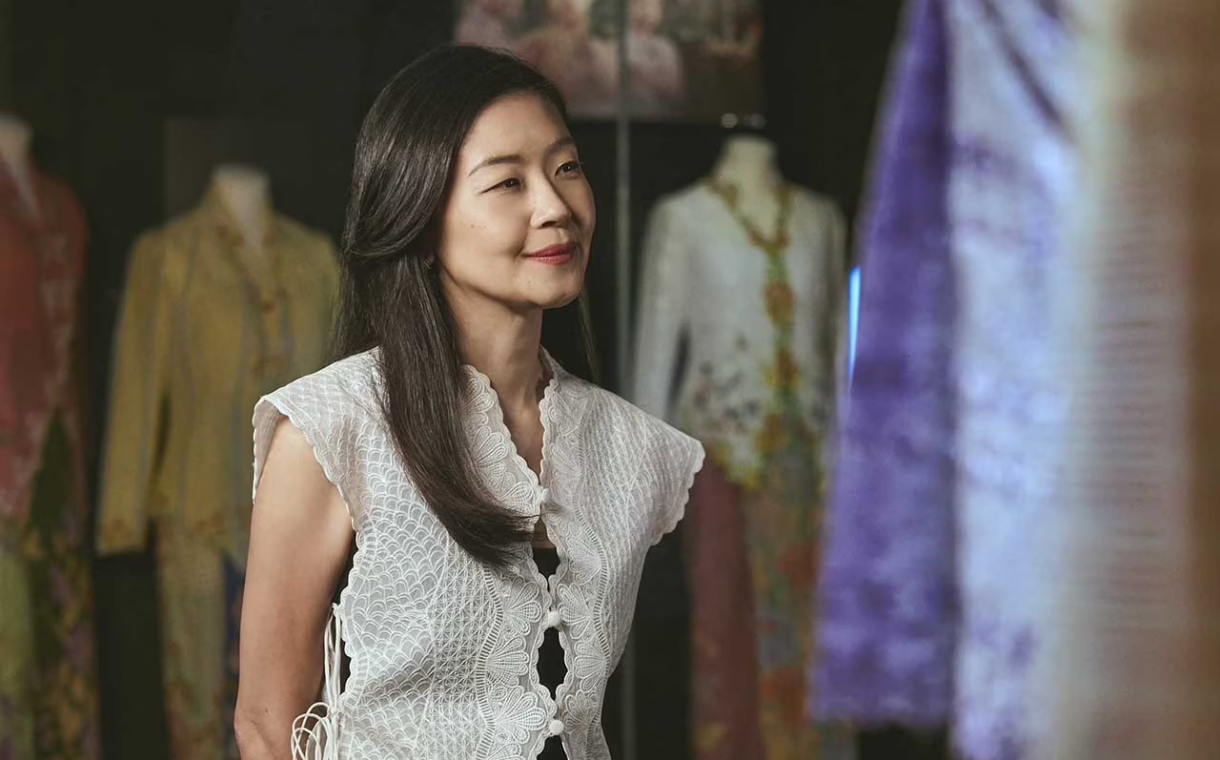
Working behind the scenes of the exhibition was Jackie Yoong, senior curator (Design) at the ACM and Peranakan Museum. She has since gone on to curate other fashion exhibitions such as Andrew Gn: Fashioning Singapore and the World, and the permanent galleries of fashion and textiles at both museums.
Her projects during her 17-year-long career are centred around the ACM’s mission of understanding Asia from Singapore.
Jackie has also played a key role in curating the museum’s permanent fashion gallery, which includes menswear, footwear and accessories, alongside the traditional dress like the kebaya. She is responsible for the research, selection and presentation of objects within the museum’s National Collection, as well as shaping the direction of its design displays.
Having long been fascinated by history – and the way the past shapes the present while offering glimpses into the future – Jackie shares that her path into the role came somewhat serendipitously. During university, she was assigned to visit the Asian Civilisations Museum and critique it.
“While doing my master’s in history, I volunteered as a docent at the newly opened Peranakan Museum, which was part of ACM, and when an assistant curator role opened up, I was lucky enough to step into it,” recalls Jackie.
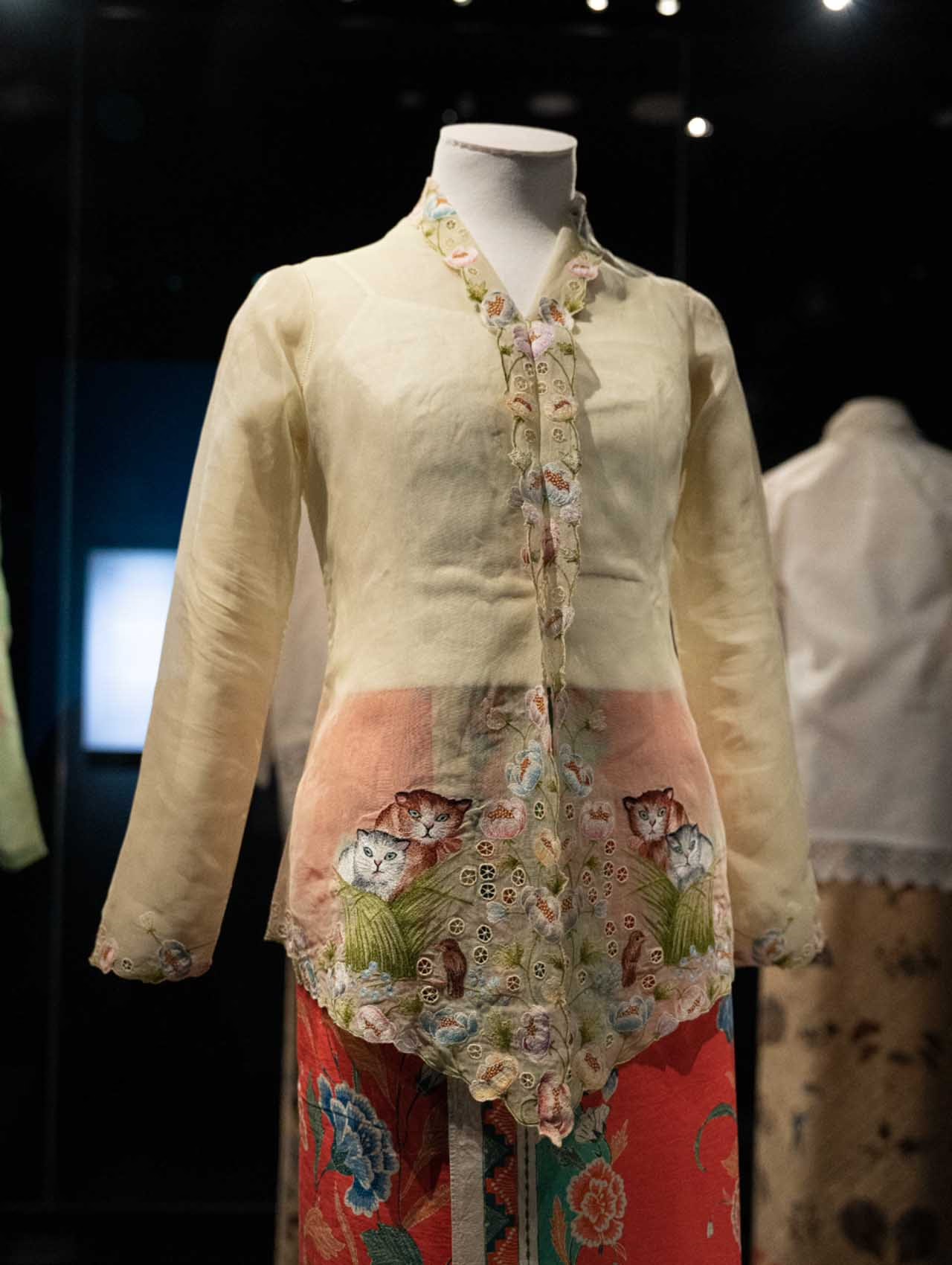
Over the years, she has developed a broad range of skills that have enabled her to present the diversity and rich sartorial history of Singapore.
“What’s unique about Singapore is how many silhouettes exist here. That reflects our history as a place shaped by migration and the exchange of ideas, where different communities brought their dress traditions and adapted them over time,” she says.
Peranakans, for instance, also wore garments such as the qipao (the form-fitting Chinese dress with a mandarin collar) and the baju kurung, comprising a loose-fitting blouse (baju) paired with a long skirt (kurung). The museum has also collected hybrid garments such as the kebaya-qipao and kebaya-sari, reflecting the blending of cultural influences over time.
“These hybrids reflect how designers today continue that long tradition of cultural exchange. The possibilities for contemporary reinterpretations are endless and exciting,” she enthuses.
No two days are ever the same for Jackie. One day might involve viewing collections and studying garments up close; another could see her visiting designers and makers in their studios to better understand their creative processes, or spending hours researching and writing at her desk.
Assembling a collection often comes down to the smallest details – even how garments were originally worn decades ago. When displaying an early form of the kebaya known as the baju panjang, a looser and longer garment, Jackie worked closely with conservators to avoid over-padding the mannequin, allowing visitors to better understand how the piece would originally have looked and felt when worn.
What Jackie enjoys most about her work is its sense of responsibility and possibility.
“I find it deeply meaningful that what we choose to collect – and how we document the voices, processes and contexts behind those objects – is a conscious act of remembering,” she shares.
“In a way, we are considering what from today might inspire tomorrow.”
“I find it deeply meaningful that what we choose to collect is a conscious act of remembering"
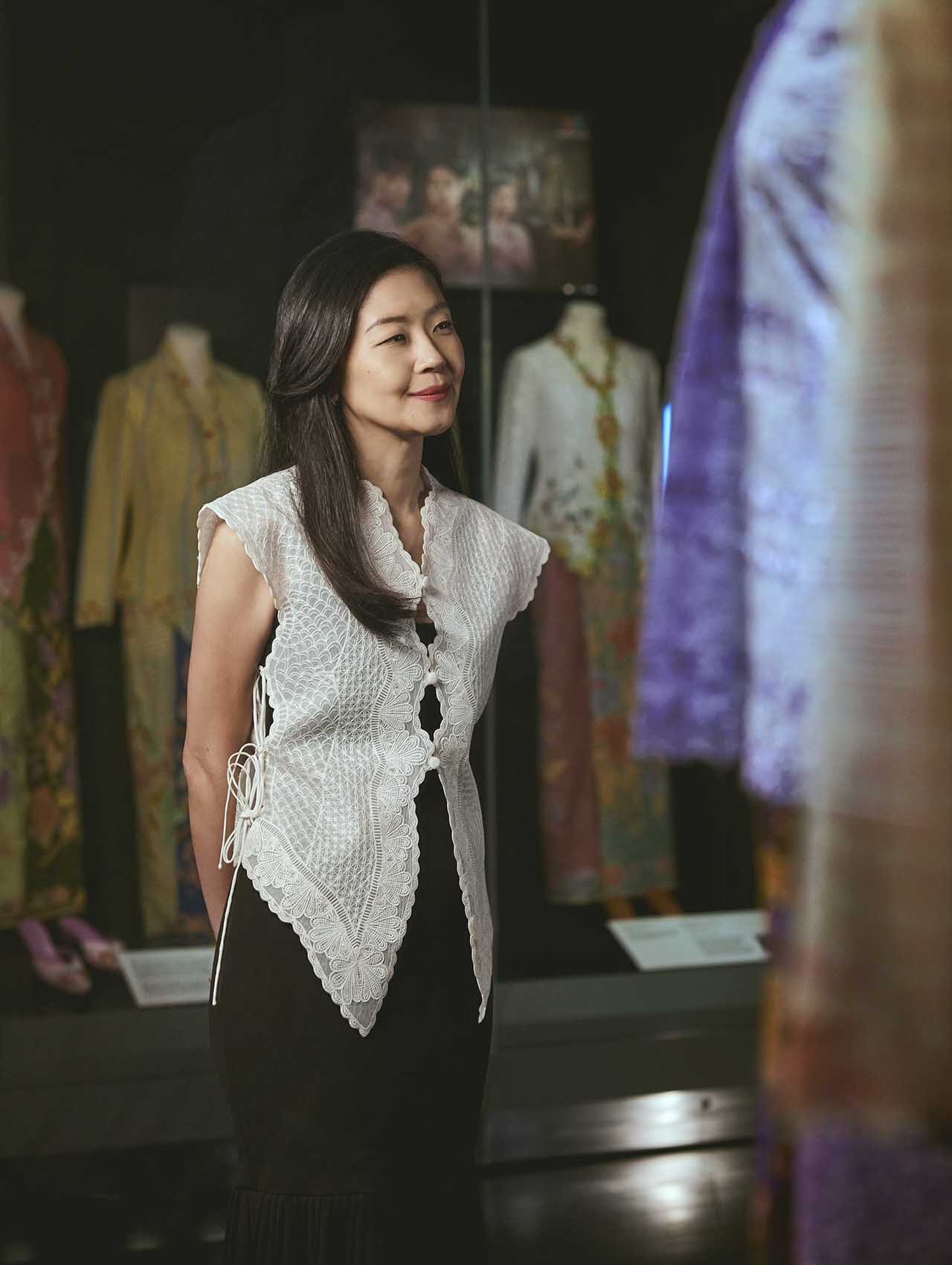
Currently, Jackie and her team are researching contemporary fashion and furniture across Asia for their next project. Last year, they met designers in Jakarta and Shanghai to gain deeper insight into how they approach craft, identity and innovation. Designers have also been invited to share their perspectives with local audiences – conversations that continue to broaden her understanding.
For Jackie, what matters most is bringing these learnings back to Singapore and finding ways to apply them.
“These exchanges – whether in studios, on stage or through informal conversations – are really at the heart of our work,” she says. “They shape how we think about what to collect, and how to tell these stories meaningfully in the museum.”
Click here for more information on the Asian Civilisations Museum.