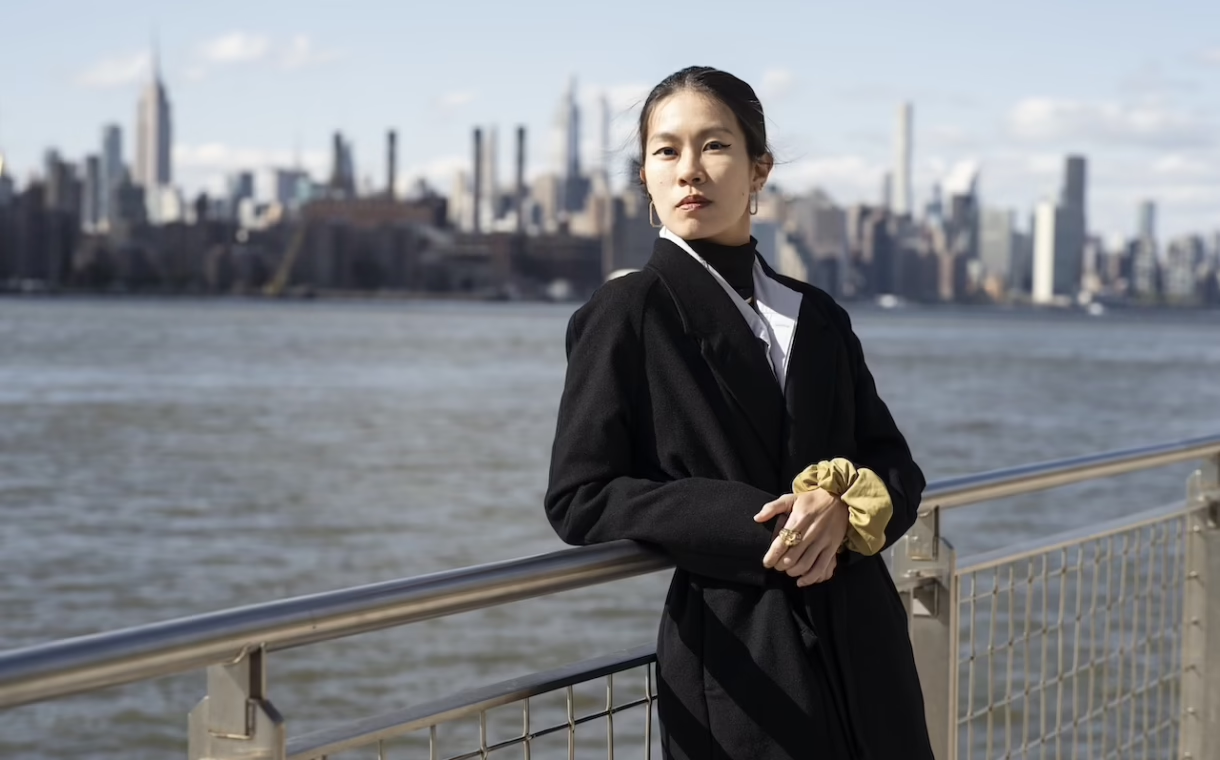
Feeling like a misfit and not quite belonging during one’s teenage years is a central theme that Singaporean filmmaker and writer Siyou Tan explores in her debut feature film, Amoeba.
Drawing on her own experiences at a top all-girls secondary school in Singapore, Siyou recalls being a non-conforming troublemaker who often found herself on the receiving end of disciplinary action.
As a loner in her teenage years, she found solace in going to the cinema alone.
“Sitting in the dark, feeling emotions through projected light and sound made me feel close to the strangers around me,” she says. “I’ve always found storytelling to be a profound source of connection, and I began to dream that one day I could make my own film.”
Here, she reflects on her journey into filmmaking.
2012-2017: Forging connections
Though she had always harboured dreams of filmmaking, Siyou was initially enrolled in the economics programme at Wesleyan University, Connecticut in 2007.
After a year, she made the decision to switch to film – choosing a different path from the banking career her parents had envisioned for her.
Upon graduating in 2012, she moved to Los Angeles in search of her big break. The reality, however, was sobering. “I ended up at the same Starbucks where everyone around me was on their laptops applying for the same jobs that none of us would get,” she recalls.
A chance encounter while buying a car changed the course of her journey. She met a fellow Singaporean who connected her to a production company owner, leading to her first role as an assistant editor. From there, she worked her way up to become an art director.
The work was varied and fast-paced: one day she was on a music video shoot for Selena Gomez, the next on a Super Bowl campaign with Gwen Stefani, alongside juggling projects for Vanity Fair, book publisher Taschen and brands such as Chanel.
She looks back on that period with fondness. “It became a place where I spent many years learning about filmmaking on a professional level, and worked closely with many legendary music video and commercial directors,” she says.
2018-2019: Finding her voice
After a few years, Siyou felt ready to tell her own stories and decided to deepen her craft. She enrolled in the prestigious American Film Institute (AFI), a pivotal step in fully committing to a career as a director.
“AFI taught me to be brave about having a voice and using it,” she says.
“Being part of such a selective programme gave me a new level of confidence. I entered at a point where I already had a strong technical foundation, but AFI was fundamental in shaping my understanding of a director’s role as a leader. It reinforced my belief that filmmaking is a collaborative process, and that the team behind a film matters just as much as the film itself.”
While there, she made the short film Hello Ahma, about a young Singaporean girl in America who is unable to return home for her grandmother’s funeral. The film went on to screen at festivals in Toronto and Berlin, and caught the attention of several producers.
“I’ve always found storytelling to be a profound source of connection, and I began to dream that one day I could make my own film.”
2019-2025: Production in progress
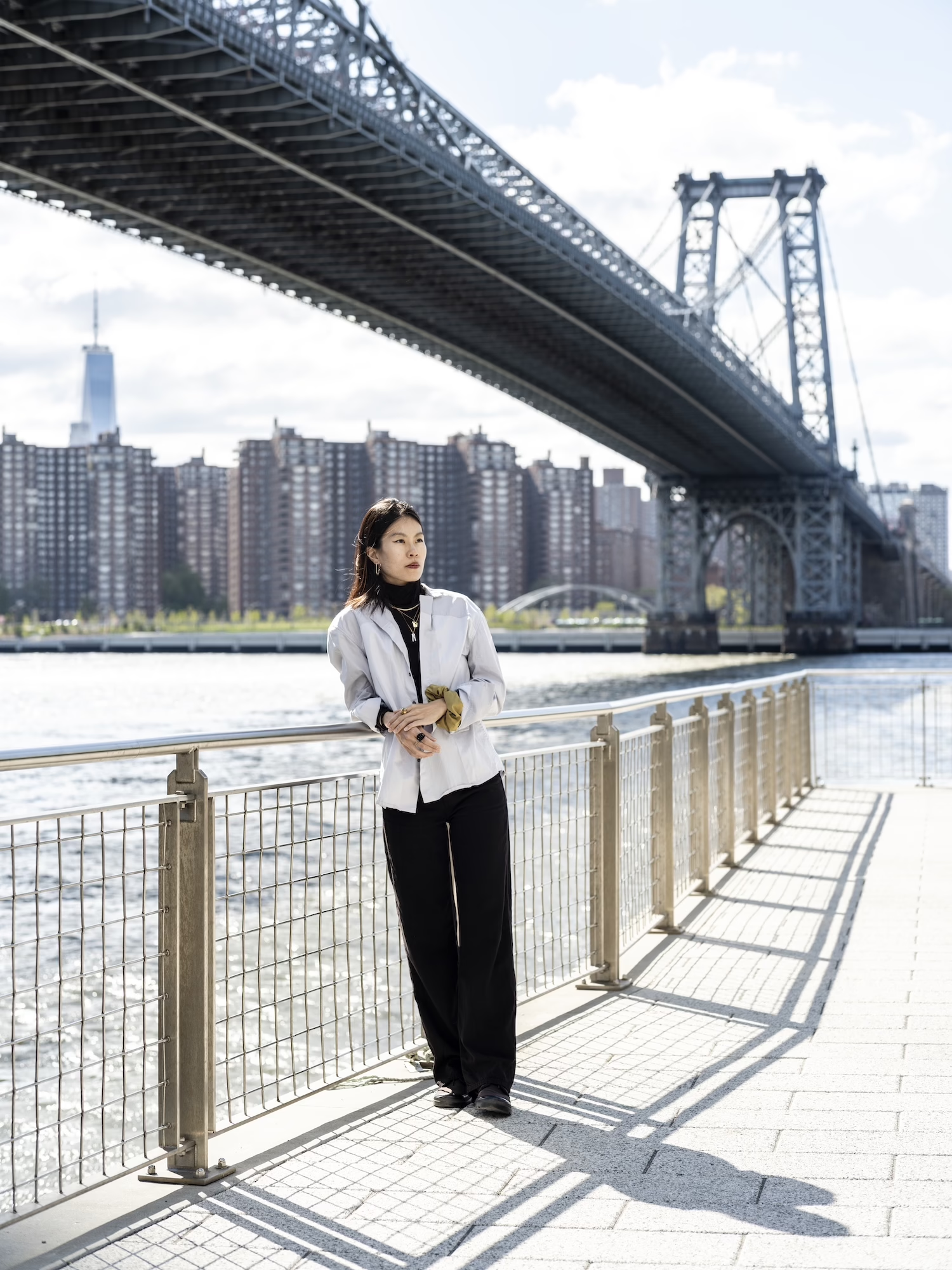
As her career bloomed, she began developing the script for Amoeba while commuting between Los Angeles and Singapore for various short films and commercial projects.
One of these projects was Strawberry Cheesecake, a short film which premiered at the Locarno Film Festival in 2021. Exploring themes of teenage rebellion within Singapore’s structured society, the short served as a precursor to Amoeba, allowing her to refine the deeper message she wanted her feature debut to convey.
Production for Amoeba commenced in 2024, prompting her to move back to Singapore. During its post-production phase, Siyou was based in Paris and Amsterdam for several months to finalise the project.
2025-present: Born again
Following its world premiere at the Toronto International Film Festival in 2025, Amoeba went on to win the Taiwan Film Critics Society Award at the 62nd Golden Horse Film Festival the same year, before making its Singapore debut in March 2026.
Despite the film’s international success, Siyou admits she initially had reservations about how it would be received at home.
“At first, I felt a bit shy about my friends and family seeing it, because the line between reality, memory and imagination blurs,” she says.
“But I’ve been heartened by how warm the response has been. Watching it in the cinema, the energy of emotions bubbling to the surface feels tangible. Many people have also told me they feel seen – and that’s a very powerful feeling.”
Reflecting on the journey, she adds, “It’s been incredibly rewarding to share it with audiences across cultures and continents, and to hear how deeply it has connected with their own lives and memories.”
Amid the festival circuit, Siyou also relocated to New York City in early 2026, finding its location more conducive to co-productions between Europe and Asia.
With one project completed, she is already looking ahead.
“Making films is a continuous cycle of death and rebirth,” she says. “You spend years making a film, and when it’s done, you wake up with the task of doing it all over again.”