Published on July 1, 2026
Discover China's new era of artisanship
From vineyards and watch ateliers to tea houses and design studios, a new generation of makers is reimagining heritage through craftsmanship, innovation and contemporary design
The rise of culturally rooted luxury
In Shenzhen, a watchmaker is earning nominations at the Grand Prix d’Horlogerie de Genève. In Paris, a Chinese leather goods label rooted in mountain landscapes is showing at Fashion Week.
And across the world, scents built around yulan magnolia and mugwort are attracting the attention of global beauty giants.
Across industries – from horology to haute fragrance – a new generation of Chinese brands is working with intention, placing craft, narrative and design at the forefront. Increasingly, they are expanding into regional and global markets like Singapore.
This shift is unfolding alongside the rise of Guochao, a growing sense of cultural confidence among Chinese consumers, particularly Gen Z, who are increasingly drawn to home-grown brands that reinterpret heritage with a contemporary, elevated edge.

“Guochao [reflects] a wider Asian cultural confidence that is reshaping how an entire generation shops,” explains Humphrey Ho, CEO of Helios & Partners, a multi-family office with deep experience in the Chinese luxury and beauty sector.
Among the brands leading this movement is Shenzhen-based watchmaker Behrens, whose timepieces combine precision engineering with a distinctly Chinese visual language. In fashion, Songmont represents a quieter expression of luxury, with paredback leather bags shaped by a “mountain and pine” ethos rooted in Chinese landscapes and philosophy.
Meanwhile, fragrance house Documents approaches scent as a conceptual medium, building olfactory narratives around traditional ingredients in a way that recently attracted strategic investment from L’Oréal.
Together, these brands point to a broader recalibration of luxury, one that is grounded in craftsmanship, cultural identity and a renewed sense of creative confidence.
“Supported by streamlined visa policies and relatively affordable luxury hospitality, China’s recent growth in international visitors reflects both strong policy support and competitive pricing in some of the luxury spaces,” says Wong King Yin, a senior marketing lecturer at Nanyang Technological University’s Nanyang Business School.
“At the same time, the shift towards culturally rooted luxury introduces a distinctive appeal for international visitors.”
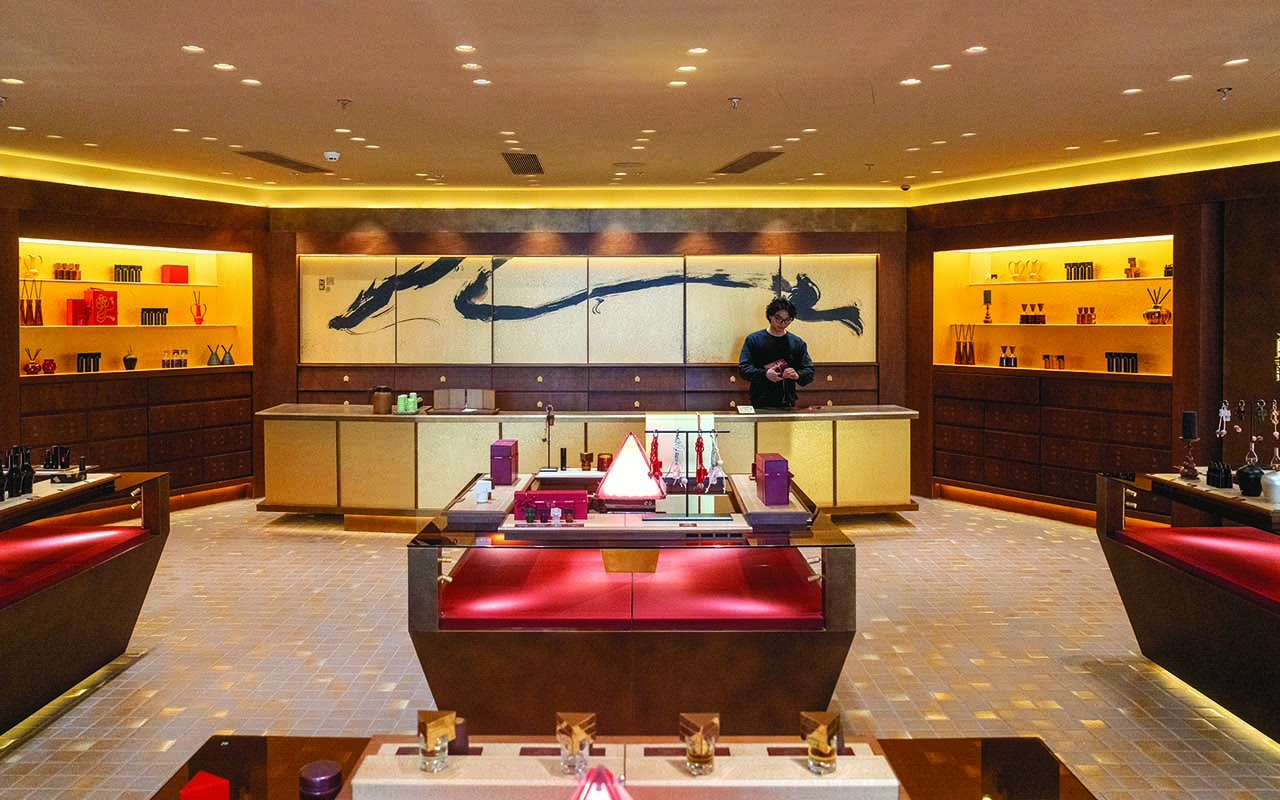
Across Asia, younger consumers – now given more compelling domestic alternatives – are gravitating towards home-grown brands. A Chinese Gen Z or millennial consumer now has options like Florasis, a cosmetics brand that weaves traditional Chinese cultural elements into its packaging. Behind this is a generational shift driven by “self-expression and variety over status signalling,” according to Humphrey.
“These brands are more affordable. They move faster, with designs refreshing constantly rather than seasonally, and that very pace means a young consumer can buy more, stay current, and express their identity, without committing to a single expensive statement piece,” he says.
This reflects China’s rapid pace of development, where consumers constantly chase novelty, and there is always something newer, something cooler just around the corner.
“The shift towards culturally rooted luxury introduces a distinctive appeal for international visitors"
Establishing Terroir
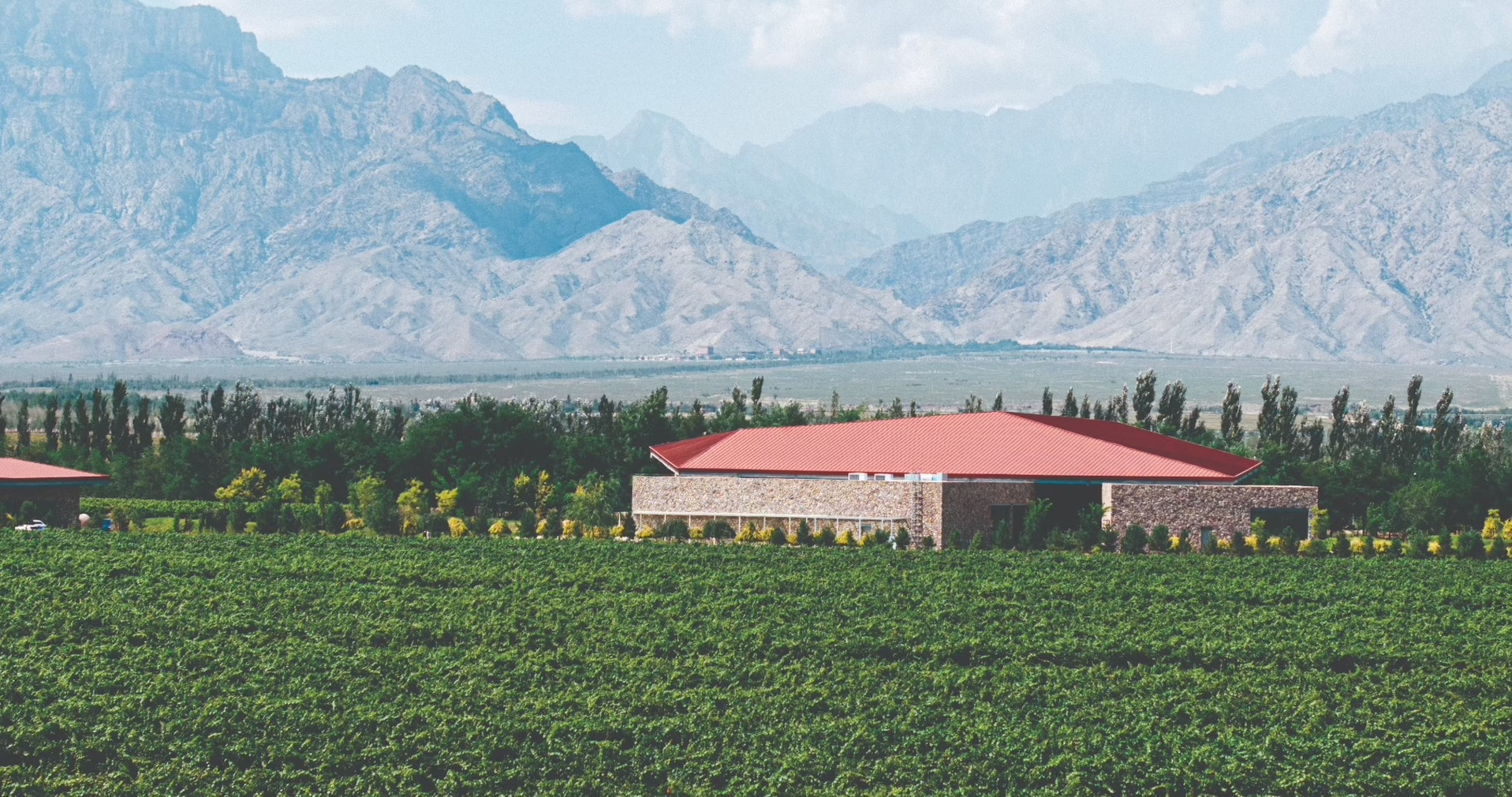
A similar narrative is unfolding in China’s wine industry, with independent producers such as Fei Tswei Winery in Ningxia – around a 90-minute flight or seven-hour drive from Xi’an – beginning to shape a new chapter in global taste.
Owner Lily Zhang sees this as an advantage: “We don’t have the burden of history, which allows us more room to experiment with grape varieties, winemaking methods and product styles.”
Many Chinese winery owners are not from winemaking dynasties – they are passionate enthusiasts, willing to boldly experiment with everything from vineyard cultivation to winemaking practices, adds Lily.
Combined with advanced equipment, rapid progress in farming and blending techniques, as well as strong capital support, these wineries are well-equipped to manage the entire process, from their own vineyards to final production.
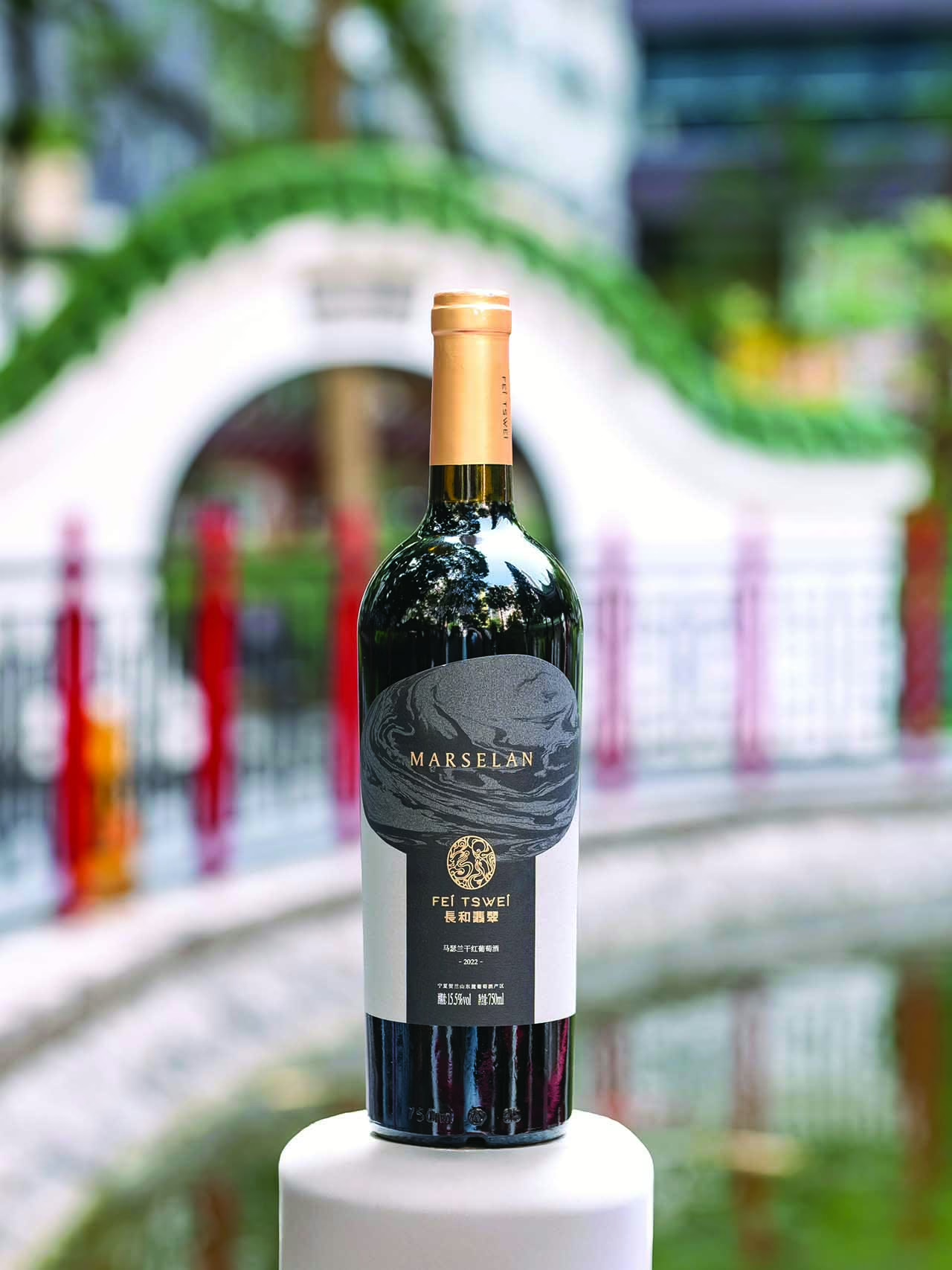
Moreover, the scale of the Chinese market allows wineries the flexibility to refine their styles and ultimately solidify them. The results are beginning to register internationally.
At the Decanter World Wine Awards 2025, two Chinese wines claimed Best in Show for the first time, while the renowned Wynn Signature Chinese Wine Awards has helped bring growing global attention to the country’s emerging regions.
In Yunnan, Ao Yun – owned by French luxury conglomerate LVMH – offers a different expression of Chinese craftsmanship. Born from a four-year search for the ideal terroir to produce a Bordeaux-style wine, the label is shaped by high-altitude vineyards at the foothills of the Himalayas, where tiny plots farmed by local families yield wines of striking freshness.
Elsewhere, distinct regional identities are beginning to emerge. Silver Heights in Ningxia is known for its restrained elegance, while Long Dai – backed by Domaines Barons de Rothschild – brings Bordeaux winemaking expertise to Shandong.
Meanwhile, Changyu reflects the scale and ambition of China’s broader wine industry. As the industry evolves, so too does the way it is experienced. Wine travel in China is still in its infancy, but gaining traction through curated, place-driven journeys, rather than the traditional model of cellar doors and tasting rooms.
A typical itinerary might include meeting winemakers in Ningxia, staying in scenic lodges, and pairing wines with regional cuisine, or combining tastings with treks through Yunnan and visits to contemporary art hubs. The appetite is strongest among well-travelled collectors who feel they have seen it all.

“For them, China offers discovery, and discovery is the ultimate luxury,” says Louen Tang, managing director of Charlotte Travel and a wine expert.
“Ten years ago, Chinese wine was often positioned defensively. Today, among informed drinkers, collectors and sommeliers, the discussion is increasingly about site, restraint, vintage variation and producer intent,” he adds.
Louen notes that younger Chinese consumers, particularly those who have studied or lived abroad, are “far more interested in authenticity than labels that shout lineage”.
Looking ahead, Louen expects Chinese wine to become a selective but established presence on international lists, with top producers appearing alongside established names in Michelin-starred restaurants and private cellars.
He adds: “The conversation will move away from nationality towards producer and place, which is where fine wine belongs.”
Changing Palates
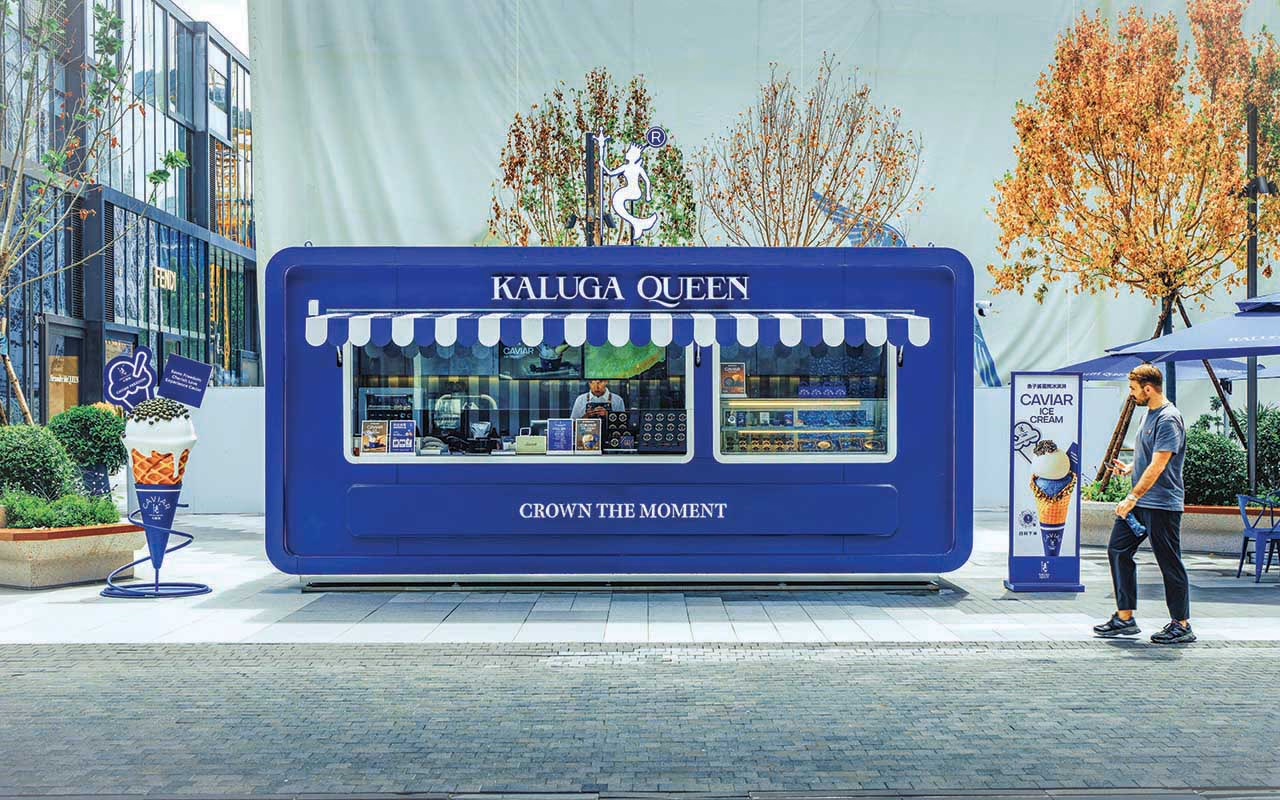
In the world of fine dining, Kaluga Queen has similarly redefined perceptions of luxury. The world’s largest caviar producer – accounting for 35 per cent of global supply – it has built its reputation through a careful fusion of technology and artisanal craft.
The brand has entered Michelin-starred restaurants by “making quality and consistency themselves the passport”, says marketing director Lily Liu.
Its Beijing and Quzhou concept stores are designed to “lower psychological barriers”, especially for younger consumers.
By serving caviar through open, casual formats – ready-to-eat portions, with unexpected pairings like ice cream, chocolate, ice lollies and hot dogs – the effect is to recast it from a rarefied luxury into something more immediate: an everyday indulgence.
The larger ambition is to establish how it’s perceived as a coveted, world-class luxury ingredient brand, built not just on product quality, but on the slower accumulation of trust, storytelling, and a deeper presence in global gastronomic circles.
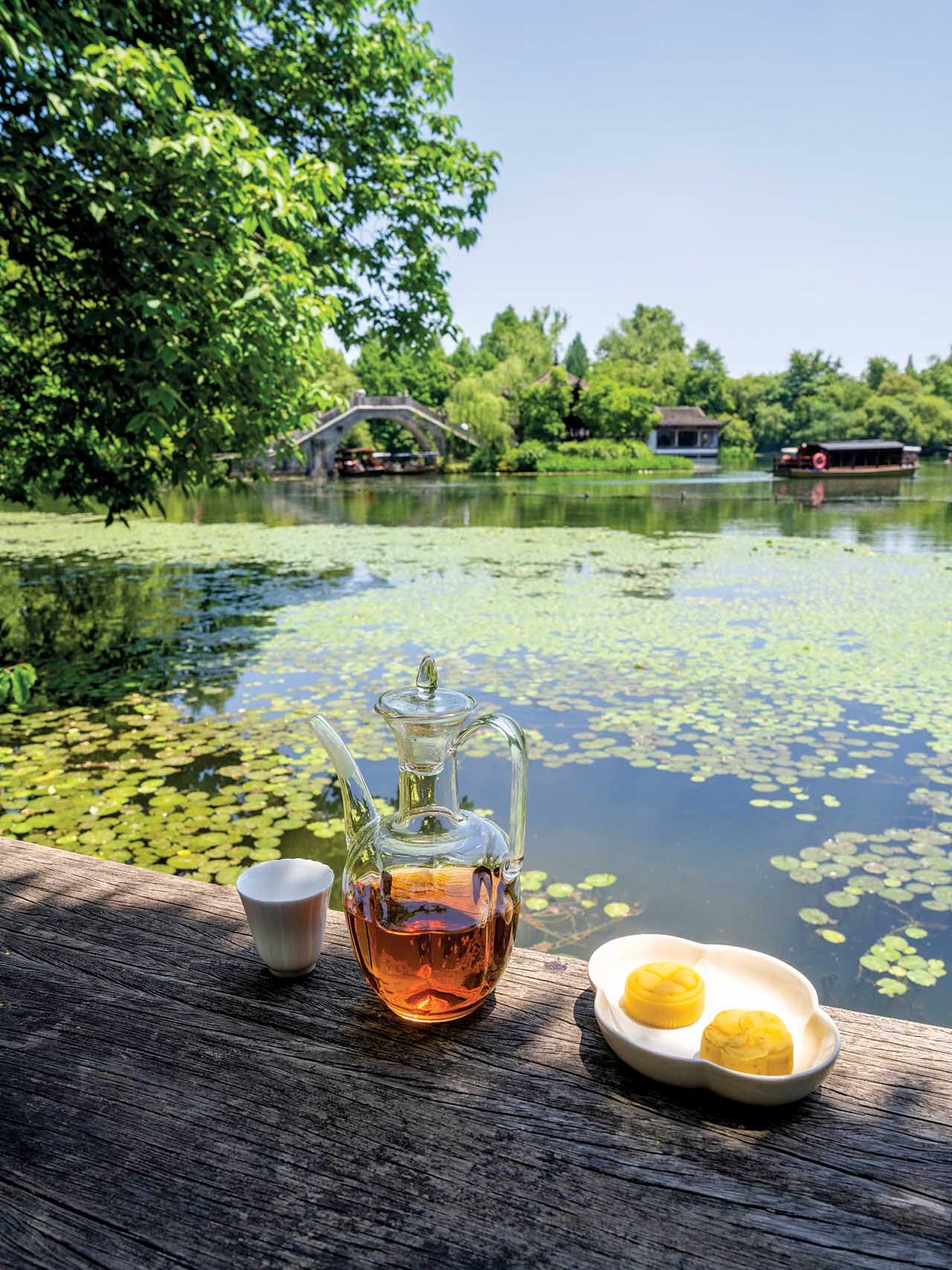
A parallel shift is taking place in another realm of Chinese luxury. Tea is re-emerging as a slower, more ritualised form of luxury, and Hangzhou sits firmly at the centre of this revival.
Long regarded as the spiritual home of Long Jing (Dragon Well) tea, the region continues to shape how Chinese tea is cultivated, appreciated and experienced today.
At places like Fu Yun Tang Teahouse on the banks of West Lake in Hangzhou, overlooking its misty waters, tea is not simply consumed, but practised as a quiet, deliberate ritual. It resonates with younger consumers seeking slower, more intentional experiences rooted in identity.
China’s younger consumers are reshaping how tea is experienced, from fast-growing Chinese tea chains like Chagee to a new wave of premium tea brands. Yet even as modern formats thrive, many Gen Z drinkers are looking beyond convenience, returning to the traditional art of tea drinking with a deeper sense of curiosity and intent.
From Hangzhou, this renewed appreciation for tea is extending outwards, influencing how it is presented in cities beyond China.
In Singapore, Golden Seed tea atelier at Millenia Walk translates these traditions into a contemporary, design-led setting, where tea becomes a shared, sensory encounter.
Marketing director Abby Lim describes the space as a “library of choice”, catering to both seasoned enthusiasts and newcomers. The range spans accessible everyday teas to rare, collector-grade leaves, allowing guests to “taste, learn and collect” at their own pace.
Familiar varieties such as Xi Hu Long Jing are offered in different grades, alongside lesser-known teas like Liu Bao, and prized selections including Da Hong Pao and other renowned rock teas.
Workshops and seasonal events further extend the experience, from candlelit tea sessions to collaborations with wellness practitioners and a Traditional Chinese Medicine practitioner exploring health and longevity, as well as tea and cocoa pairings with a local chocolatier.
A recent highlight was the launch of the first flush of 2026 Xi Hu Long Jing – sourced exclusively from the protected core region of West Lake in Hangzhou, hand-picked and processed within hours of harvest. Very little of this tea leaves China.
Abby explains why it commands such reverence: “Hangzhou’s terroir is a harmony of mild temperatures, gentle rainfall, fertile soils, and mist-laden hills around West Lake.”
This creates a cooler, more humid environment that nurtures tender tea buds and concentrates their flavour.
The most prized harvest is the first flush, picked just before the Qingming Festival in late March, when cool rains and soft light slow the buds’ growth, yielding leaves with higher amino acids, antioxidants, and what Abby describes as “a sweet, nutty character with a smooth, lingering finish”.
Beyond taste, the timing carries deeper meaning. Abby notes: “For generations, tea masters in Hangzhou have perfected the art of hand-picking and pan-firing these early buds, preserving both their purity and their story.”
Gaining international recognition
Chinese engineering and design are increasingly asserting themselves on the global luxury stage, attracting not only affluent domestic consumers, but also international tastemakers.
In the automotive sector, Hongqi has long served as a national emblem. Founded in 1958 by China’s FAW Group, it is closely associated with state limousines used by Chinese President Xi Jinping and senior dignitaries.
Under former Rolls-Royce design director Giles Taylor, the brand’s “Eastern Luxury” philosophy takes shape through elements such as the imperial grille, ceremonial proportions and its signature red emblem, paired with advanced engineering.
Now, Hongqi is looking outwards. The brand has already established a presence in 43 countries and regions, with plans to expand to more than 100 over the next five years. 2026 marks its pivot to Asia, with Singapore, Malaysia, Thailand and Hong Kong forming the next phase of growth.
“By serving caviar through open, casual formats, the effect is to recast it from a rarefied luxury into something more immediate: an everyday indulgence"
The momentum behind that ambition is hard to argue with. In 2025, Hongqi sold 460,063 vehicles – up 11.7 per cent year-on-year, roughly double China’s automotive industry average. Hongqi also became the first Chinese luxury automotive brand to surpass two million cumulative users.
A similar emphasis on identity and craft is emerging in fashion, where labels like Norlha draw on place and tradition.
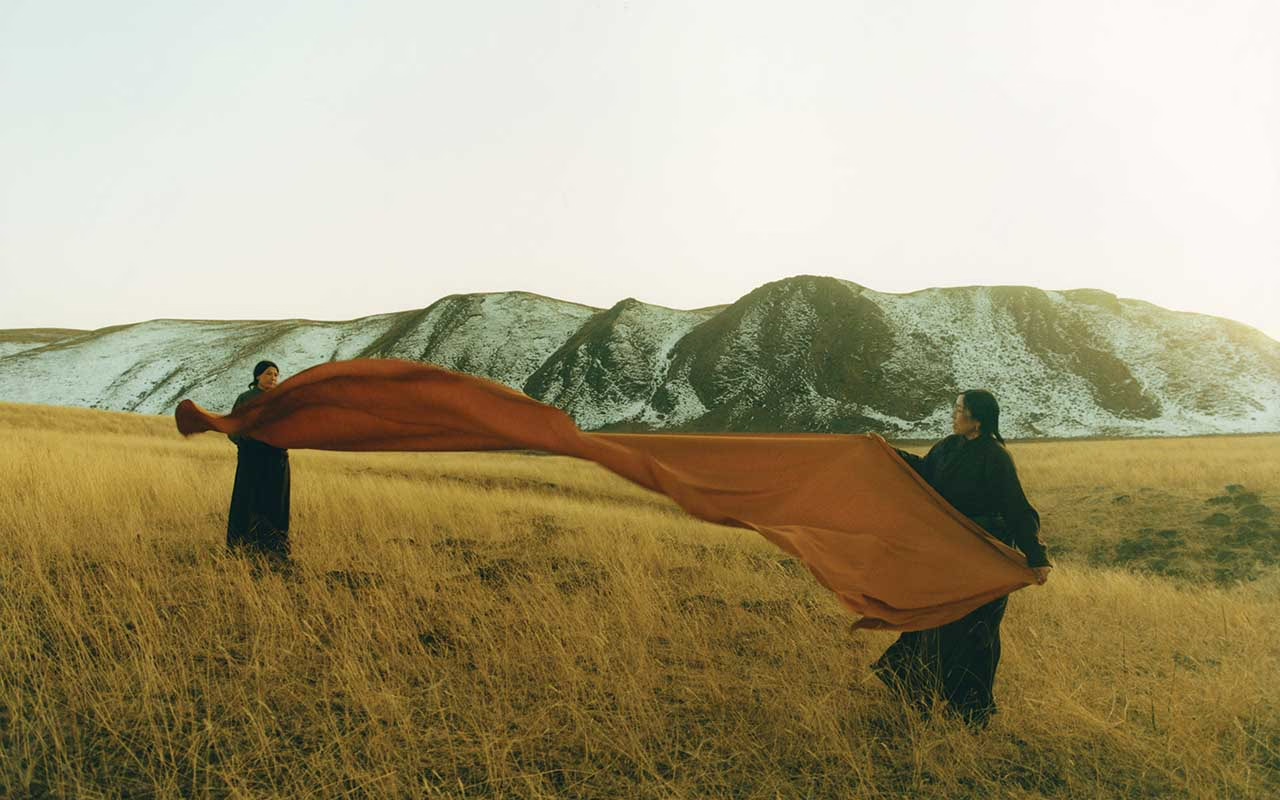
Based in a Tibetan village of Gansu, Northwest China, Norlha was born from a vision to take what the rhythms of nature offer – the soft yak khullu (undercoat) shed each spring – and, through the creation of a local atelier, transform it into products of provenance, creating lasting livelihoods on the Tibetan Plateau in return.
Norlha has since worked with global fashion houses in the luxury market such as Hermès, Louis Vuitton, Lanvin and Balmain.
This shift has not gone unnoticed. Western luxury houses are responding in kind, says Helios & Partners’ Humphrey, pointing to Louis Vuitton’s growing collaborations with Asian artists, and Dior Maison pop-ups across Shanghai, Hong Kong and Singapore.
“These are not vanity exercises. They are deliberate acts of brand storytelling, an attempt to remind the Chinese consumer not just of what these houses sell, but of who they are, where they come from, and why that still matters,” Humphrey explains.

For Chinese domestic brands, however, the next challenge lies beyond production or scale.
What they are still working on is something harder to engineer than a supply chain: the art of desire. Too often, the focus remains on performance marketing and conversion, rather than cultivating mystique and distance, which requires time to build.
In the meantime, Chinese ambition is perhaps most visible in the quiet movement of capital. Anta Sports holds a controlling stake in Finnish Amer Sports, which owns Canadian outdoor apparel and equipment brand Arc’teryx, and is poised to become the largest shareholder in Puma. Chinese conglomerate Fosun International’s luxury arm, Lanvin Group, owns French couture label Lanvin and Italian shoe designer Sergio Rossi.
China is already adept at deploying capital quickly, scaling efficiently and launching new designs at a pace that international groups often struggle to match.
Yet, as Humphrey puts it: “The honest conclusion is this: Chinese-owned international luxury will succeed. Chinese domestic luxury going abroad will remain a work in progress for now.”
The country’s story is rich, long and genuinely extraordinary, but in the luxury context, it has yet to shape a recognisable narrative of craftsmanship and cultural identity. That, ultimately, takes time.
The story of Chinese craftsmanship on the global stage is far from complete. In many ways, it is only just beginning.
For more information on Singapore Airlines’ flights to China, visit singaporeair.com.