In New South Wales' Blue Mountains, ancient stories, sacred landscapes and living traditions reveal the enduring legacy of the world's oldest continuous culture
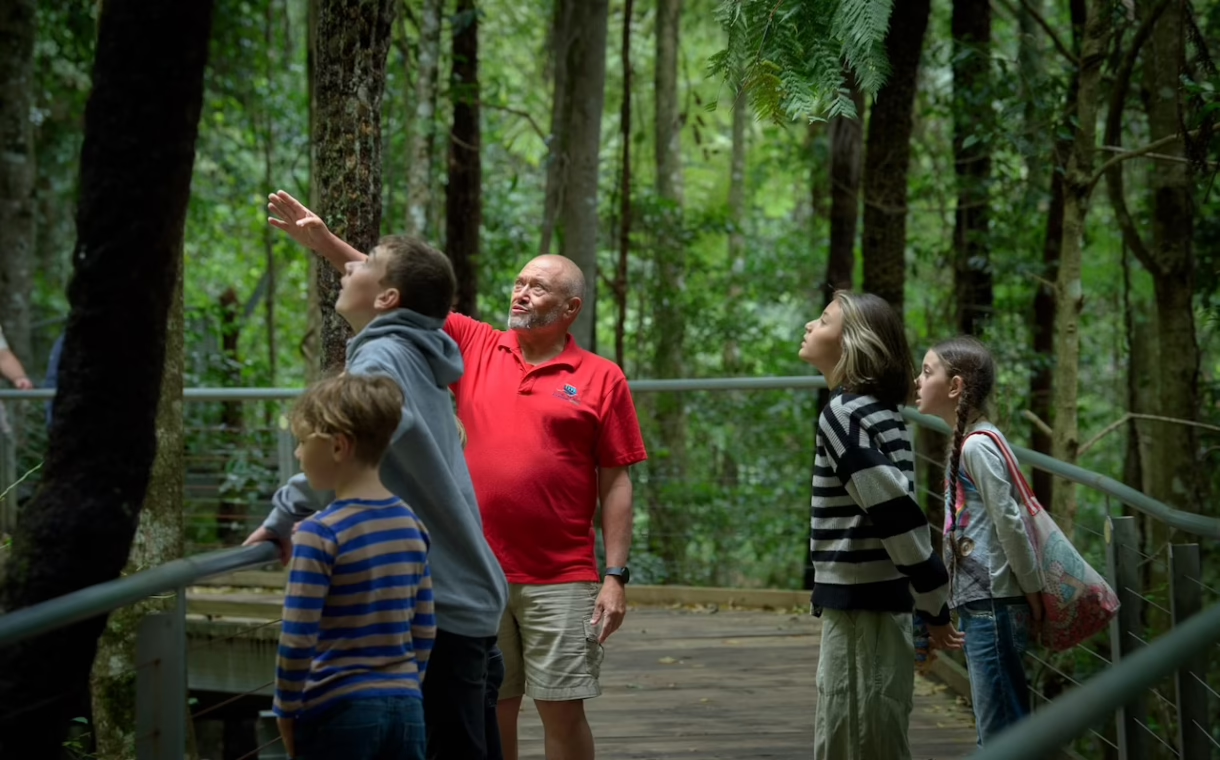
Mist swirls around us as Uncle David King spots something across the path and heads directly toward it. I follow close behind, scanning left and right to try and see what has caught his eye, but nothing appears out of the ordinary.
“Here it is, right on time!” he exclaims, reaching for bright yellow flowers covering the bush in front of us. “Acacia terminalis (a type of native Australian shrub) in flower tells me it must be the beginning of June; it wasn’t here last week,” he enthuses.
It is indeed the beginning of June, but Uncle David doesn’t need to consult a calendar to know. Indigenous Australians have six seasons, specific to the land on which they live.
Rather than relying on dates to determine each season, they closely watch the flowers bloom, fruits ripen, and animals and birds thrive, to understand their world. Even the night skies hold clues.
“Everything around here serves a purpose in its season,” says Uncle David. “We’re constantly watching for changes, looking for signs and reading the Country.”
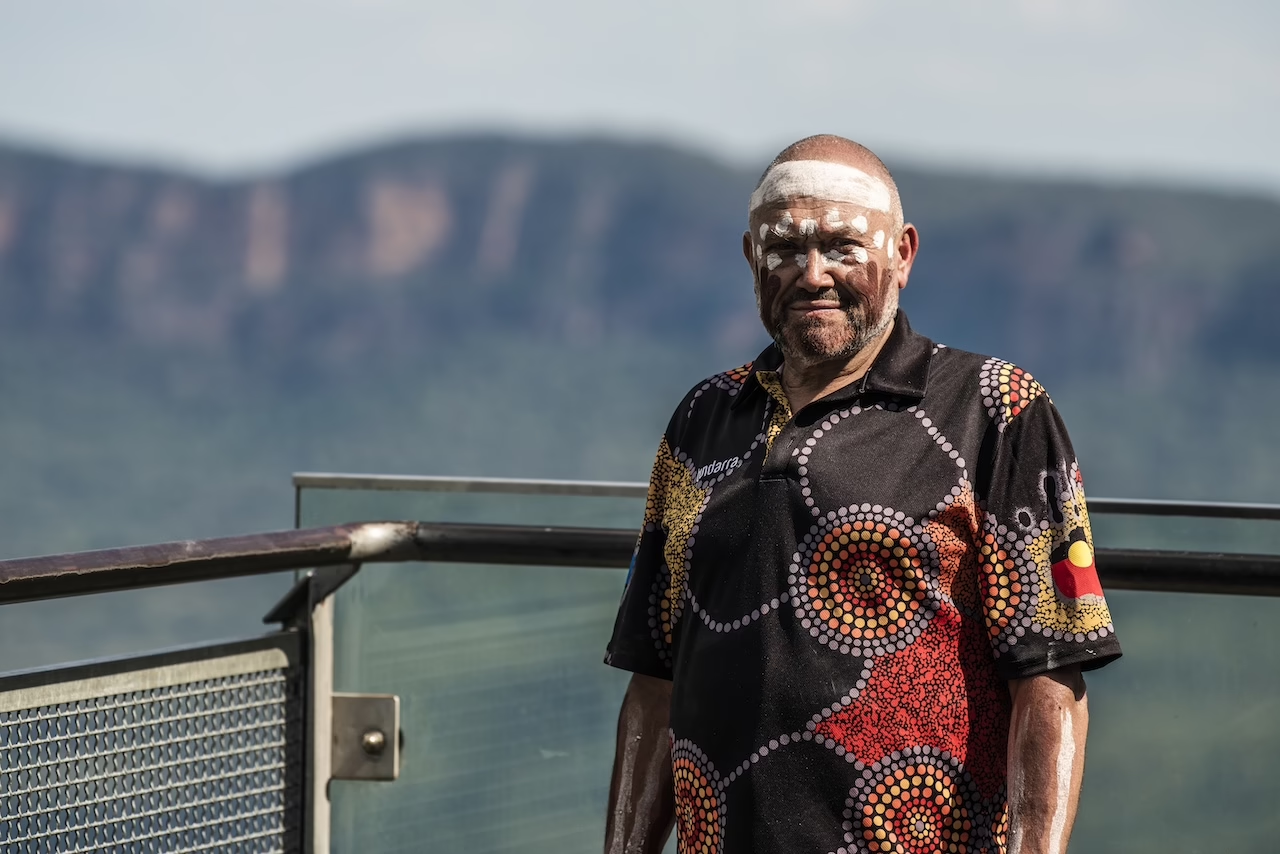
When referring to Country, Indigenous Australians are speaking about far more than the physical land. The term encompasses the waterways, skies and ecosystems that hold deep ancestral, spiritual and familial connections.
I’m spending the morning with Gundungurra Elder and guide Uncle David King at Scenic World in the World Heritage-listed Blue Mountains, about 90km west of Sydney.
As part of the Buunyal Tour, a small-group Indigenous cultural experience, I’m learning to see the landscape through a different lens – one shaped by thousands of years of knowledge, storytelling and connection to Country.
While visitors can explore Scenic World independently, they would miss the stories and insights that bring the landscape to life.
With the mountains temporarily veiled in thick fog, we begin indoors, where Uncle David shares stories rooted in his family’s history. Storytelling, he explains, has long been a way of passing down knowledge, culture and identity.
“It’s how we’ve done it for thousands of years,” he says. “We share our connection with Country, and what it means to us, with our guests.”

Uncle David explains how his ancestors moved up and down the mountain for millenia based on the six seasons, with each one providing different plants, animals and shelter for survival.
“There weren’t any supermarkets,” he jokes, “so they had to follow what Country provided.”
He shows me boomerangs, coolamon (bark vessels for carrying), and wooden tools fashioned from local trees.
Ancient forms of baking paper (bark from Melaleuca linariifolia trees), fire starters (dried flower stems of the grass tree Xanthorrhoea australis), and even natural, velvet-soft leaves used as forest toilet paper give me a deeper appreciation for the ingenuity of the oldest living culture on earth.
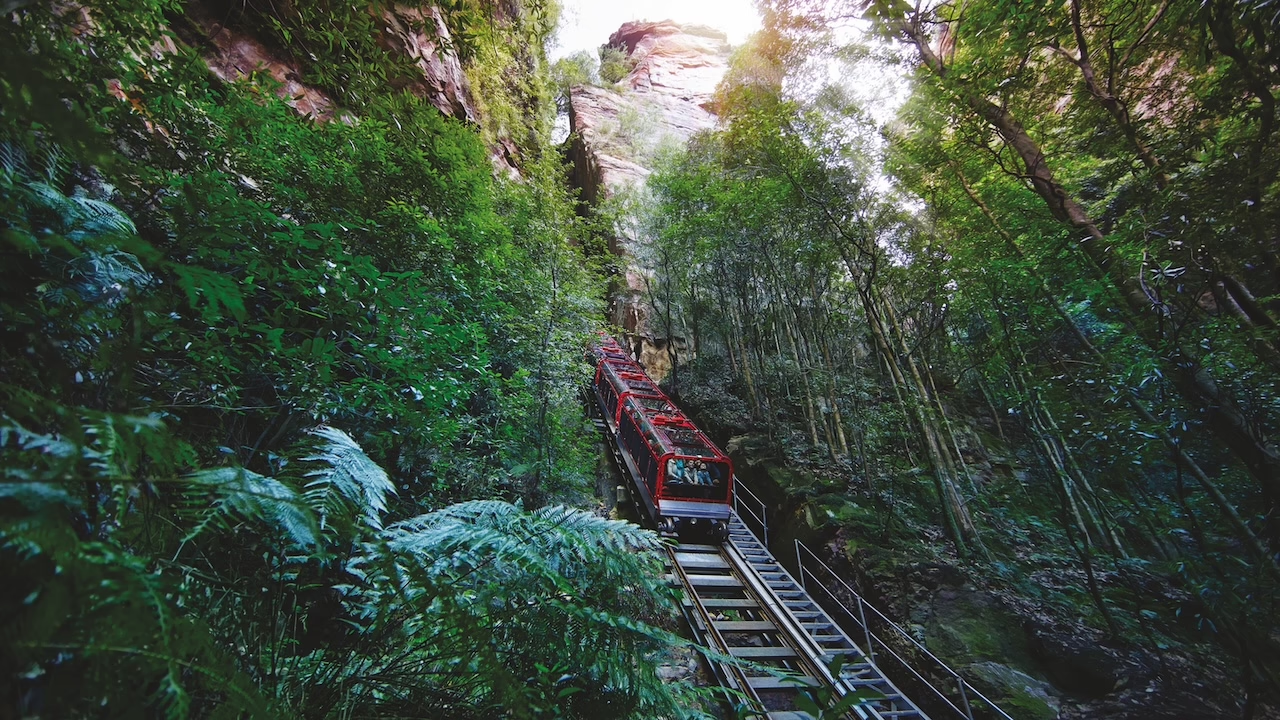
We head outdoors for the remainder of the tour to experience Scenic World’s engineering icons.
We ride the world’s steepest passenger railway, glide above the rainforest canopy in the Southern Hemisphere’s steepest aerial cable car and walk along one of Australia’s longest elevated rainforest boardwalks.
Ordinarily, these thrill-inducing attractions would command my full attention. Instead, I find myself completely absorbed by Uncle David’s commentary.
Deep in the rainforest valley, a lyrebird has nested beside the boardwalk, signalling the start of the breeding season. In the distance, we can hear the echoing calls of male lyrebirds competing for attention.
“They’re exactly where they should be,” Uncle David says with a smile as he listens. “And we should have a little baby or two by September.”
It’s a rare sighting, and a fitting conclusion to a tour that has been as informative as it has been humbling. Through Uncle David’s stories, the landscape has transformed from a beautiful backdrop into a living classroom, revealing layers of knowledge that no textbook could fully capture.
Lost in thought, I almost miss the iconic Three Sisters emerging briefly from the clouds. I quickly raise my camera and snap a photo before the rock formation disappears back into the mist moments later.
For once, I am perfectly on time.
Just like the yellow blossoms swaying beside the path.
In this evocative first-person column, writer Catherine Boucher explores New South Wales’ Blue Mountains alongside a First Nations guide, immersing readers in the stories, landscapes and living traditions of one of Australia’s most culturally significant regions. She travelled as a guest of Scenic World.
For more information on Singapore Airlines’ flights to Western Sydney, visit singaporeair.com.