Ribera del Duero’s most fascinating wine experience lies not among vineyards or château-style wineries, but beneath a Castilian town in a five-mile labyrinth of medieval cellars
A Weekend In… is a series exploring easy weekend escapes from the cities Singapore Airlines flies to. From charming islands and countryside retreats to historic towns and hidden gems, each guide highlights destinations that can be discovered in just a few days.
About 160km north of Madrid, Ribera del Duero is home to nearly 950 underground wine cellars, many connected through old passageways underneath the region’s towns.
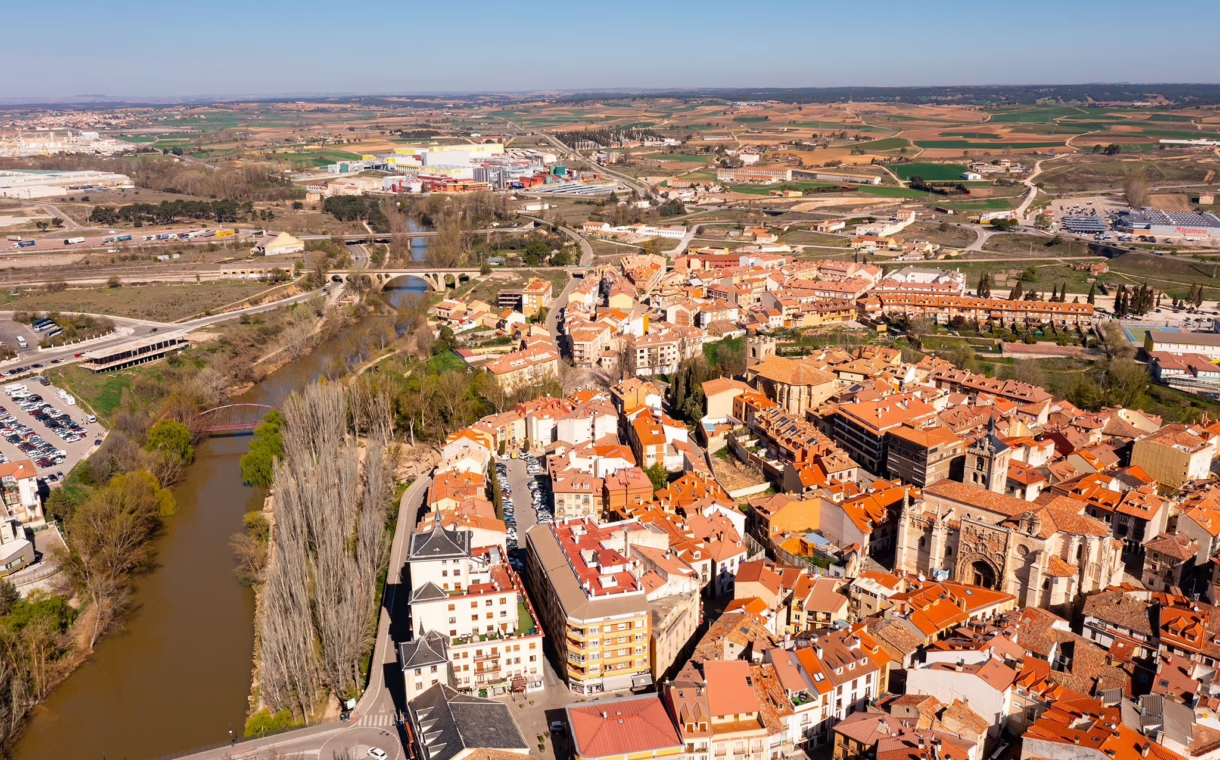
Of these towns, Aranda de Duero, is the largest that most people know, though it resists the usual imagery associated with château-style wineries or vineyard vistas. Aranda’s historic quarter moves at the pace of its lanes and squares. Iglesia de Santa María rises over the centre, and nearby Plaza del Trigo, once a grain market, has given way to cafés and conversation.
For centuries, wine was considered more reliable and more caloric than drinking water. That persisted until phylloxera swept across Europe’s vineyards during the 19th century. Production stopped and many cellars were abandoned.
When vines returned, wine production moved above ground and the underground spaces evolved into storage areas and tasting rooms.

What to see and do
A short walk from Plaza del Trigo, the Museo de Juegos Tradicionales explores the rural pastimes once common across Castilian village squares.
Only when you descend into its basement gallery, where scale models map Aranda’s hidden cellar network, do you realise that the city folds inwards rather than outwards.
The best way to understand that hidden world is with a visit to the historic Don Carlos Winery. Hours after my museum visit, guide Cristina López Nez unlocked one of the surviving cellars for me to explore.
“This place goes back to the late 14th century,” she explained as we descended a staircase that folded in on itself like a corkscrew. “This cellar is nearly 650 years old, carved long before modern wineries existed.”
Despite its name, there is no recorded Don Carlos in the historical archive. The site functioned as a family cellar beneath a medieval home and acquired its current name only after restoration. The 34°C heat above ground instantly collapsed into 11°C underground.
“This is why the heat never bothers us,” Cristina smiled. We were standing in what felt like an underground city. Today, almost every building in Aranda’s historic centre sits atop its own private cellar.
“We didn’t build one big cellar,” Cristina explained. “Each family dug their own. That way, there was never any confusion about ownership.”
The system was sophisticated. Straight staircases encouraged air movement, while turns slowed it down and protected the wine. By the 16th century, Aranda had nearly 9km of tunnels – “the same number of galleries as streets”, according to Cristina.
"Only when you descend into its basement gallery, where scale models map Aranda’s hidden cellar network, do you realise that the city folds inwards rather than outwards"
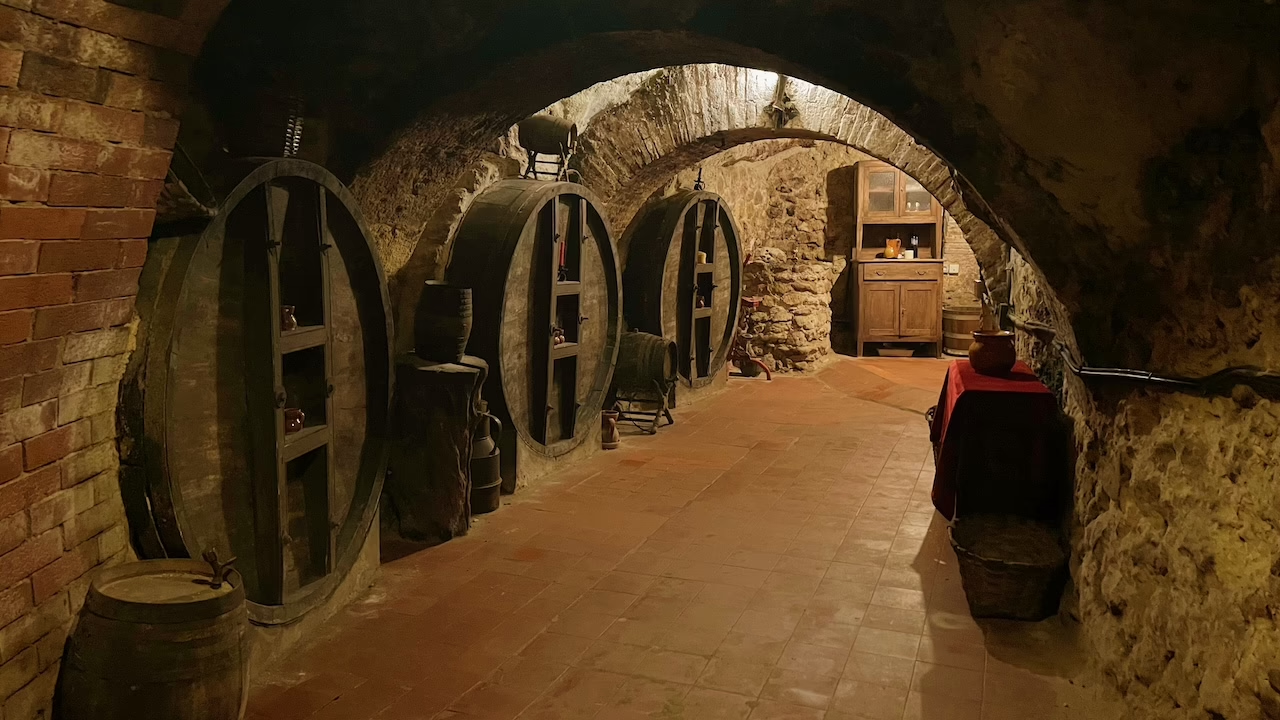
The town’s geology also helped. Clay served as a protective upper seal, preserving humidity and preventing water ingress. Underlying sand improved drainage and helped regulate temperature. Temperatures remain around 12–13°C with humidity levels between 60 and 70 per cent year-round – conditions many modern wineries attempt to recreate mechanically.
Inside the cellar, we stopped beside the remains of a large oak cuba.
“One of these held about 3,200 litres,” Cristina noted. “In this cellar alone, the family produced around 34,000 litres every year.”
Grapes arrived in goatskins carrying up to 40 litres. During fermentation, carbon dioxide could accumulate to dangerous levels. Candles provided a simple solution; if a flame extinguished on the stairs, nobody entered.
The wines themselves were very different from those produced today. Red and white grapes were fermented together and there was little concept of ageing. “There was no ageing,” Cristina said. “No reserves. Wine was made to be drunk.”
Cellar visits typically conclude with a tasting. At Don Carlos, the tasting began with a white wine – uncommon in Ribera del Duero, as most visitors arrive expecting the reds. Later, Tempranillo anchored the red wines from Crianza, from bottling to single vineyard and to vintages.
"Cellar visits typically conclude with a tasting. At Don Carlos, the tasting began with a white wine – uncommon in Ribera del Duero, as most visitors arrive expecting the reds"
Where to eat
Wine is only part of the story in Aranda. Roast suckling lamb is difficult to keep away with, in Aranda, where lechazo (suckling lamb) emerges from wood-fired ovens across the town’s traditional asadores (grills). Morcilla de Aranda (black pudding), seasoned with herbs, is another local fixture, often served with torta de Aranda, the area’s flatbread.
At El Lagar de Isilla, these regional dishes are matched with wines from across Ribera del Duero. Elsewhere, Meson El Pastor, Casa Florencio and Casa Jose Maria remain reliable addresses for Castilian cooking.
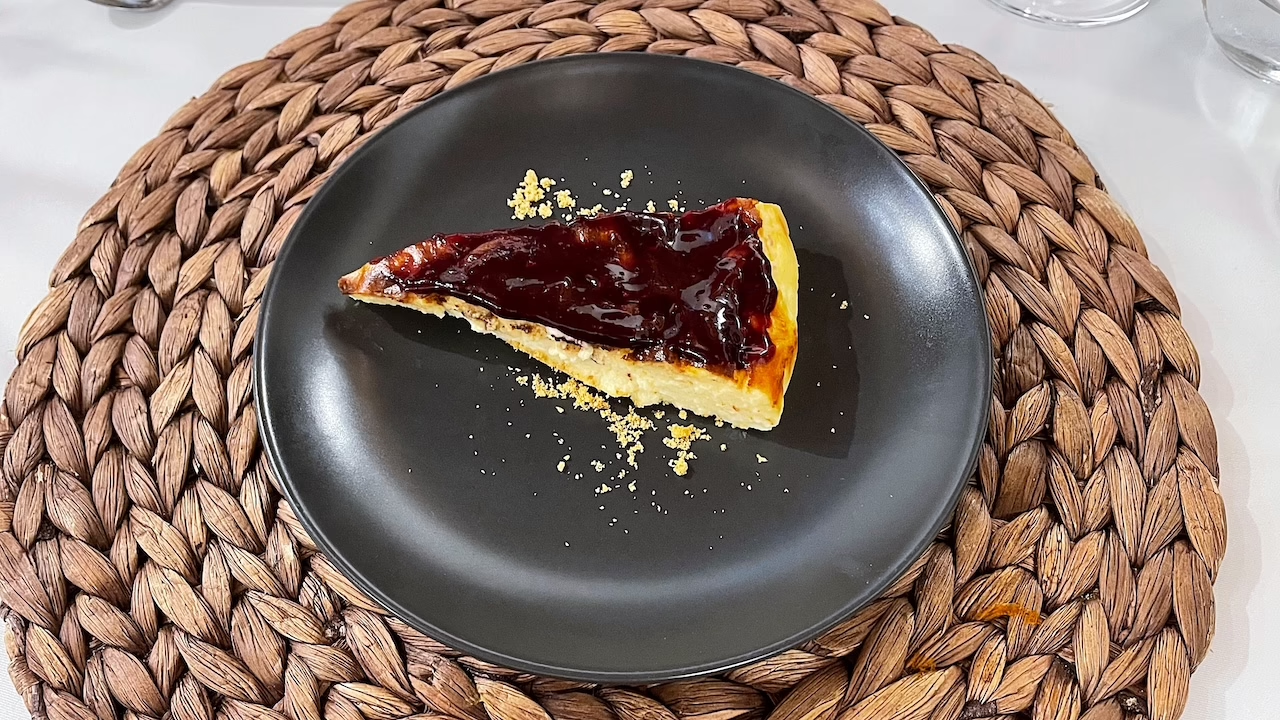
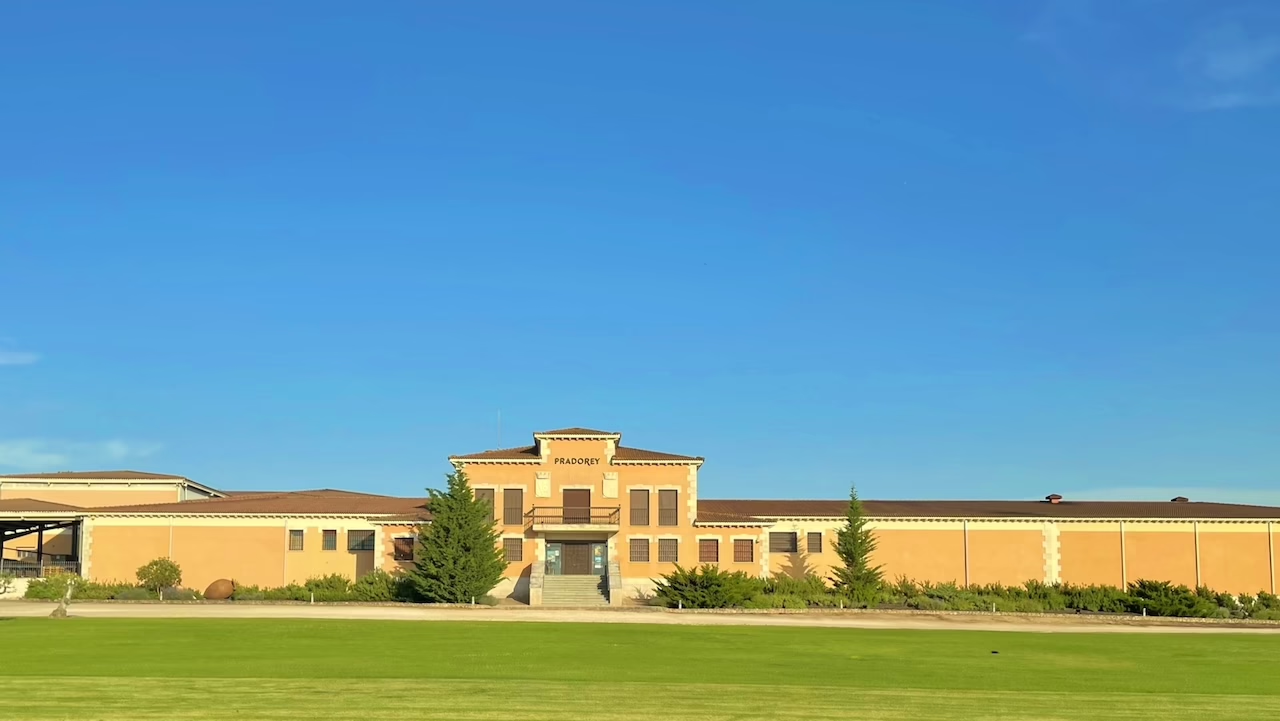
For dinner, La Posada de Pradorey serves escabeche (fried fish with sweet and sour sauce), partridge salad, empanadillas, Iberian pork with apple parmentier (a dish prepared with potatoes) and Basque cheesecake alongside Pradorey Crianza wine.
Where to stay
La Posada de Pradorey lies about 12 minutes outside Aranda among the vineyards of the Pradorey estate. The property includes a restaurant serving regional dishes alongside the estate’s wines. In the town centre, Hotel Torremilanos and Hotel SPA El Lagar de Isilla are both close to Aranda’s main squares, churches and underground cellar network.
How to get there
Aranda de Duero is about 160km north of Madrid. The drive via the A-1 takes around two hours. Madrid-Barajas is the nearest major airport, and regular bus and car rental services connect Madrid with Aranda.
For more information on Singapore Airlines’ flights to Madrid, visit singaporeair.com