Trail running along South Korea’s scenic Chungcheong coastline offers a striking contrast to the frenetic pace of Seoul
Striding through a coastal forest of black pine, I’m enveloped by cool air and the constant twitter of birdsong. Beyond the twisting trunks and low branches, sunlight spills across a vast stretch of sand that reaches all the way to a distant waterline.
The landscape here is deeply tied to local life. Yellow pine pollen gathers on the sand and is said to flavour the region’s soybean paste and salt, while the trees themselves have, over centuries, been used to build everything from royal palaces to towering warships.
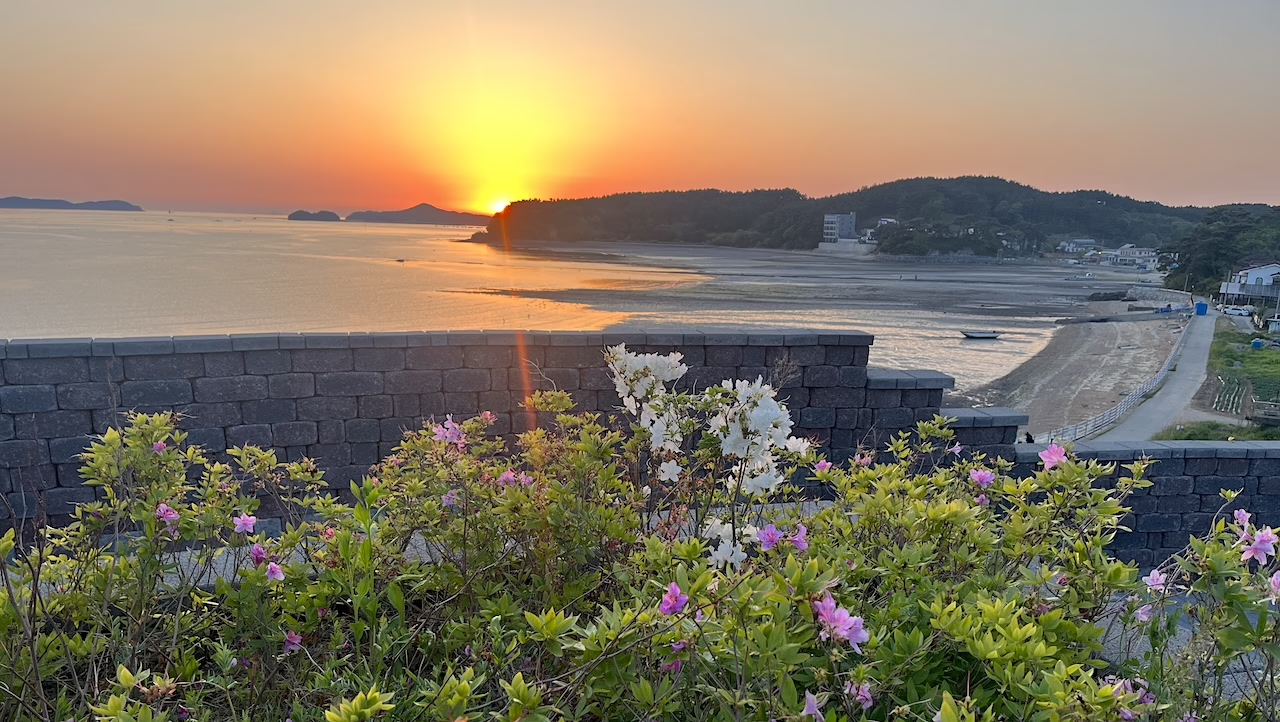
For its uninterrupted run of beaches and dramatic cliffs, I decide to tackle a 12km stretch of Anmyeondo’s Noeul-gil (Sunset Path), accessible by bus from Seoul’s Central City Terminal.
The route also overlaps with Section 1 of the ambitious East-West Trail of Korea, currently being developed by the national forest service and set to open in 2027.
What feels most remarkable is how close all of this is to Seoul – little more than a two-hour drive away. But that is one of the advantages of a compact country where much of the population clusters around the capital.
Head in almost any direction and the landscape quickly opens into countryside, with the central Chungcheong provinces among the country’s most underrated regions.
While North Chungcheong Province is mountainous and rustic, South Chungcheong Province is defined by verdant rice fields, historical cities such as Gongju and Buyeo – once capitals of the Baekje Kingdom (18 BCE–660 CE) – and striking coastal scenery, particularly within Taeanhaean National Park.
"While North Chungcheong Province is mountainous and rustic, South Chungcheong Province is defined by verdant rice fields, historical cities such as Gongju and Buyeo"

To improve access to this pristine coastline, the 97km Taean Haebyeon-gil (Taean Seashore Path) was constructed across Taean-gun County and unveiled in stages between 2011 and 2013.
In the north, the route traces the Taean Peninsula, passing the surfing beach of Mallipo, Cheollipo Arboretum and the country’s largest sand dune system. To the south, it winds along the coast of Anmyeondo, South Korea’s sixth-largest island.
Trail running with a view
My journey into nature begins at the legendary Kkotji Beach, located on the island of Anmyeondo in Taean-gun, South Chungcheong Province, along South Korea’s west coast. Though busloads of sun seekers descend on this wide stretch of beige silica sand during the hotter months, it is quiet today.
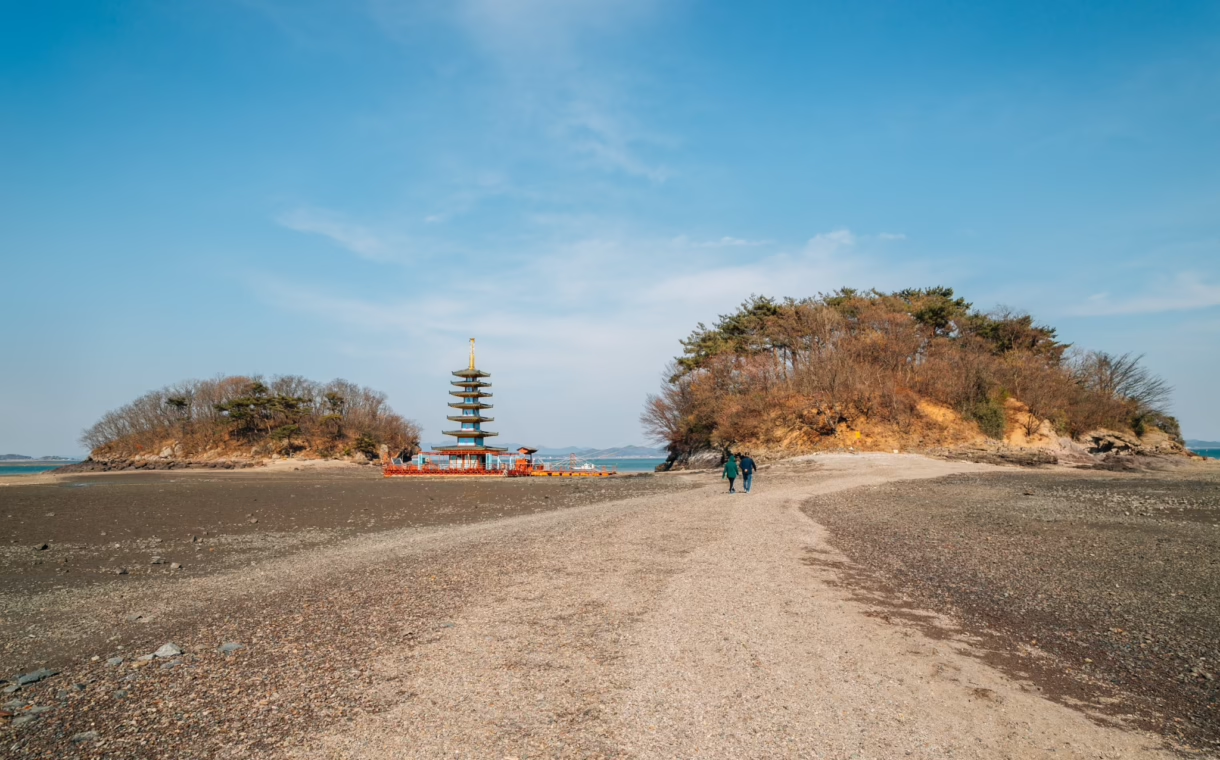
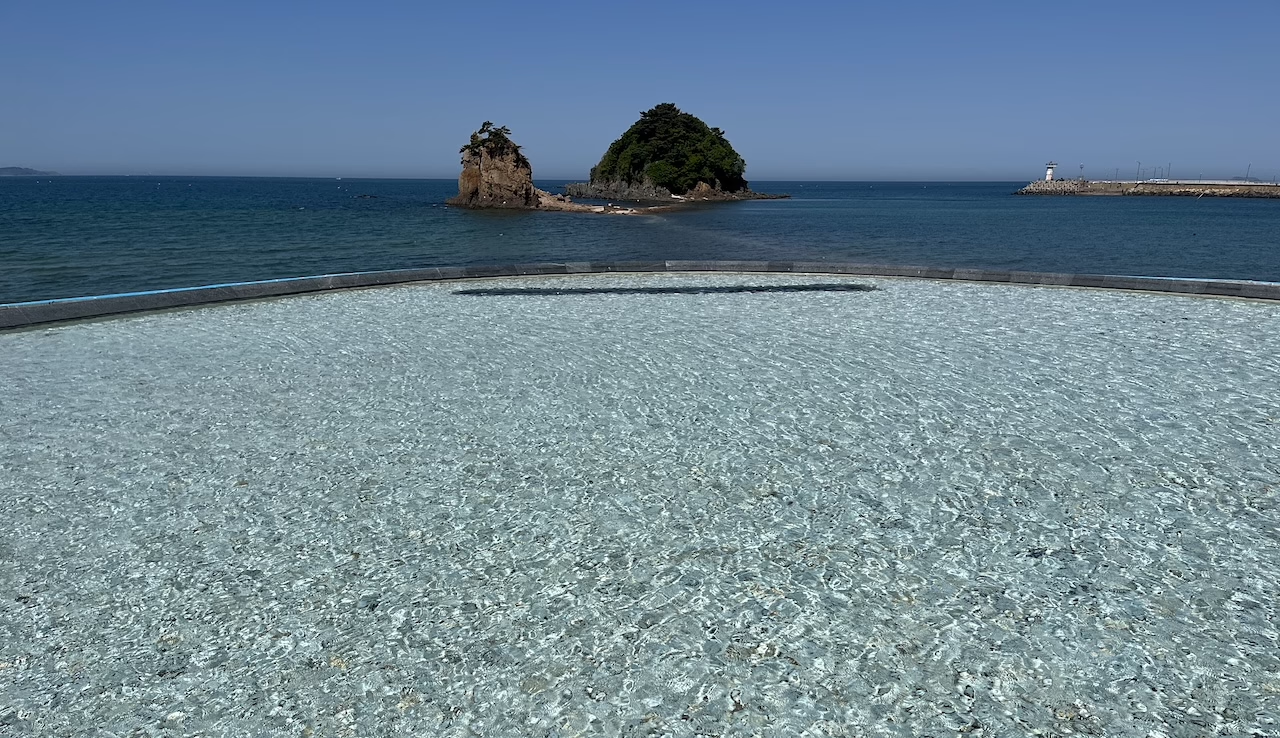
I pause to admire the Grandmother and Grandfather Rocks – jagged outcrops crowned with scraggly pines that are said to represent a tragic couple from the ninth century.
The rocks can be reached on foot when the tide is out, thanks to the west coast’s dramatic tidal range. At low tide, vast mud flats known as gaetbeol emerge from the shoreline. Recognised for their unique ecosystems and importance to migratory birds such as the hooded crane, South Korea’s tidal flats were added to UNESCO’s World Heritage List in 2021.
With my shoes laced and running pack secured, I set off along the Taean Haebyeon-gil trail. Built to give hikers greater access to the region’s pristine coastline, the trail is divided into northern and southern sections, each revealing a different side of Chungcheong’s coastal landscape.
Crossing a coral footbridge towards a sleepy fishing port before climbing stairs into lush green forest, I begin to tune in to the crash of waves below and notice how the trail skirts forested cliffs with steep drops to the rocks beneath. Cheerful groups of hikers pass me along the way.
While trail running has surged in popularity across South Korea – with major races now selling out in minutes – the Taean Haebyeon-gil still feels geared towards slower exploration. Many of the people I pass are picnicking beneath the trees or strolling at an easy pace.
I stop occasionally to take it all in, breathing in the scent of hardy pink rugosa roses growing on the dunes, though I never manage to spot the endangered Korean tiger lizard known to dart through the grassy sand drifts.
Along one narrow stretch of trail, I pause to let an older couple pass. They enthusiastically recommend a viewpoint further ahead.
“Taean is our favourite,” the man tells me. “It has the most beautiful coastline in Korea.” His wife, leaning on a walking stick, nods in agreement with a warm smile.
From steep promontories, the trail descends towards a succession of beaches separated by rocky bluffs. I begin to appreciate the terrain beneath my feet just as much as the scenery itself.
Winding through pine groves like an endlessly unrolling carpet, the trail is softened by layers of pine needles and hard-packed sand, dappled with shifting patches of sunlight and shade.
"From steep promontories, the trail descends towards a succession of beaches separated by rocky bluffs. I begin to appreciate the terrain beneath my feet just as much as the scenery itself"

Coast of the morning calm
After several hours of slow-paced running, I reach bustling Baeksajang Harbour, at the northern tip of Anmyeondo.
Here, a white bridge soars over a wide canal that was carved out in 1638, effectively turning a long peninsula into an island. On a covered, open-air stage, a woman is belting out a sentimental ballad, while a trio of fishery workers bands together to untangle a net at the dock.
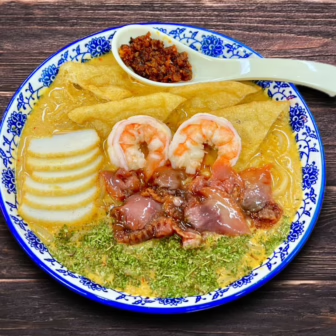
By now, the morning tide has receded, and clam diggers squat far out near the waterline, wielding buckets and trowels. For some mudflat-to-table dining, I step into one of the dockside restaurants and order a bowl of piping hot kalguksu (knife-cut noodle broth) with enormous, succulent clams from nearby.
Energised by the clean flavours and refreshed by the day’s views, I take out my trail map. The sun is still high, and an inviting new section of trail – the Solmorae-gil (Pine Sand Path) – stretches further still along Korea’s dazzling west coast.
How to get to Chungcheongnam-do
From Seoul, South Chungcheong Province is easily accessible by car or express bus in around two to three hours, depending on the destination.
Buses to Taean and Anmyeondo depart regularly from Seoul’s Central City Terminal, making the region a convenient escape into nature from the capital.
For more information on flights to Seoul, visit singaporeair.com