Exchange the cosmopolitan dazzle of the Lion City for sea and sand on these sunny isles just a short skip away
You don’t have to travel far from Singapore to find an island that feels like a proper change of scenery. Within a few hours, you could be cycling past old quarries on Pulau Ubin, sleeping in an overwater villa on Sugi, snorkelling off Rawa or exploring Bintan and Batam beyond their familiar resort and shopping spots.
Some are easy day trips, while others call for a weekend away. Here are the nearby island escapes to keep on your radar, with what to do, where to stay and how to get there from Singapore.
Pulau Ubin
Did you know?
Granite quarried on Pulau Ubin was once used to build some of Singapore’s best-known landmarks and infrastructure.
The island’s name comes from Pulau Batu Jubin, or “Granite Stone Island”, and from the 19th century, its quarries supplied stone for projects including Horsburgh Lighthouse, the Istana and the Causeway. Quarrying became one of Ubin’s major industries before the island’s last quarry closed in 1999.
The island itself once looked rather different too. What is now Pulau Ubin was originally five smaller islands separated by tidal rivers, later joined through bunds built for prawn farming.
From the 1950s to the early 1970s, around 2,000 people lived here, with communities supported by quarrying, farming and other trades. Today, the old quarries have filled with water, while remaining kampong houses, fruit trees and plantations offer a glimpse of the Singapore that existed before much of the mainland was urbanised.
Ubin’s cultural history can still surface in unexpected ways. Its main village has an old wayang stage, traditionally used for Chinese street opera during religious celebrations.
In 2020, we documented Lao Sai Tao Yuan, a Teochew opera troupe founded in Singapore in 1864 and still active today, performing here during the Hungry Ghost Festival.
What can you do there?
Spread across just over 1,000 hectares, Ubin is made for exploring outdoors. Expect kampong houses, forest trails, mangroves and striking water-filled former quarries rather than manicured attractions. Cycling is one of the easiest ways to cover the island, although there’s plenty worth slowing down for on foot too.
A full day gives you enough time to experience its highlights without rushing. While you’re there, you can:
See Ubin through an islander’s eyes: Join the Malay KamPUng Heritage Walk with Nor Syazwan Abdul Majid, a descendant of Ubin’s Orang Pulau community and founder of Wan’s Ubin Journal.
The 2.5-hour, 5km walk takes you through Ketuk Batu, Kampong Sungei Durian and the former Kampong Surau while sharing stories of the Malay community who called Ubin home. Walks currently run at 8.30am on Saturdays, Sundays and most public holidays, with advance booking required.
Tickets cost $100 for adults, $90 for seniors and $80 for ages seven to 17, including return bumboat fares. Check Wan’s Ubin Journal or SG Culture Pass’ website for available dates and bookings.
Cycle around the island: Rent a bicycle near Ubin Village and follow the roads and trails past old kampongs and quarries. More experienced riders can try Ketam Mountain Bike Park, with around 10km of trails ranging from beginner to advanced.
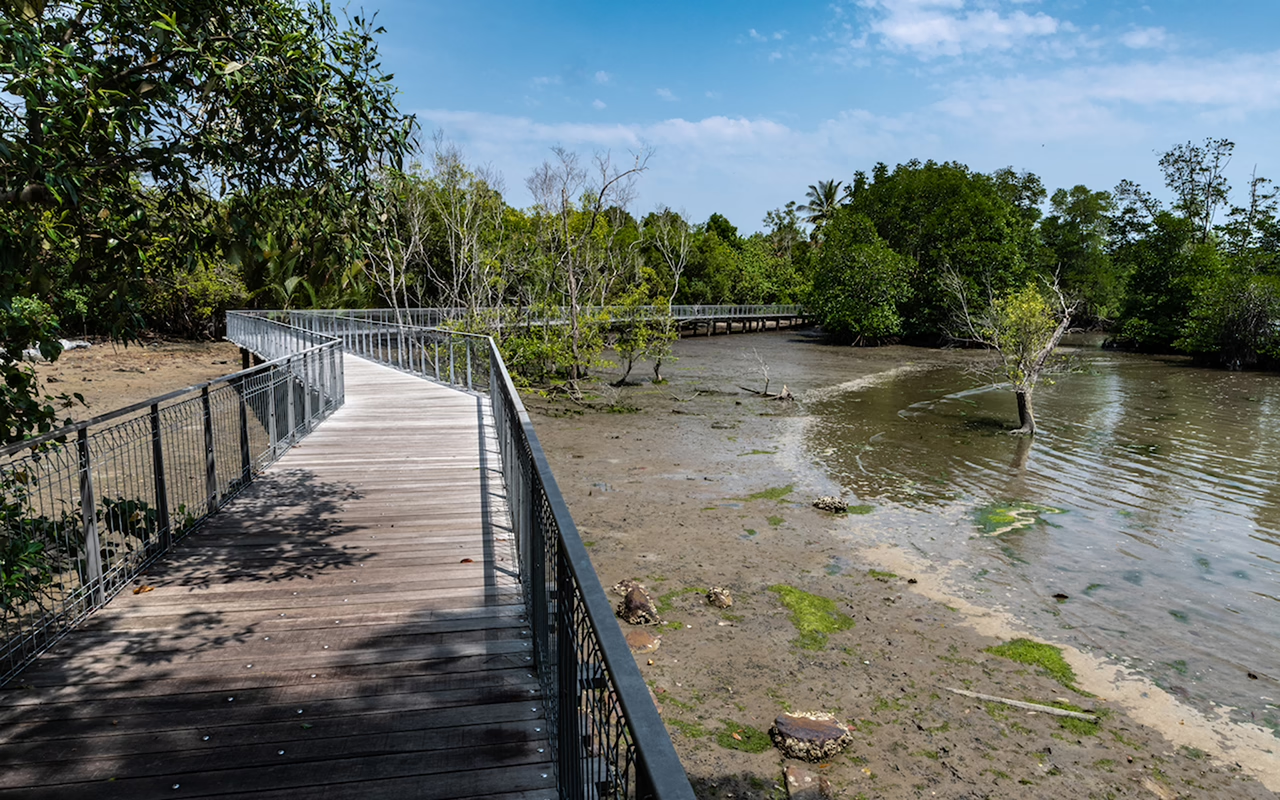
Explore Chek Jawa Wetlands: Six different ecosystems meet within this roughly 100-hectare area, from mangroves and coastal forest to seagrass lagoons and rocky shores.
Follow the boardwalks and climb the 21m Jejawi Tower for views over the greenery. Marine life is easiest to spot when tides fall to 0.5m or below.
Climb Puaka Hill: At 74m, it’s the highest point on Ubin. The short climb rewards you with a bird’s-eye view over the water-filled Ubin Quarry, with Singapore and Malaysia visible in the distance.
Spot Ubin’s wilder residents: Chek Jawa is particularly rich in marine life, while Butterfly Hill attracts around 140 butterfly species. Keep an eye out for birds and other wildlife as you cycle or walk around the island.
Stay overnight: Pitch your own tent at Jelutong, Mamam or Endut Senin campsite. Camping is free, but you’ll need to apply for an NParks camping permit at least two weeks in advance.
Singaporeans and PRs can apply through AXS, while tourists and short-term visitors can use the separate application available through NParks’ Pulau Ubin permits page.
Jelutong is the most convenient if you want to stay close to Ubin Village and its amenities, while Mamam offers a more secluded experience.
There are bicycle rental shops, provision shops and places to eat around Ubin Village, so you won’t need to carry an entire day’s supplies from the mainland.
How to get there
Part of the Ubin experience is getting there. Instead of a large scheduled ferry, you’ll hop aboard a traditional bumboat from Changi Point Ferry Terminal, beside Changi Village.
To reach the terminal by public transport:
- From Tampines East MRT (DT33): Take bus 59 from the Exit B bus stop to Changi Village Bus Interchange.
- From Tampines MRT (EW2/DT32): Take bus 29 from Tampines Bus Interchange.
- From Tanah Merah MRT (EW4): Take bus 2 from Exit B to Changi Village Bus Interchange.
- By taxi or private hire: Head to Changi Point Ferry Terminal, 51 Lorong Bekukong.
The bumboat crossing takes around 10 minutes and costs $4 per person each way, plus $2 if you bring your own bicycle. Boats generally operate on demand from 6am to 7pm daily and leave once 12 passengers have gathered.
There’s no need to reserve a seat for the regular service; if you want to depart before the boat fills up or travel outside normal operating hours, a higher fare can be arranged directly with the operator.
Once you arrive, explore on foot, rent a bicycle or hire one of Ubin’s local vans to get around.
Travel tips
There’s one important update if you’re heading over soon. From 15 September 2026, a section of Chek Jawa’s Coastal Loop boardwalk is temporarily closed for maintenance, with works expected to finish on 30 April 2027.
You can still explore the Mangrove Loop and the open section of the Coastal Loop. The official Chek Jawa Wetlands Tour is also suspended until further notice due to maintenance works at the floating pontoon.
A few other things worth knowing:
- Bring cash: It’s handy for the privately operated bumboats and smaller businesses around the island.
- Wear proper shoes: Covered footwear is particularly useful for trails, cycling and exploring Chek Jawa.
- Check the weather and tides: Some parts of Ubin can flood during particularly high tides, while forested areas should be avoided during and immediately after heavy rain.
- Give wildlife space: Admire animals from a distance and don’t feed them.
- Keep the right ferry terminal in mind: You want Changi Point Ferry Terminal, not the similarly named Changi Ferry Terminal.
Lazarus Island
Did you know?
Lazarus Island has a surprisingly eventful past for somewhere now associated with beach days and picnics.
Its Malay name, Pulau Sekijang Pelepah, translates as “Island of One Barking Deer and Palm Fronds”, and it has historical links to the Orang Laut, or sea people, who once lived around Singapore’s islands and waterways.
During the colonial era, Lazarus and neighbouring St John’s Island were even referred to by versions of the same name before Lazarus received its current name in 1899.
The island was later used for ammunition storage, housed a beri-beri hospital and served as a burial ground connected to the quarantine operations on St John’s.
Even the island you see today has changed shape: Pulau Seringat was once a separate island with its own fishing community before reclamation connected it with Lazarus.
What can you do there?
Lazarus is easy to visit for half a day, but there’s plenty to stretch it into a full-day outing or even an overnight stay. Part of its charm is its laid-back island feel, with sandy shores, tropical greenery and open sea rather than sprawling resorts or busy commercial strips.
While you’re there, you can:
Have a beach day at Eagle’s Bay: Swim, sunbathe or bring a picnic and spend a few hours by the water.
Explore St John’s Island: A causeway connects the two islands, with the walk taking around 15 to 20 minutes.
Get on the water: Try kayaking, stand-up paddleboarding or sea bicycling at Lazarus Sea Sports Centre.
Go island-hopping: Some ferry routes let you combine Lazarus and St John’s with Kusu Island for a fuller day out.
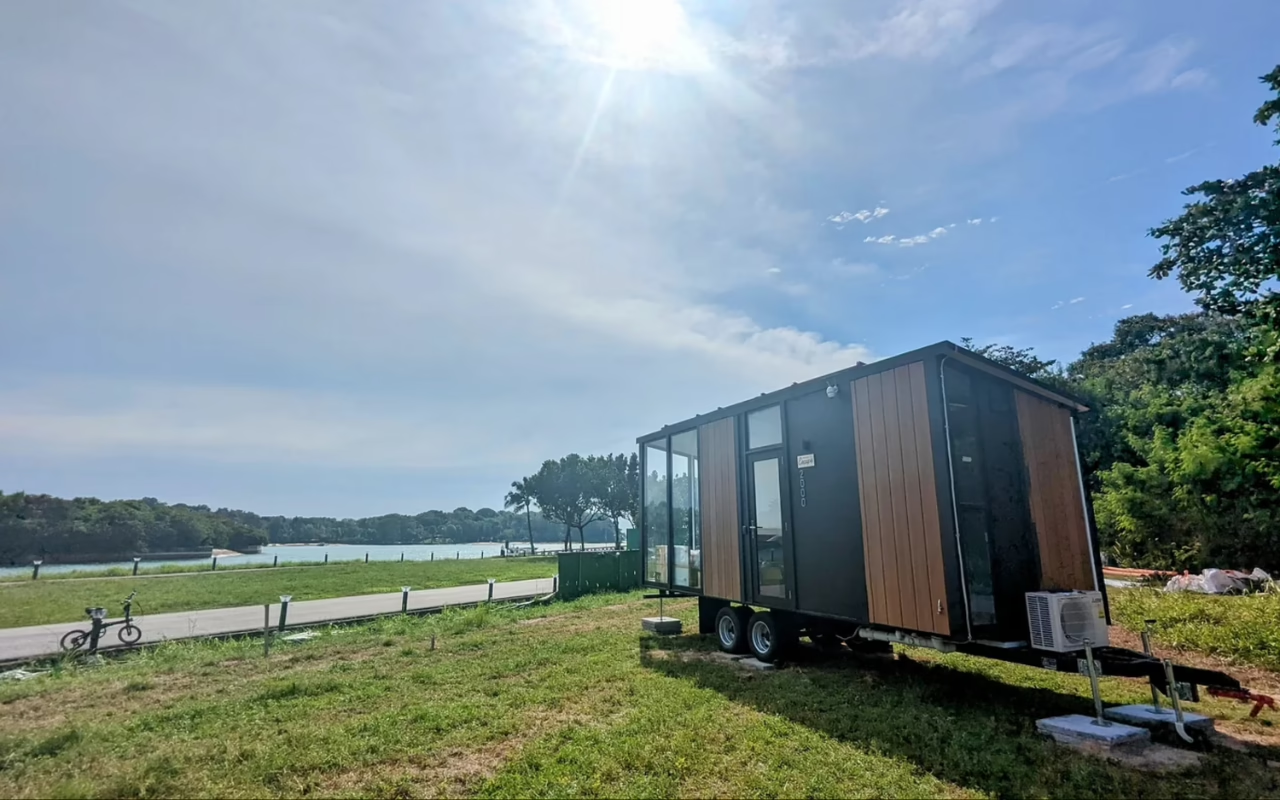
Stay overnight: For more creature comforts, Tiny Away Escape @ Lazarus has five eco-friendly tiny houses with air-conditioning, private bathrooms and kitchenettes.
It is scheduled to close in February 2027, with bookings available until 31 January 2027. Alternatively, Into the Woods offers furnished glamping tents with communal bathrooms and showers.
There’s also a small convenience store, currently open from 10am to 6pm, Friday to Sunday, although it’s still worth bringing enough food and water for your visit.
How to get there
Take the North-South Line to Marina South Pier MRT (NS28), Exit B, then catch a ferry from Marina South Pier.
- Marina South Ferries: Direct services take you to Pulau Seringat Jetty, close to Eagle’s Bay.
- Singapore Island Cruise: Southern Islands ferry tickets currently start from $15, depending on the route and ticket selected.
- From Sentosa: You can also travel from Sentosa Jetty @ Cove to the Lazarus/Seringat area, with the crossing taking around 15 minutes.
- Private charters: Ferries and yachts can also be chartered, which may be useful if you’re travelling in a group or want more flexibility.
Travel tips
Ferries run to fixed timetables, so check the last return service before setting off and leave enough time to get back to the jetty. If you’re staying overnight, check whether your accommodation already includes or arranges ferry transfers before buying separate tickets.
A few other things worth knowing:
- Bring drinking water and food, particularly if you’re visiting on a weekday.
- Pack sunscreen and insect repellent as you’ll be spending much of the day outdoors.
- There are no medical services on the island, so bring any medication or essentials you may need.
- Check the weather forecast beforehand, especially if you plan to swim or try watersports.
- You can leave your passport at home – Lazarus Island is still part of Singapore.
Cempedak Island
Did you know?
The Indonesian Cempedak Island takes its name from the cempedak, a Southeast Asian fruit related to jackfruit. Ironically, when Australian entrepreneur Andrew Dixon and his business partners acquired the island’s titles in 2011, there were no cempedak trees left.
Their valuable timber had likely been cut for boat-building, so young trees were bought from a nearby village and planted around the island, restoring its namesake species.
Dixon and his partners were already behind Nikoi Island, a private-island resort a few kilometres north of Cempedak that opened in 2007. Cempedak became their second island project, this time conceived as an adults-oriented stay for guests aged 15 and above.
Building it came with its quirks: around 50,000 pieces of bamboo were eventually used across the resort, and an entire shipment disappeared for a month before the Indonesian navy helped locate it. Cempedak opened in 2017, with its villas concentrated on the southern half while primary rainforest to the north was left protected.
Today, Cempedak sits within the East Bintan Marine Protected Area, formally gazetted in 2022. Its forests and surrounding waters support wildlife including oriental pied hornbills, otters, turtles and the critically endangered Sunda pangolin.
What can you do there?
Cempedak is best for a private-island stay of a few days, with enough to do between the beach, reef, spa and activities without having to leave the island.
The 17-hectare island, around 9km off Bintan, has just 20 villas, with granite boulders, beaches and rainforest providing much of the scenery.
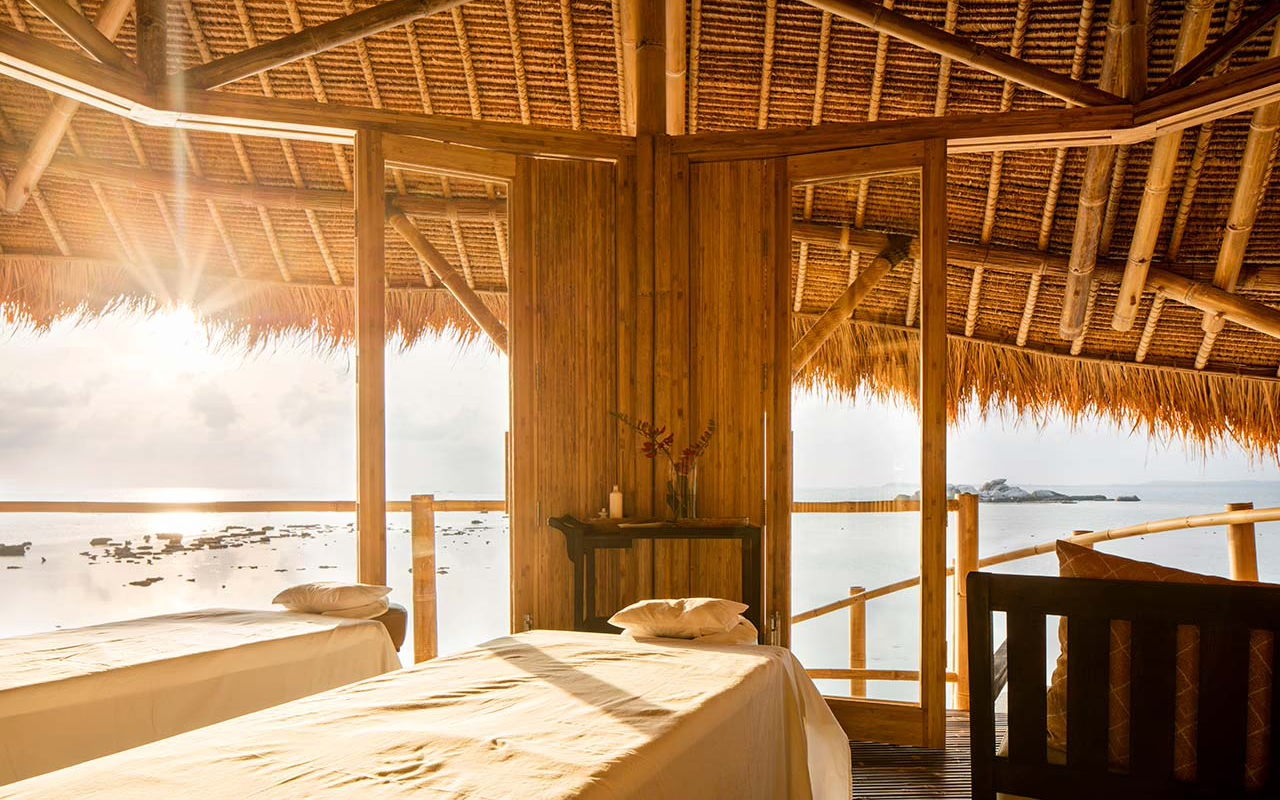
The architecture is a draw in itself. New Zealand-born architect Miles Humphreys worked with Balinese bamboo specialists Chiko Wirahadi and Ketut Indra Saputra on the resort, using bamboo alongside materials such as recycled teak, rubber wood and traditional alang alang grass roofs.
The open-air villas follow the contours of the island and are positioned to catch the sea breeze rather than relying on air-conditioning. Each comes with a private plunge pool and either direct beach access or elevated sea views.
Given the journey from Singapore, it makes most sense as an overnight escape of at least a couple of days. While you’re there, you can:
Explore the reef from Cempedak Island’s boathouse: This is the hub for Cempedak’s watersports, where you can pick up snorkelling gear, kayaks, stand-up paddleboards, sailing dinghies and windsurfing equipment.
Kayaking around the entire island takes roughly 30 minutes, although there’s a self-service beach bar at Deadman’s Beach if you fancy breaking up the journey. Certified divers can also enquire about diving, subject to sea conditions.
Join the morning nature walk: Meet at the island’s boathouse at 9am daily for a complimentary guided walk introducing the island’s wildlife, habitats and conservation work.
Have lunch on your own little island: Cempedak is surrounded by several uninhabited islands, and the resort can arrange an excursion with a picnic hamper to take along.
Request the Island Picnic directly with the Cempedak team during your stay or enquire ahead of arrival; the exact island and arrangements depend on the excursion.
Book a treatment at The Rock Spa: Built among Cempedak’s granite formations overlooking the sea and mangroves, the spa offers massages, facials and other treatments. It currently opens daily from 8am to 8pm, with the last treatment starting at 6pm; booking before arrival is recommended.
Try something unexpected: Play on one of Cempedak’s two natural-grass tennis courts, practise archery or use the island’s telescope for moon-gazing on clear nights. Cooking classes and private yoga sessions can also be arranged through the resort for an additional charge.
Have a drink at Dodo Bar: Cempedak’s island bar is also the setting for its Sunset Takeovers, which bring bartenders from around the region to the island.
Time your stay around a special event: Cempedak’s calendar goes well beyond the usual resort programming.
The Murder Mystery Weekend from 2 to 4 October features professional actors from Evolve School of Performing Arts, while wellness coach Mae Kwan leads the Island Wellness Retreat from 13 to 16 November.
A Scientific Diving Expedition from 19 to 22 November takes guests into the East Bintan Marine Protected Area to assist with research into recently discovered fish species. These are date-specific, so check Cempedak’s events calendar and book ahead.
There are no outside shops or restaurants on the island, but the resort has its own restaurant, Dodo Bar, Rock Spa, boathouse and communal pool.
Three meals a day are covered by the compulsory $121-per-adult daily board charge, along with drinking water, tea, brewed coffee and most island activities. Other drinks and selected experiences are charged separately.
How to get there
Cempedak is in Indonesia, so you’ll need to travel via Bintan. From Singapore, the complete journey takes roughly 2.5 hours from Tanah Merah Ferry Terminal to Cempedak.
For public transport, take the East-West Line to Tanah Merah MRT (EW4) and catch bus 35 from the stop outside Exit 2 to Tanah Merah Ferry Terminal. A taxi or private-hire car is the simpler option if you have luggage.
From there, the journey happens in three stages:
- Singapore to Bintan: Take a Bintan Resort Ferries high-speed catamaran from Tanah Merah Ferry Terminal to Bandar Bentan Telani. The crossing takes around an hour. Adult Economy return fares currently start at $100 on regular dates, rising to $110 on designated peak dates. Ferry tickets are booked separately from your Cempedak stay.
- Across Bintan: Cempedak staff meet guests at the terminal for the roughly one-hour private car transfer to Kawal.
- Kawal to Cempedak: The final leg is a roughly 30-minute private speedboat ride to the island.
The combined Bintan car and Cempedak speedboat transfer costs $121 per adult return, including access to the VIP lounge at Bandar Bentan Telani.
Cempedak only meets designated Bintan ferry services, so check its current transfer schedule before booking your Singapore to Bintan ferry.
Travel tips
This is an international resort stay rather than a spontaneous island hop, so there are a few things to sort out before leaving Singapore:
- Bring your passport: Bintan is in Indonesia, and your passport should have at least six months’ validity from your travel date. Visa requirements depend on nationality; Singapore citizens and most ASEAN nationals are currently eligible for visa-free entry.
- Complete your arrival declaration: International visitors must complete the Indonesia Digital Arrival Card within 72 hours before arrival.
- Book your Singapore to Bintan ferry separately: It isn’t included in the resort price. Bintan Resort Ferries recommends arriving at least 1.5 hours before departure, with check-in closing 40 minutes beforehand.
- Factor in the compulsory extras: The room rate doesn’t include the $121 daily board charge or $121 return Bintan to Cempedak transfer per adult, and your Singapore-to-Bintan ferry is a separate expense too.
- Don’t expect air-conditioning: The open-sided bamboo villas rely on high ceilings, sea breezes and ceiling fans for ventilation, while beds are protected by mosquito nets.
- Pick your season accordingly: Cempedak recommends March to October for snorkelling and sunbathing, while November to February tends to bring better sailing conditions.
Pulau Tengah
Did you know?
Long before travellers came to Pulau Tengah for its beaches, the Malaysian island was a temporary home for thousands of Vietnamese refugees who had fled their country by boat.
From the mid-1970s to the early 1980s, it served as a UNHCR refugee transit camp, providing shelter while residents waited to be resettled in other countries.
Tengah Island Conservation estimates that around 120,000 people passed through Pulau Tengah, and some former residents and their families still return to the island today. The camp closed in 1981.
What followed was quite a change of pace. Pulau Tengah became home to a small backpacker resort called Pirate Bay and was later used as a filming location for European survival reality series Expedition Robinson and Koh-Lanta. Then, in 2012, Batu Batu opened as the island’s only resort.
Conservation has since become another important part of Pulau Tengah’s story. After turtle nests were found being poached, Batu Batu worked with Malaysia’s Marine Park authorities and Department of Fisheries to establish a turtle hatchery in 2014.
The project expanded over the following years and became the non-profit Tengah Island Conservation in 2019, which now researches and protects sea turtles, coral reefs, seagrass and other marine life around the Johor islands.
What can you do there?
Pulau Tengah is best for a two-night-or-longer beach and nature stay, particularly if you want to get involved in marine conservation while you’re there.
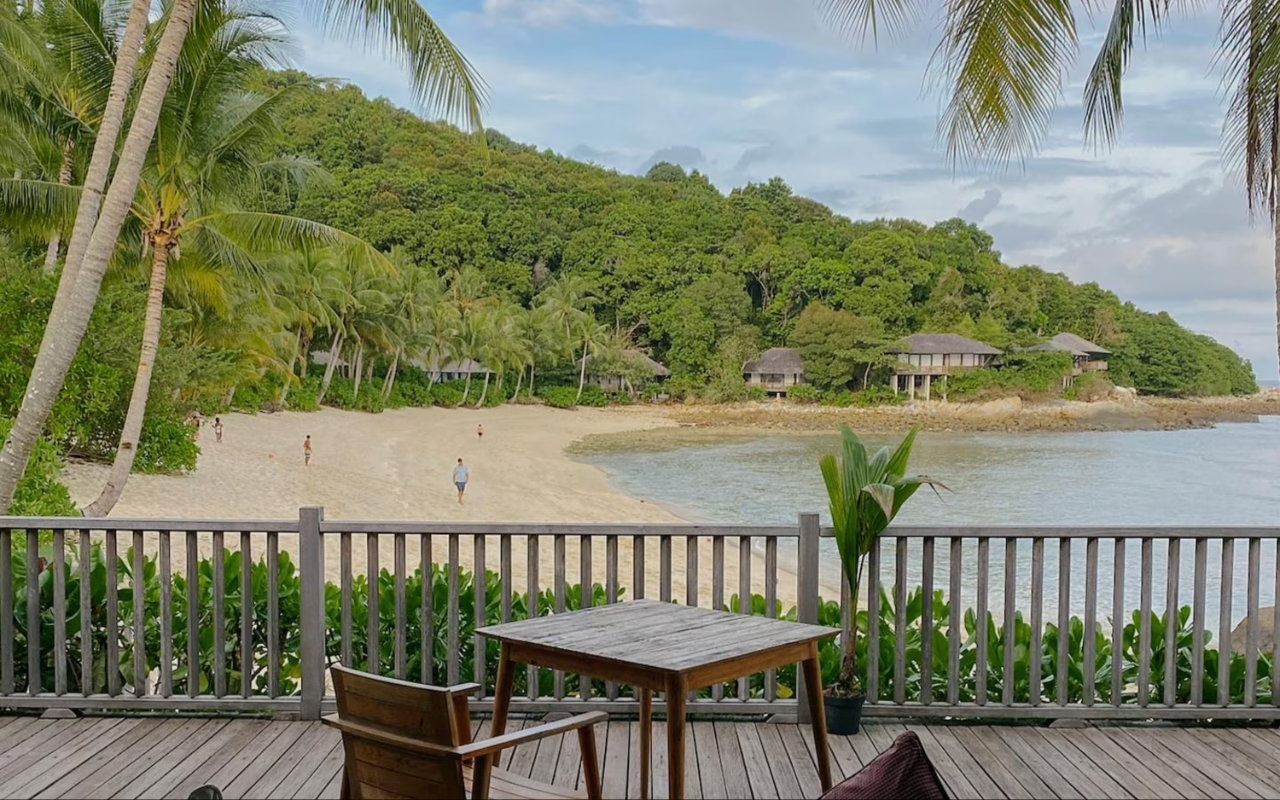
Part of Johor’s protected Sultan Iskandar Marine Park, the island measures just 3km around but has eight sandy beaches, a forested interior and coral reefs and seagrass meadows just offshore.
The island’s only accommodation is Batu Batu, an eco-resort with 22 villas ranging from Jungle and Ocean Villas to Beach Villas with direct access to Sunrise Beach. Its current booking system requires a minimum two-night stay.
While you’re there, you can:
Meet the conservation team: Head to the Tunku Abdul Jalil Conservation Centre and turtle hatchery, where scientists and interns from Tengah Island Conservation share their work protecting Pulau Tengah’s marine ecosystems.
Guests can join a conservation tour, attend science talks and sign up for beach clean-ups during their stay.
Adopt a turtle nest: TIC’s Adopt a Turtle Nest programme costs RM300 (approximately $94), with proceeds supporting its sea turtle conservation work. You’ll receive updates about your adopted nest and its hatchlings, and adoptions can also be arranged online.
Snorkel or dive the reefs: Batu Batu Dive, the island’s PADI 5-Star Dive Resort, runs snorkelling excursions, Discover Scuba sessions, fun dives and PADI courses.
There are 15 fringing reef dive sites, ranging from around 2m to 20m deep, with marine life including turtles, stingrays, nudibranchs and blacktip reef sharks. Dive activities are best booked ahead.
Earn your PADI certification: Complete the theory online before arriving and Batu Batu can take you through the practical portion of the PADI Open Water certification over three half-days. Training can include the island’s Junior Reef and nearby Pulau Hujong.
Explore the surrounding reefs by boat: Guided snorkelling trips venture beyond Pulau Tengah to sites including Hujong Island, Northern Reef and Besar Island, giving you another way to explore the wider marine park.
Explore above water: Borrow a kayak or stand-up paddleboard, follow trails through the forested interior or make your way between Pulau Tengah’s different beaches.
Time your stay around a special programme: Batu Batu runs a changing calendar of bookable retreats and camps.
Upcoming dates after 16 September 2026 include The Balance Retreat from 5 to 7 October, Wildlings Adventure Camps from 14 to 18 and 21 to 25 October, and the Release & Renew YOQI Qigong retreat from 3 to 6 November.
Batu Batu has a main restaurant, swimming pool, spa, The Bar, Tiki Bar and Sunset Bar, so everything you need is on the island.
Meals are served through a compulsory three-meal plan, currently RM350+ (approximately $109) per adult per day, covering breakfast, a two-course lunch and three-course dinner; drinks are separate.
How to get there
Pulau Tengah sits around 16km off Mersing in Johor, so getting there from Singapore involves travelling overland into Malaysia before taking Batu Batu’s private speedboat to the island.
For travellers without a car, a direct coach from Singapore to Mersing Jetty is the simplest public-transport option. KKKL Travel & Tours currently operates a 6am service from Kovan, taking around three hours to Mersing Jetty and costing $42 one way.
Book ahead and make sure your coach gives you enough time to meet Batu Batu’s boat.
From Mersing:
- Batu Batu scheduled speedboat: The resort generally operates one to two return services a day, with timings changing according to tides and occupancy. The crossing takes approximately 20–30 minutes in good weather. The currently published return fare is RM190+ (approximately $59) per adult and RM130+ (approximately $41) per child. Once your stay is booked, Batu Batu sends the available boat times for your dates; reply with your preferred service to reserve a seat.
- Private speedboat: If the scheduled transfer doesn’t work, Batu Batu can arrange private transfers between 9am and 6pm, subject to tides and boat availability. A private one-way charter during normal operating hours starts from RM700+ (approximately $218) for two people, plus RM50+ (approximately $16) for each additional passenger.
If you’re driving, Mersing is roughly 2.5 to 3 hours from Singapore, depending on traffic and immigration. Singapore-registered cars entering Malaysia need a valid Vehicle Entry Permit (VEP).
Travel tips
- Bring your passport: You’ll be crossing into Malaysia. Non-Singaporean and non-Malaysian passport holders must also complete the Malaysia Digital Arrival Card (MDAC) before entering the country.
- Coordinate your journey to Mersing with the boat: Batu Batu’s speedboats don’t follow a fixed public timetable; departures depend on tides and occupancy, and seats are limited. Confirm your island transfer before finalising transport to Mersing.
- Factor in the extras: Villa rates don’t include the compulsory meal plan, boat transfer or Marine Park conservation fee.
- Book popular activities ahead: Diving and spa appointments can fill up, particularly during peak periods.
- Respect the marine park rules: Pulau Tengah sits within a protected no-take zone, so fishing, anchoring and collecting shells are prohibited.
- Expect limited Wi-Fi: Complimentary Wi-Fi is available in Batu Batu’s public areas rather than the villas. Mobile reception is available from Malaysian networks, although coverage can vary around the island.
- Keep the weather in mind: Boat transfers and water activities are subject to sea and weather conditions, so check arrangements with Batu Batu before travelling.
Rawa Island
Did you know?
Rawa Island takes its name from the white doves associated with the island – “rawa” is the local term for the birds, according to Tourism Johor.
The tiny coral island also has a royal connection: it is owned by the family of the Sultan of Johor, whose family established the two resorts that remain its only accommodation today.
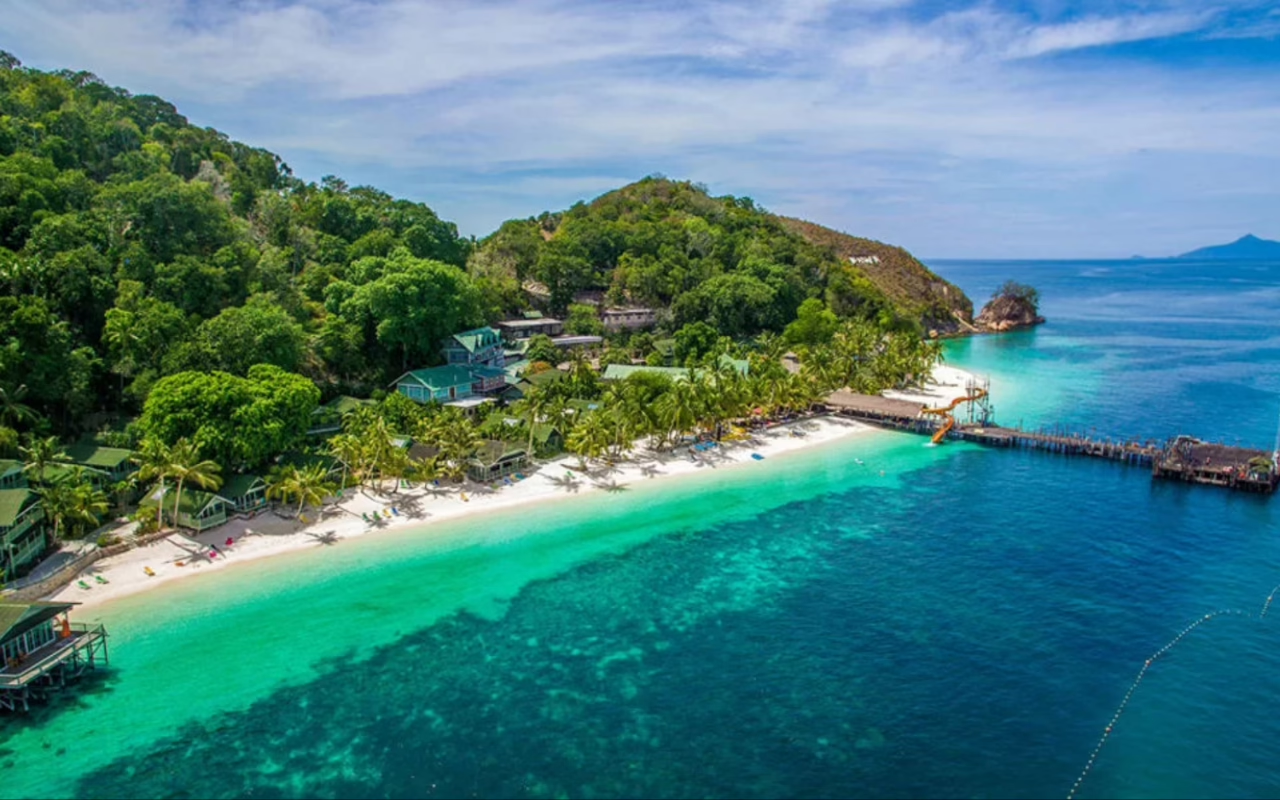
Its geography is unusually neat too. One side is edged by white sand and shallow coral reef, while the other rises into a rocky vertical cliff. Rawa and its surrounding waters also form part of the Sultan Iskandar Marine Park, which protects a wider archipelago of islands and reefs off the coast of Mersing.
What can you do there?
Rawa is best for a two- or three-night beach stay, especially if your priority is getting into the water without needing a packed itinerary. There are no roads and only a handful of walkways; much of the action centres on the sandy western side, where the reef begins just metres from shore.
There are only two places to stay. Rawa Island Resort is the larger, more full-service option, with beachfront and hillside accommodation, a spa, PADI dive centre, restaurant and bars. Alang’s Rawa is smaller and family-run, with just 12 rooms ranging from beachfront A-frames to hillside accommodation.
Its standard two-night packages bundle accommodation, meals and return speedboat transfers from Mersing.
While you’re there, you can:
Snorkel straight from the beach: Rawa’s shallow house reef means you don’t necessarily need a boat trip to find coral and marine life. Rawa Island Resort describes its house reef as having extensive coral cover, with snorkelling and diving available directly off the island.
Learn to dive: Rawa Island Resort Dive Centre is a PADI Five Star Instructor Development Centre offering courses from introductory diving through to professional-level training, alongside recreational dives around the surrounding reefs.
Paddle around the island: Both resorts offer ways to get onto the water. At Alang’s Rawa, kayaks, stand-up paddleboards and other watersports equipment are included for guests, subject to a refundable RM100 (approximately $31) equipment deposit. Rawa Island Resort offers kayaking and paddleboarding for an additional charge.
Take the Hilltop Walk: Follow Rawa Island Resort’s Hilltop Walk through the forested hillside for elevated views across the island, South China Sea and neighbouring islands – a refreshing change of scenery after exploring Rawa at beach level.
Go island-hopping: Rawa Island Resort can arrange trips around the surrounding archipelago. Tourism Johor specifically highlights nearby Pulau Harimau and Pulau Mensirip, both uninhabited islands known for snorkelling and diving.
Eat, drink and wind down by the beach: At Alang’s Rawa, head to its beachside restaurant and bar for laid-back meals during the week; on Saturdays, the atmosphere picks up with its regular beach barbecue and cocktails.
Over at Rawa Island Resort, there’s the Restaurant & Beach Bar, while Rawa Spa offers massages, facials and other treatments overlooking the South China Sea.
How to get there
Rawa sits off Mersing on Johor’s east coast, so from Singapore you’ll first travel overland into Malaysia and then take a resort-operated speedboat.
There is no public ferry to Rawa; Johor National Parks advises travellers to arrange accommodation and their boat transfer directly with their resort before travelling.
For travellers without a car, KKKL Travel & Tours currently operates a direct coach from Kovan Hub Bus Terminal to Mersing Jetty. It leaves at 6am, costs $42 one way and takes around three hours, depending on immigration and traffic.
From Mersing, your boat journey depends on where you’re staying:
- Rawa Island Resort: The resort’s speedboat takes around 20 minutes. Boat timings depend on tides and weather and are confirmed by the booking office shortly before your stay. Its 2026 full-board packages already include the return Mersing to Rawa transfer; where charged separately, the published return transfer is RM140 (approximately $44) per person.
- Alang’s Rawa: Its private speedboat takes around 25 minutes, with return transfers included in the standard two-night package. Boats usually leave Mersing between 12pm and 1pm and return from Rawa between 2pm and 3pm, although timings can change with conditions.
If you’re driving, allow around three to four hours from Singapore to Mersing, depending heavily on border traffic. Both resorts provide directions for reaching their respective Mersing offices before boarding.
Travel tips
- Bring your passport: You’ll be crossing into Malaysia. Check the current Malaysia Digital Arrival Card (MDAC) requirements for your nationality before travelling.
- Stay overnight: Access is organised through the island’s two resorts rather than a regular public ferry, so Rawa works best as an overnight trip. Both resorts currently structure their standard stays around two-night packages.
- Confirm your boat before setting off: Departures from Mersing are affected by tides, sea conditions and weather. Rawa Island Resort specifically requires guests to use its own arranged transfer rather than buying a third-party boat ticket.
- Remember the Marine Park fee: At Alang’s Rawa, the currently published fee is RM30 (approximately $9) for non-Malaysians and RM5 (approximately $2) for Malaysians, payable in cash at the jetty.
- Leave the reef where you find it: Fishing, collecting marine life, touching coral and anchoring onto coral or rocks are prohibited within the protected waters.
- Don’t count on Wi-Fi in your room: Both resorts provide Wi-Fi in communal areas rather than guest rooms.
- Plan your meals around your resort: There are no independent restaurants or village on Rawa, so dining is handled by the two resorts. Rawa Island Resort offers halal dining options. Meals are also included in stays at Alang’s Rawa, although travellers who require halal food should confirm their dietary requirements directly with the resort before booking.
Bintan
Did you know?
Bintan’s proximity to Singapore belies how much history separates the two today. The Indonesian island was once part of a Malay realm whose influence extended across Johor, Malacca, Singapore and the Riau-Lingga archipelago.
That political landscape changed dramatically with the Anglo-Dutch Treaty of 1824, which divided territories between British and Dutch spheres of influence; Bintan eventually came under Dutch control while Singapore developed under the British.
Traces of that history survive around Bintan today. Just off Tanjung Pinang, Pulau Penyengat became an important royal and cultural centre of the Riau-Lingga Sultanate and was home to Raja Ali Haji, the 19th-century scholar whose work helped shape the modern Malay language.
Elsewhere, Bintan’s east coast remains closely associated with the Orang Laut, whose communities have lived around the waters of the Riau Islands for generations.
What can you do there?
Spanning around 1,173 sq km – considerably larger than Singapore – Bintan rewards travellers who venture beyond its northern resort belt.
Around Lagoi you’ll find polished resorts, beaches, golf courses and the enormous Crystal Lagoon; head farther afield and the landscape shifts to mangrove rivers, fishing villages, old sand-mining sites, forested hills and the long coastline around Trikora.
A weekend gives you enough time to combine the beach with one or two excursions, although three nights is better if you want to see both the resort area and the wider island.
Accommodation ranges from beachfront resorts such as Banyan Tree Bintan and The Sanchaya to safari-style tents at Natra Bintan and desert-inspired glamping at The ANMON Resort Bintan.
While you’re there, you can:
Meet Bintan’s Orang Laut community: Bintan Resorts‘ six-hour Cultural Voyage: Orang Laut heads along the east coast to Panglong Village in Berakit, home to Bintan’s largest Orang Laut community.
The trip also visits preserved mangrove-charcoal kilns, Grotto Santa Maria, Kawal and a local restaurant, with hotel transfers included. It currently costs IDR750,000 (approximately $54) per adult.
Cruise the Sebung River: The Mangrove Discovery Tour takes you into the mangrove forest for around an hour, with chances to spot silver leaf monkeys, macaques, kingfishers, monitor lizards and mangrove snakes.
Day tours currently cost IDR380,000 (approximately $27) per adult, while an evening departure shifts the focus to the river’s fireflies.
See Bintan’s surreal Sand Dunes and Blue Lakes: Bintan’s Sand Dunes and Blue Lakes occupy a former sand-mining site where pale dunes now surround striking blue pools. Bintan Resorts currently offers a combined visit with a seafood lunch for IDR499,000 (approximately $36) per adult.
Spend a day at Treasure Bay: The 6.3-hectare Crystal Lagoon is Southeast Asia’s largest recreational man-made seawater lagoon, with swimming, kayaking, sailing and other watersports. Natra Bintan sits directly alongside it, making this one of the easiest areas to turn into an overnight stay.
Head into Bintan’s royal past: The full-day Islands of the King tour travels to Tanjung Pinang before crossing by traditional pompong, a small wooden motorboat, to Pulau Penyengat.
Stops include the yellow Sultan of Riau Grand Mosque, royal tombs and Fort Bukit Kursi, followed by lunch and shopping in Tanjungpinang. The tour currently costs IDR850,000 (approximately $61) per adult.
Trek Gunung Bintan: If the beaches have had enough of your attention, Bintan Resorts runs a guided Gunung Bintan Adventure Trek into the island’s forested interior, currently priced at IDR550,000 (approximately $40).
Explore Lagoi Bay on four wheels: A newer option is Bintan Resorts’ UTV Adventure Ride, which runs through forest, shallow river and beach terrain from the Sea Sport Center at Lagoi Bay. Prices currently start at IDR1,000,000 (approximately $72) for 30 minutes.
How to get there
From Singapore, the easiest route is Bintan Resort Ferries (BRF) from Tanah Merah Ferry Terminal to Bandar Bentan Telani Ferry Terminal in northern Bintan. From Tanah Merah MRT station (EW4), take bus 35 from the stop outside Exit 2 to the ferry terminal.
The high-speed ferry crossing takes approximately 60 minutes, with several departures in each direction daily. As of 17 September 2026:
- Economy Class: $62 one way for adults, or $100 return on regular dates. Peak return fares are S$110.
- Emerald Class: $89 one way for adults, or $154 return on regular dates. Emerald Class includes priority treatment and lounge privileges.
- September promotion: BRF is currently offering selected regular Economy return journeys from S$90 per person for bookings made by 30 September and travel through 31 October 2026, subject to eligible sailings and blackout dates.
BRF currently operates departures from Singapore at 8.10am, 11.10am, 2pm and 5pm from Monday to Thursday, with additional services on some Fridays, weekends and high-demand dates.
Bintan is one hour behind Singapore, so take the time difference into account when reading the return schedule.
Once you arrive at Bandar Bentan Telani, many hotels within the Bintan Resorts area provide transfers. Grab is also available in Bintan, while Bintan Resorts operates the BinBin shuttle, including an unlimited day pass currently priced at IDR25,000 (approximately $2).
Travel tips
- Bring your passport: It should have at least six months’ validity from your travel date. Visa requirements depend on nationality.
- Complete Indonesia’s arrival formalities: International visitors to Bintan are required to complete the All Indonesia electronic arrival declaration before travelling.
- Arrive early at Tanah Merah: BRF recommends checking in 1.5 hours before departure; check-in closes 40 minutes before sailing.
- Remember the time difference: Bintan is one hour behind Singapore, which is particularly important when planning your return ferry.
- Don’t underestimate the island’s size: Lagoi, Trikora, Tanjung Pinang and Bintan’s east coast are spread across a large island. Plan activities by area rather than trying to cover everything in one day.
- Book excursions rather than relying on walk-ins: Experiences such as the Mangrove Discovery Tour, Cultural Voyage: Orang Laut, Gunung Bintan trek and Islands of the King can be reserved through Bintan Resorts and include or offer transfers from accommodation within the resort area.
- Bring Indonesian rupiah: Resorts commonly accept cards, but cash remains useful once you travel beyond the main resort area and into villages and smaller establishments.
Sugi Island
Did you know?
Long before Sugi Island became a weekend getaway from Singapore, it was home to coastal communities whose lives were closely tied to fishing and the sea.
Tourism began taking a more organised form in 2004, when American college friends Mike Schubert and Eric Baldwin arrived in the Riau Islands with US$200,000 and an idea for a simple retreat that could also create jobs and support surrounding communities.
What became Telunas Beach Resort started with just a dock, six dormitory rooms, a dining room and a kitchen, catering mainly to Singapore school groups and cultural trips. Local builders helped construct the resort, while furniture was made by local craftspeople using timber reclaimed from traditional Malay boats.
More than two decades later, Telunas has grown into an overwater resort, while Sugi remains largely an island of fishing villages, secondary rainforest and coastal communities.
The resort has continued its community and conservation work through initiatives ranging from scholarships for residents of neighbouring islands to programmes supporting endangered species.
Many of its guest experiences also remain closely connected to Sugi itself, from traditional shrimping and village visits to pottery made using locally sourced clay.
What can you do there?
Around 50km south of Singapore, Sugi offers a more rustic island experience than Bintan’s large resorts or Rawa’s compact beach stays.
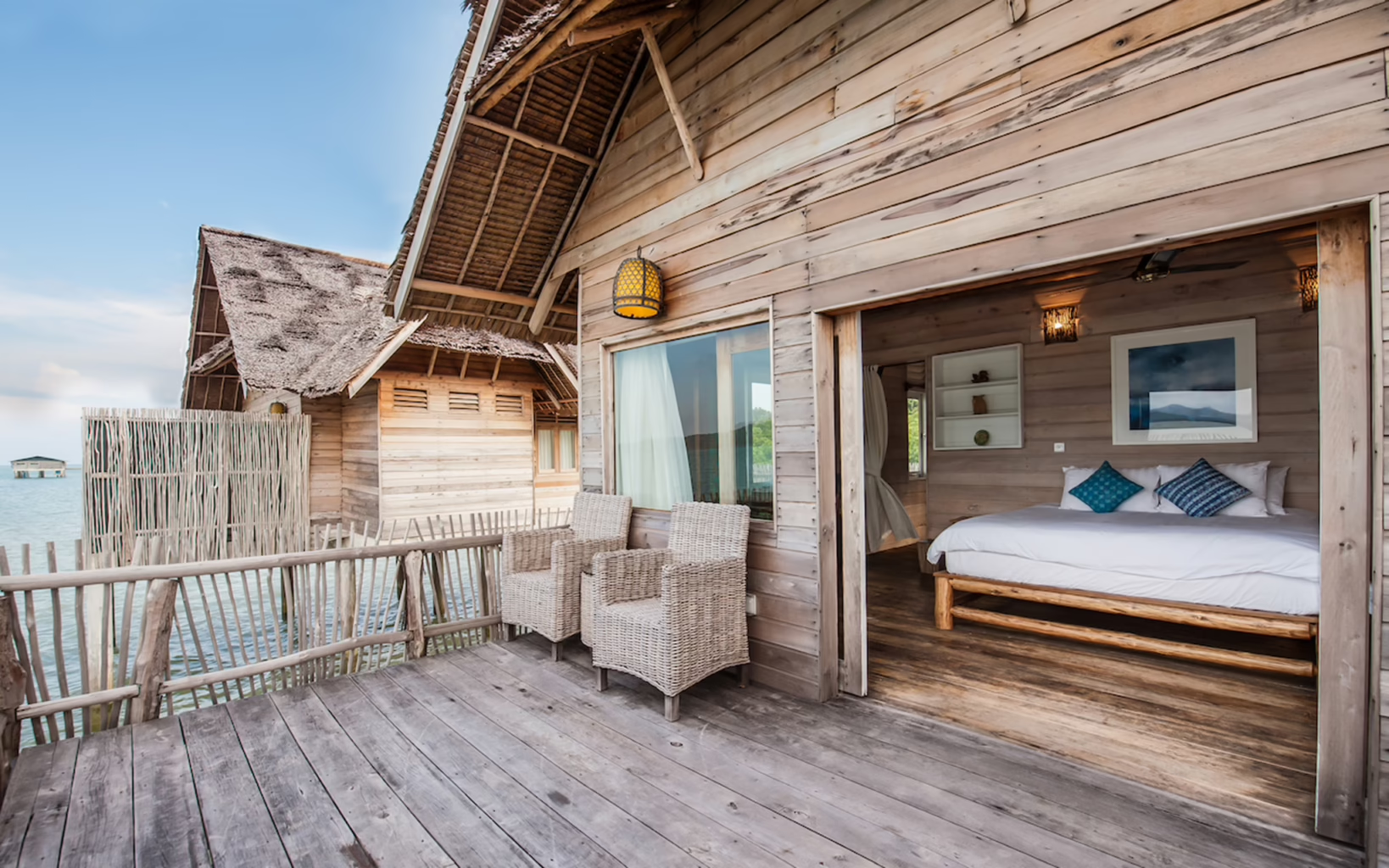
Telunas Beach Resort is the main base for visitors, with a broad sandy beach backed by greenery and 18 timber rooms and bungalows extending over the water, their architecture inspired by Malay coastal homes.
Plan on at least two nights. Many activities operate on a rotating schedule rather than continuously, so a longer stay gives you a better chance of joining the ones you’re interested in. Rooms currently start from IDR1,275,000 (approximately $92) for two adults, before the compulsory meal plan and transfers.
While you’re there, you can:
Hike to a jungle waterfall: The seasonal Jungle Waterfall Hike covers around 10km through secondary rainforest before reaching a waterfall and natural pool.
The hike is included when it appears on Telunas’ rotating activity roster and runs according to conditions and availability.
Go shrimping or fishing: Telunas Beach Resort runs traditional shrimping trips with locals when low tides align with its rotating activity roster. The experience is included with your stay; check the week’s schedule with your host when you arrive.
Complimentary hand-line fishing from the resort’s jetty is available daily, or pre-book its guided Fishing Boat Adventure, from IDR1,200,000 (approximately $86) for two hours for up to four people.
Visit a neighbouring village: Telunas’ Island Tour visits a nearby Malay village and is included when it appears on the activity roster.
For something more immersive, pre-book the Malay Lunch, which takes you by boat to a nearby village to dine with a local family. It currently costs IDR480,000 (approximately $35) per person, with a minimum charge of IDR1,920,000 (approximately $138).
Make pottery from Sugi clay: Telunas’ pottery studio uses clay sourced from Semokol Point on Sugi itself, with guests able to try shaping their own pieces. Pottery lessons are included when they appear on the resort’s activity roster.
Get onto the water: Sea kayaking and stand-up paddleboarding are available daily and included with your stay. You can also try Telunas’ signature jetty jumping straight into the sea.
Learn a little Malay culture: Depending on the activity roster, guests can try kompang drumming, make a miniature keris (dagger) from folded leaves or join other craft and cultural sessions.
Have dinner on the beach: Telunas offers a private Candlelight Dinner for IDR350,000 (approximately $25) per adult, with a minimum charge of IDR700,000 (approximately $50); book it two to three days before arrival.
Its Pizza on the Beach experience costs IDR225,000 (approximately $16) per person, with a minimum charge of IDR2,250,000 (approximately $162), and Telunas recommends booking at least a week ahead where possible.
Telunas’ compulsory meal plan currently costs IDR835,000 (approximately $60) per adult per day and covers three meals. Its kitchen meets halal requirements, while beer is available separately.
How to get there
There isn’t a direct international ferry from Singapore to Sugi. The simplest route is through Batam, with Telunas coordinating the second leg.
From HarbourFront MRT (NE1/CC29), take Exit B and follow the sheltered route to the Singapore Cruise Centre at 5 HarbourFront Avenue.
- Singapore to Batam: Telunas currently recommends taking Sindo Ferry’s 10am service to Sekupang Ferry Terminal. The crossing takes about one hour. Sindo’s current Batam fare is $28 one way or $56 return, excluding the $10 Singapore departure fee and Batam’s IDR100,000 (approximately $7) departure terminal fee.
- Batam to Sugi: Telunas staff meet guests at Sekupang and escort them between the international and domestic terminals before accompanying them on the onward boat. The journey from Sekupang to Telunas takes around one hour. Telunas currently lists its return domestic transport at approximately IDR1,065,000 (approximately $77) per adult, confirmed when you book your stay.
Allow roughly 2.5 hours from Singapore to Telunas once the connections are factored in.
For the journey home, Telunas currently offers a standard 1.15pm departure from the resort, connecting with the 3.20pm Sekupang–Singapore ferry. An earlier 8.15am departure connects with an 11.20am ferry.
Travel tips
- Book your stay before arranging the ferries: Telunas coordinates the Sekupang to Sugi leg and recommends specific Singapore ferry services that connect with its onward transfers.
- Check the activity roster: Pottery, shrimping, the waterfall hike, Island Tour and keris-making don’t necessarily run every day. Your host will share the schedule during your stay.
- Book paid experiences ahead: The Fishing Boat Adventure and special dining experiences require advance arrangements, particularly if you want them on a specific day.
- Arrange ahead if you want to explore farther: Pantai Air Dagang, Pantai Berangan and Air Terjun Hitam lie beyond the usual Telunas experience, and published transport information is limited. Check locally about access and transport before setting out.
- Factor in the compulsory extras: The room rate is separate from the daily meal plan and return domestic boat transfer, so compare the complete stay cost rather than the headline room price.
- Bring your passport: Indonesia requires at least six months’ passport validity for entry. Visa requirements depend on nationality.
- Complete the arrival declaration: Travellers should submit Indonesia’s All Indonesia arrival card before travelling; Telunas advises completing it within the 72-hour window before arrival.
- Pack proper shoes if you want to hike: The waterfall route covers around 10km through secondary rainforest and is seasonal, so conditions can be wet and uneven.
- Expect limited connectivity: Wi-Fi is available but more limited than at a large resort, so plan accordingly if you need to stay connected.
Batam
Did you know?
It’s difficult to imagine modern Batam without its malls, shipyards and busy roads, but as recently as 1965, the Indonesian island had only around 6,000 residents and little infrastructure.
Its transformation began in the early 1970s, when Indonesian state oil company Pertamina started developing Batam as a logistics and operations base for the oil and gas industry. In 1973, the Indonesian government established the Batam Authority to oversee its development.
The biggest changes came under BJ Habibie, who led the Batam Authority from 1978 to 1998 before becoming Indonesia’s third president.
His plans extended beyond Batam itself: six bridges were built to connect Batam, Rempang and Galang, creating the 50km Barelang corridor. Completed in 1998, the Barelang Bridges remain one of the most recognisable results of that era.
But older Batam hasn’t disappeared completely. Nongsa, now associated with beachfront resorts, takes its name from Raja Isa, better known as Nong Isa, who was given authority over the area by the Riau-Lingga Sultanate on 18 December 1829. That date is now commemorated as Batam’s official anniversary.
What can you do there?
Batam is much more than the quick shopping and spa getaway it’s often known for. Beyond its busy city centre are mangroves, old Malay settlements, waterfront resorts and the Barelang corridor stretching south towards Rempang and Galang.
A day trip is easy, but one or two nights gives you time to see more of the island and venture farther south.
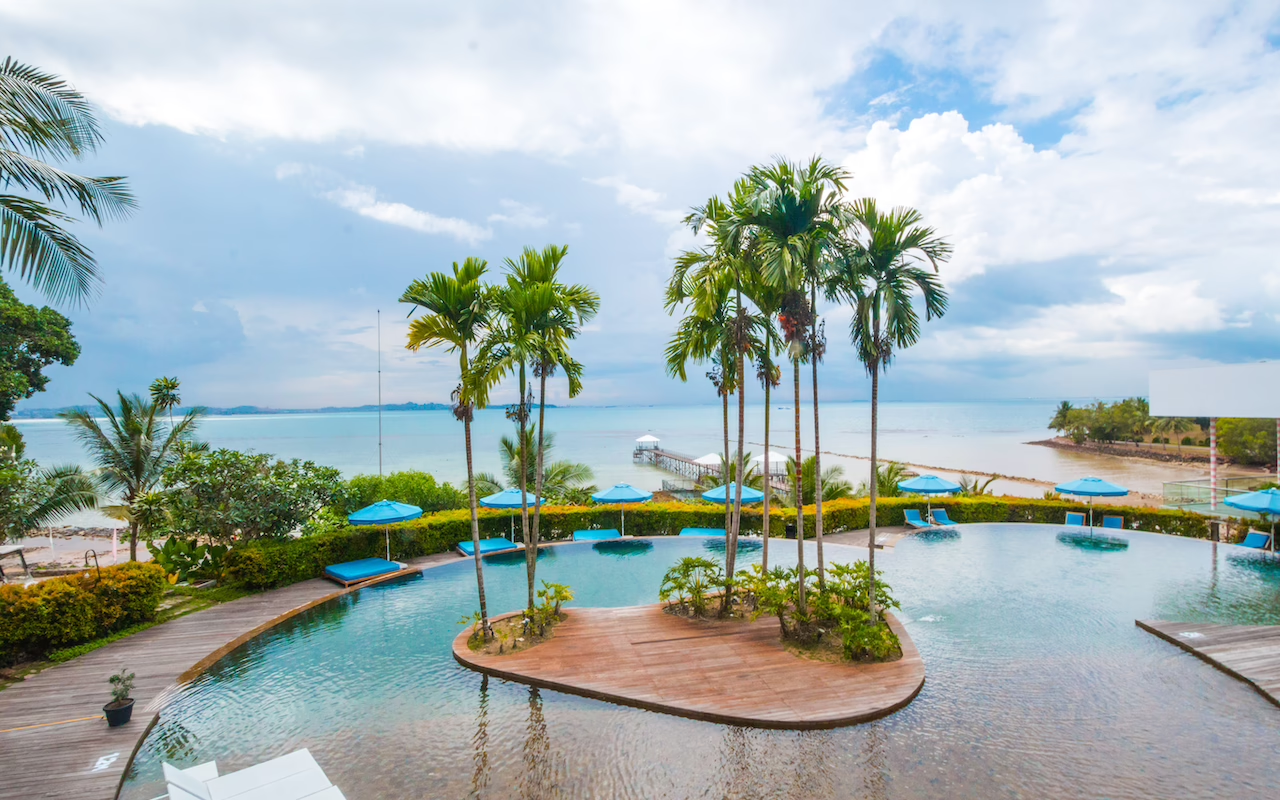
For a resort stay, Montigo Resorts Nongsa has whitewashed private-pool villas overlooking the Singapore Strait, while Batam Marriott Hotel Harbour Bay sits just a two-minute walk from Harbour Bay Ferry Terminal if convenience is the priority.
While you’re there, you can:
Cross the Barelang Bridges: Drive south across the chain of six bridges linking Batam, Rempang and Galang. Construction began in 1992 and was completed in 1998, with each bridge given its own name and design.
The first and most recognisable is the 642m Tengku Fisabilillah Bridge, with its cable-stayed towers.
Visit the former Vietnamese refugee camp: Continue along the Barelang route to Camp Vietnam on Galang Island, an 80-hectare former UNHCR refugee settlement that accommodated more than 250,000 Vietnamese refugees between 1979 and 1996. Surviving buildings include former barracks, places of worship, a cemetery and museum.
In 2025, Batam began the process of developing the site as a protected cultural heritage area.
Delve into Batam’s history: Museum Batam Raja Ali Haji in Batam Centre traces the island’s story from the Riau-Lingga Sultanate and colonial period to the establishment of the Batam Authority and the BJ Habibie era.
Opened in 2020, the museum occupies a former national Musabaqah Tilawatil Quran pavilion.
Explore Nongsa’s mangroves: At Mangrove Pandang Tak Jemu in Kampung Tua Bakau Serip, boardwalks and boat trips lead through a community-managed mangrove area that also highlights local Malay culture, shell crafts and foods made with gonggong, a sea snail associated with the Riau Islands.
The village was named among Indonesia’s 50 best tourism villages in 2022.
Take a guided mangrove trip from your resort: Montigo Resorts Nongsa runs a 1.5-hour Mangrove Tour by boat with a guide.
Its published recreation menu lists the experience from IDR562,500 (approximately $40) per adult, with a minimum of four guests. Book directly with the resort’s recreation team.
Head out fishing: Montigo also operates a guided Sea Fishing Trip, currently listed at IDR3,750,000 (approximately $270) for three hours for four to six people, with up to four fishing rods. Advance booking with the resort is recommended.
See one of Batam’s most striking modern landmarks: Sultan Mahmud Riayat Syah Mosque in Batu Aji was completed in 2019 and can accommodate around 25,000 worshippers.
Its 99m minaret was designed with an observation level, while the complex combines Malay architectural details with a vast main dome and large courtyard. Non-Muslim visitors are permitted, with robes available for visitors who need more appropriate clothing.
How to get there
Batam is one of the easiest Indonesian islands to reach from Singapore, with ferries running throughout the day to several terminals. For most visitors staying around Batam Centre or Nagoya, Batam Centre Ferry Terminal is the most straightforward arrival point.
From HarbourFront MRT (NE1/CC29), take Exit B and walk to the Singapore Cruise Centre at 5 HarbourFront Avenue.
- HarbourFront to Batam Centre: Both BatamFast and Sindo Ferry operate frequent services. BatamFast’s timetable effective 17 September 2026 starts at 7.40am, with services running throughout the day. The crossing takes roughly one hour.
- HarbourFront to Sekupang: Useful if you’re heading towards western Batam. BatamFast and Sindo operate multiple daily sailings, with the journey taking around 45 to 60 minutes.
- Tanah Merah to Nongsapura: The most convenient route for Nongsa’s resorts, including Montigo. BatamFast currently operates several services daily from 8am, with resort transfers available from Nongsapura.
- Tanah Merah to Batam Centre: Another option if Tanah Merah is more convenient, with several departures operated by BatamFast and Sindo.
As a current fare reference, Sindo Ferry charges $28 one way or $56 return between Singapore and Batam, before the $10 Singapore passenger departure fee and IDR100,000 (approximately $7) Batam terminal fee.
Book online before travelling, particularly for weekends and public holidays.
Travel tips
- Remember the time difference: Batam is one hour behind Singapore, so check whether ferry times are listed in Singapore or Indonesian time when planning the return journey.
- Choose your ferry terminal around your plans: Batam Centre works well for the city and shopping, Nongsapura for Nongsa resorts, and Sekupang for western Batam. Arriving at the wrong terminal can mean an unnecessarily long drive.
- Don’t underestimate the Barelang route: Camp Vietnam is on Galang Island, well south of central Batam. Combine it with the Barelang Bridges rather than trying to squeeze it between shopping or spa appointments.
- Use Grab or Gojek for shorter journeys: Ride-hailing is widely used around Batam. For a full Barelang and Galang excursion, arranging a car and driver is generally more practical.
- Bring your passport: Indonesia requires at least six months’ passport validity. Visa requirements depend on nationality.
- Complete Indonesia’s arrival formalities: International visitors should complete the All Indonesia electronic arrival declaration before travelling.
- Carry some rupiah: Cards and digital payments are common at resorts, malls and larger establishments, but cash is useful at smaller eateries, markets and attractions farther from the city.
- Allow more than a day if you’re going south: Batam Centre, Nongsa and Galang sit in very different parts of the wider Batam area. An overnight stay makes it much easier to see something beyond the usual mall-spa-seafood circuit.
Note: All $ prices are in SGD.
To learn more about Singapore Airlines’ flights to Singapore, visit the official website.
This story was first published in April 2023 and was updated in September 2026 by Syed Zulfadhli.