Until recently, strict government controls stunted the growth of Laos’ film industry. Now, through founder Gabriel Kuperman and director Mattie Do, it’s beginning to earn a global reputation
A UNESCO-listed town that lost its last public cinema decades ago – in a country that barely produces one film a year – is not the most likely location for an international film festival. However, the Luang Prabang Film Festival has defied the odds. Founded in 2010 by American media studies graduate Gabriel Kuperman, it has grown to become a showcase of films from the ASEAN region – noted for its free screenings that take place at venues transformed into temporary cinemas. The 2017 edition will take place 8-13 December at various locations.
The Founder: Gabriel Kuperman
In 2008, 20-something Washington DC native Gabriel Kupermen expected to spend just three days in Luang Prabang as part of a whistle-stop tour around the region. Instead, he ended up staying for three months – long enough to know that Luang Prabang was where he belonged. Now 33, he set up the festival as a means of showing South-East Asian films to a wider audience.
Did you ever think you’d end up running a festival in Laos?
I hadn’t really considered it, but when I decided to move to Laos, I knew I wanted to stay within my field, and had to find a way to do that.
How would you define the festival’s philosophy?
One of the most important aspects of our festival is that it’s completely free and open to the public. This is why our logo is a blue plastic chair: it’s ubiquitous, casual and easy. While the festival has grown throughout the years, we’ve managed to maintain its intimacy and warmth.
What’s new this year?
On 9 and 10 December, we will be holding our second Talent Lab for South-East Asian filmmakers, led by the Tribeca Film Institute. The filmmaker of the best project will be selected to attend the TFI Network market at the 2018 Tribeca Film Festival.
What can you say about filmmaking in Laos today?
When we founded this project, Laos was only producing one or two feature films per year. Now, that number has grown to four or five. It’s not just quantity – the quality of films has improved a great deal as well, with several going on to be screened in international festivals around the world.
The Director: Mattie Do
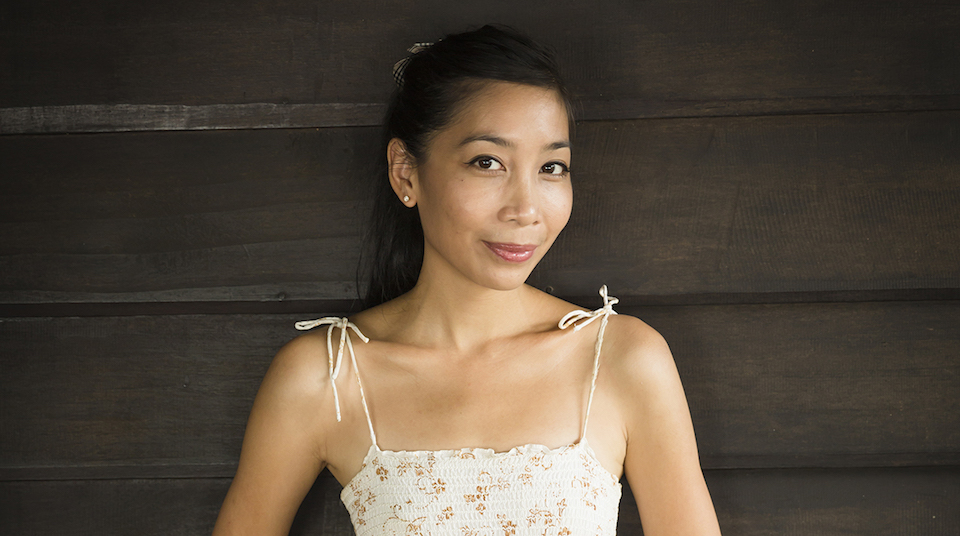
Born and raised in California to Laotian-Vietnamese parents, Mattie Do holds the distinction of being Laos’ first female film director.
Despite being relatively new to the industry, her progress has been impressive; this year her latest movie, Dearest Sister, was the first ever Laos film to be submitted for the Academy Awards’ foreign language category.
Having previously worked as a ballet dancer and makeup artist, she confesses that her route to film was completely accidental.
It all started when she relocated to Laos after her widowed father decided to return in 2010. Do and her screenwriter husband Chris Larsen’s arrival coincided with the launch of the first Luang Prabang Film Festival. The couple quickly got to meet those involved in the country’s emerging film scene, including production company Lao Art Media – responsible for Laos’ first non-government commissioned film, Sabaidee Luang Prabang. Impressed by Larsen’s industry knowledge, they asked him to direct a new film; with no language skills or directorial experience, he declined but volunteered Do for the job. The couple collaborated on a script, and work on Do’s first film, Chanthalay, soon began.
As a filmmaker, Do is drawn to dark stories set in contemporary Vientiane. Crucially, she also feels it is important to have women in lead roles, rather than the typical handsome male protagonist. We sat down with Do to learn more about the challenges she’s faced and her views on her recent success.
What is the state of the Lao film industry?
When I moved here, the film industry was virtually non-existent. There were no official cinemas, only small venues showing bootleg movies. The only film we were aware of was the 2008 romantic drama, Sabaidee Luang Prabang, which was the first film made in Laos since the 1975 communist revolution. The first Luang Prabang Film Festival gave us encouragement that change was coming. Now in its eighth year, it has grown to be the country’s most important cultural event.
What are some of the biggest challenges you face as a filmmaker in Laos?
Starting out knowing little about filmmaking has been an advantage, as I don’t know what should intimidate me. However, there are challenges that come from being an extroverted woman in a conservative country. Some people think I am brazen, but then I think I need to be in order to accomplish what I do. At the same time, the government is happy to have someone who is actively promoting Laotian art and culture. It takes motivation and passion to make sure our stories get seen.
What does your Laotian heritage mean to you?
I was lucky that my parents didn’t instil any preconceived notions of what it is to be Laotian. That said, identity is incredibly important. I am Laotian enough to fit in, but international enough to see that there are issues we need to work on. My films enable me to show people how I see things both as a local and as someone looking in.
How did you react to your Oscar nomination?
I never imagined I would ever have a film submitted to the Academy Awards – and potentially compete for an Oscar! I feel an immense joy and pride to represent my country.
Mattie Do's Filmography
Chanthalay – Do’s directorial debut was the first horror film to be written, directed and shot entirely in Laos. It premiered at the 2012 Luang Prabang Film Festival. Do describes it as “a supernatural psycho-thriller about the struggles of a modern Laotian woman being brought up by her conservative father, after the death of her mother”.
Dearest Sister – Released in late 2016, this supernatural thriller depicts the social struggles of Laotian women living in a rigid hierarchy. The story follows a village girl who moves to Vientiane to care for a rich cousin who has lost her sight, but can now talk with the dead. The film is Laos’ first submission for the Best Foreign Language Film award at the Oscars.
City of Cinemas
The festival’s free screenings will take place at venues transformed into temporary cinemas.
The Handicrafts Market
A big screen and a sea of 800 plastic chairs take over this corner of the night market, one of Luang Prabang’s most popular tourist attractions.
Azerai Luang Prabang
The star-studded opening reception will be held around the hotel’s courtyard pool, with food catered by talented chef Ben Faker and his team.
Sofitel Luang Prabang
Daytime screenings and talks will take place in an elegant teak house on the grounds of the former governer’s residence.
SEE ALSO: The young Bangkok filmmakers winning global acclaim
This article was originally published in the November 2017 issue of Silkwinds magazine