From empty beaches to picture-perfect hiking trails, untapped adventures lie less than an hour away from the Catalan capital of Barcelona
Montserrat
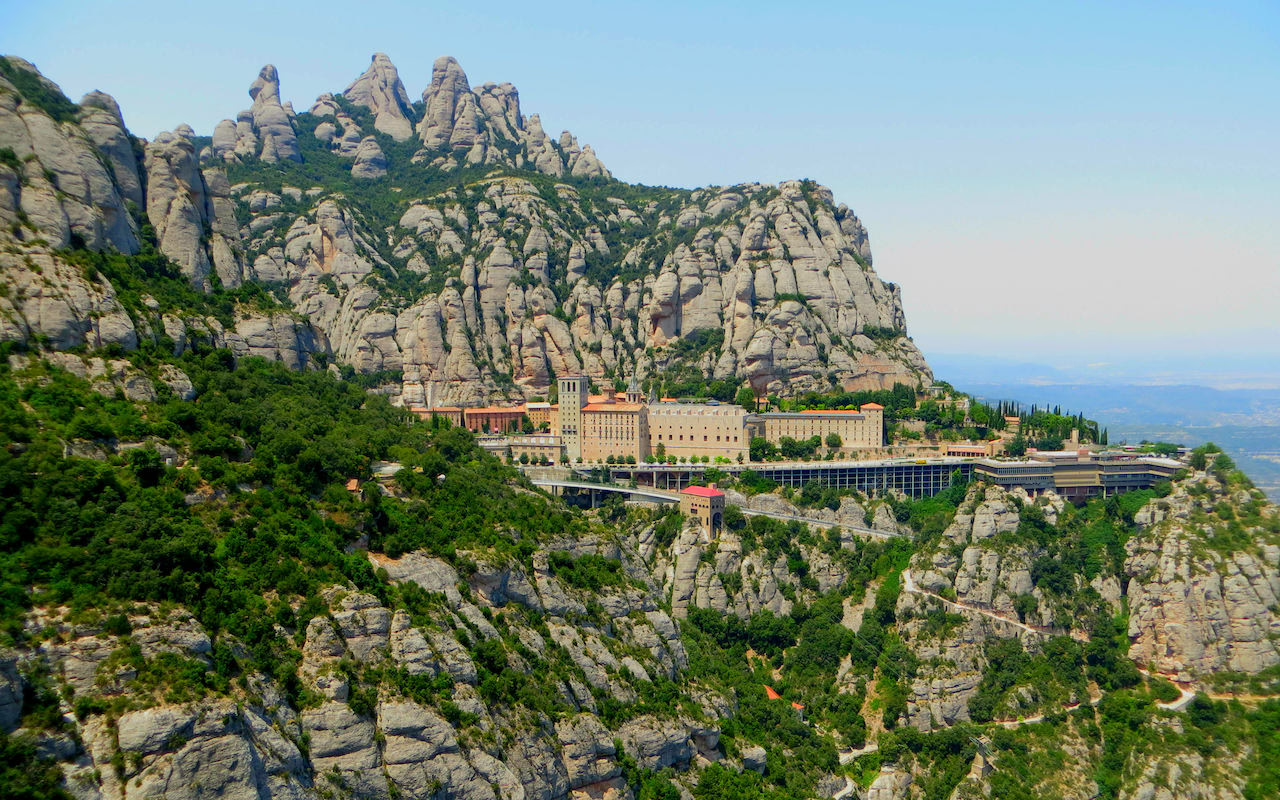
Meaning “saw mountain” in Catalan, Montserrat is pinch-yourself photogenic: knife-edged cliff peaks erupt like giant pink molars above an 11th-century Benedictine monastery, which marked its 1,000th anniversary in 2025.
Home to around 70–80 monks, there’s a real spiritual energy here – touch the hand of the Virgin of Montserrat statue in the Basilica, which is said to have healing powers, or time your visit for 1pm on a weekday to catch L’Escolania, the famed boys’ choir, singing live inside.
A wide network of hiking trails covers the mountain, and the route to Sant Jeroni is worth the ascent: a moderately challenging 6.4-mile loop with over 800 stone steps near the summit, rewarding you with 360-degree views across Catalonia and, on clear days, as far as the Pyrenees.
To get here, catch the R5 line from Plaça d’Espanya (departing every 20–40 minutes) to Aeri de Montserrat for the cable car, or one stop further to Monistrol de Montserrat for the rack railway – the journey takes about an hour.
Sitges
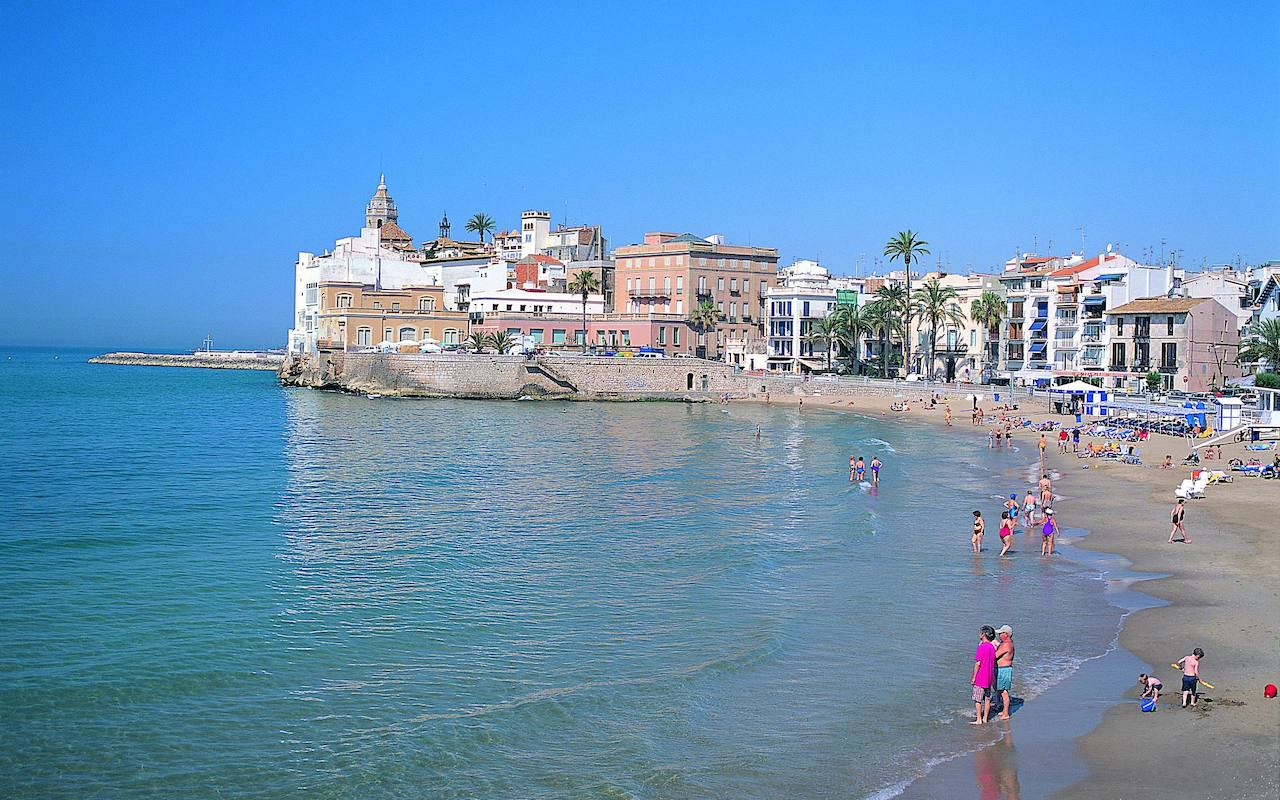
Catch the train south from Passeig de Gràcia – Barcelona‘s shopping street – and around 40 minutes later you’ll pull into picturesque Sitges. This seaside town is a patchwork of cobbled streets, pastel walls and balconies straining with blooms. It’s a treat for the stomach too.
Paella at Vivero Beach Club is served mere centimetres above the sea (book the “terraza inferior”), while laid-back Nem offers a modern incarnation of tapas – its patatas bravas ditches predictable potato cubes for crispy-skinned slivers of salty goodness, and the menu changes weekly, so no two visits are quite the same.
Sensory overload peaks at Palau de Maricel, a palace whose exuberantly over-the-top décor is a sight to behold – access is now guided-tour-only (costs €12 or around $18, and lasts for about an hour), so book ahead online rather than expecting to wander in freely.
Penedés
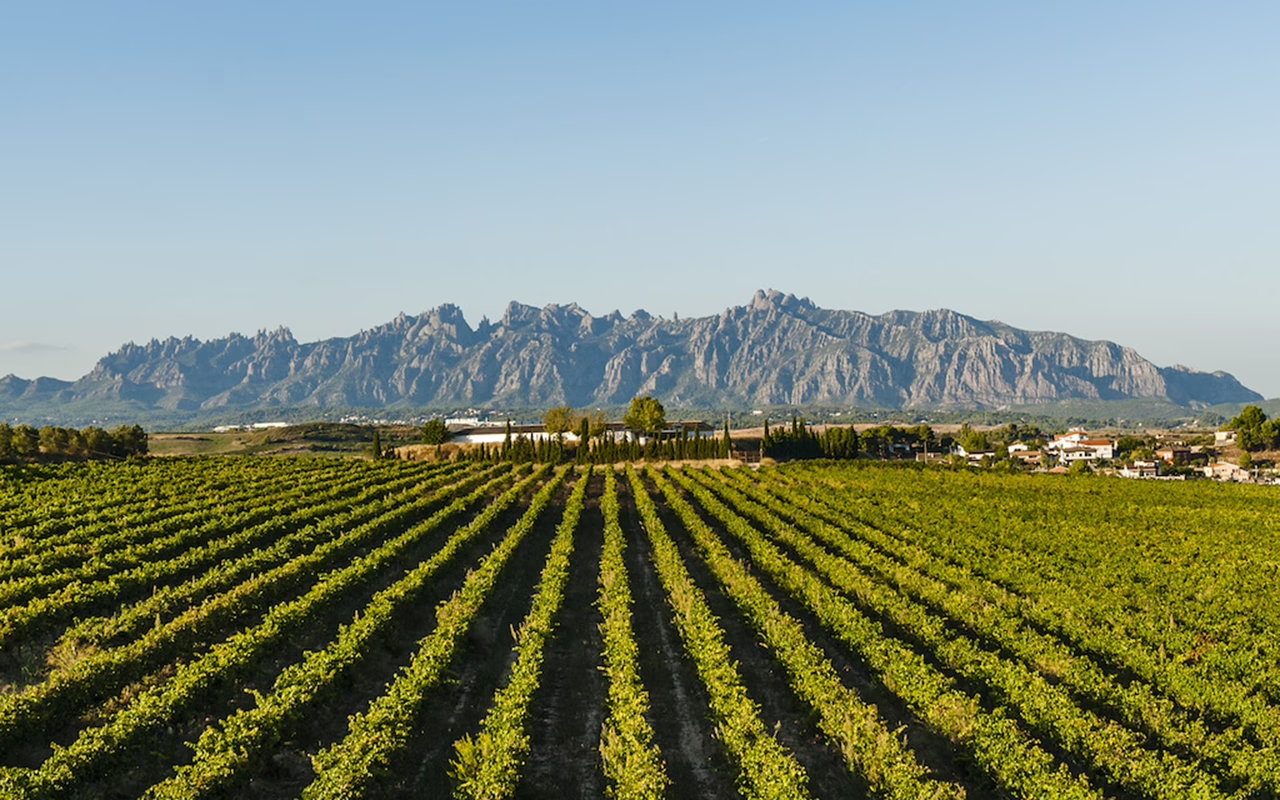
The cava region, an hour west of Barcelona, is where the vast majority of Spanish sparkling wine ferments – made by both big producers (Torres, Freixenet, Codorníu, Jean Leon) and smaller family operations serving organic wines and farm-to-table tapas.
Take the train from Plaça de Catalunya to cava-land’s capital, Sant Sadurní d’Anoia, where many wineries are within 15 minutes’ walk – including Freixenet beside the station, Gramona, with its ancient underground cellar, and the brilliant Recaredo (reservations are essential everywhere).
Worth knowing: Recaredo and Gramona are both founding members of Corpinnat. It’s a newer designation created by a handful of top producers who felt Spain‘s official Cava rules were too loose. Those rules fall under the Denominación de Origen, or DO — Spain‘s version of France’s AOC wine-quality system. Corpinnat requires organic farming, hand-harvesting, and everything to happen at a single estate within the historic heart of Penedès, so if you spot “Corpinnat” rather than “Cava” on a label here, that’s why.
If you’d rather not navigate the region solo, Castlexperience runs daily guided day trips from Barcelona that bundle transport with visits to country house wineries further afield – a useful shortcut if reservations and rural bus routes sound like too much hassle.
Girona
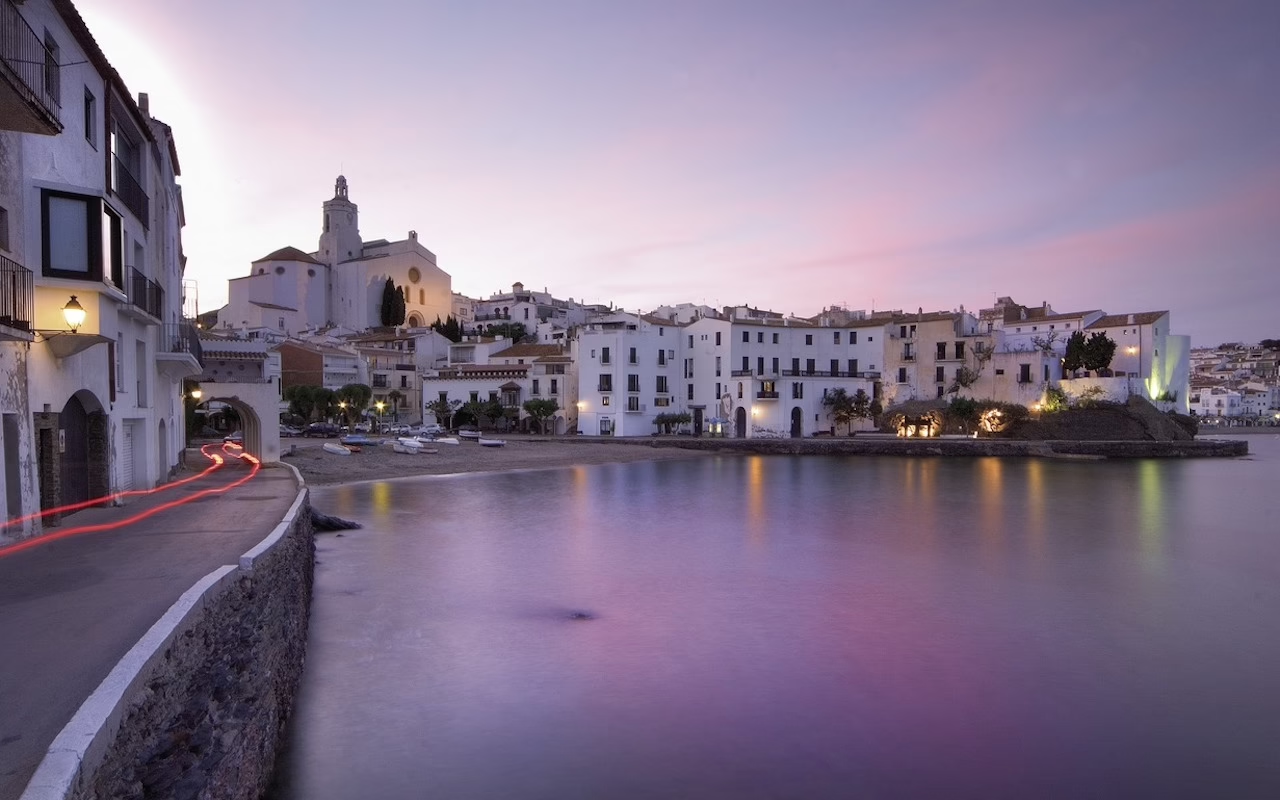
River Onyar, separating Girona’s medieval Barri Vell from its newer western side, provides the postcard image of this arty cathedral city, with reflections of sunset-hued houses that look more Copenhagen than Catalunya (though Game of Thrones fans will know Girona better as the setting for Braavos).
Ancient streets wind like threads, knotted with coffee-sipping patios (La Fábrica serves the best), but little beats dining at El Celler de Can Roca, the three-Michelin-starred restaurant so celebrated that World’s 50 Best inducted it into a permanent “Best of the Best” hall of fame back in 2019, retiring it from the annual rankings altogether.
Can’t crack the nearly year-long waiting list? Eat lunch at Divinum, which has since earned its own Michelin star and whose chef Jordi Rollan trained in the Roca kitchen, or try a panet – hot brioche stuffed with ice cream – from Rocambolesc, the Roca family’s ice cream boutique.
The Roca brothers aren’t the whole story either: Massana, another Michelin-starred spot in the old town, gives Girona three starred restaurants within walking distance of each other.
Note: Trains from Barcelona Sants take 38 minutes.
La Roca Village
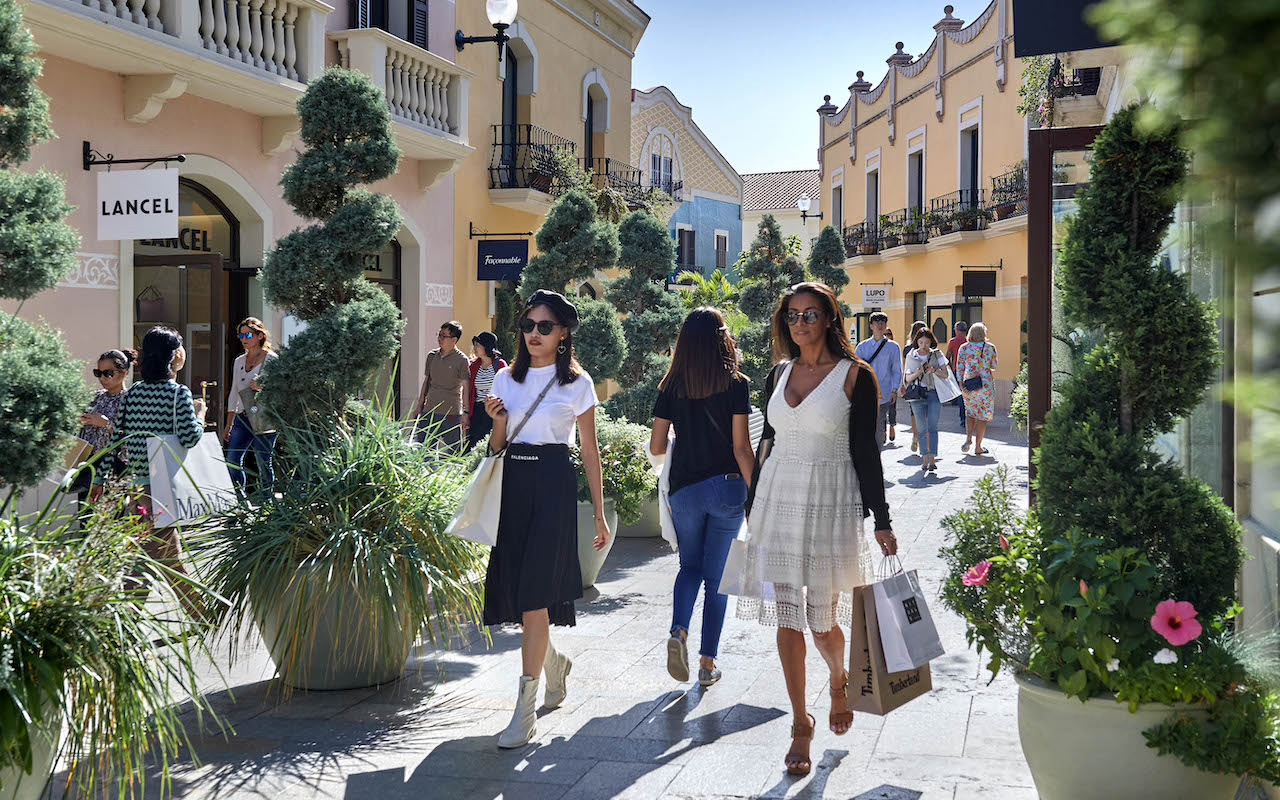
Just a 40-minute coach ride from Barcelona, La Roca Village pairs outlet shopping with genuinely wardrobe-changing finds.
Part of The Bicester Collection, it sits alongside destinations including Shanghai Village and Bicester Village near London. Modernist-inspired architecture and bright flowering vines make it as enjoyable to wander as it is to shop.
Its brand selection delivers in the form of unique pieces from Spanish designers such as Loeweand Bimba y Lola alongside Bally, Burberry, Gucci and Prada, with newer arrivals like Nude Project, Two Jeys and Custo Barcelona adding a buzzier, Gen Z-facing edge to the lineup.
Discounts reach up to 60 per cent year-round, climbing to 70 per cent during summer sales. Book the coach’s Shopping Express ticket rather than going it alone, since it comes with a VIP Pass for an extra 10 per cent off at participating boutiques.
Figueres
The birthplace of Surrealist artist Salvador Dalí was never going to be boring. Back in the 1960s, the town’s mayor asked if Dalí would consider donating an artwork to a local gallery. Dalí, with characteristic flamboyance, said no – he preferred to build himself a museum.
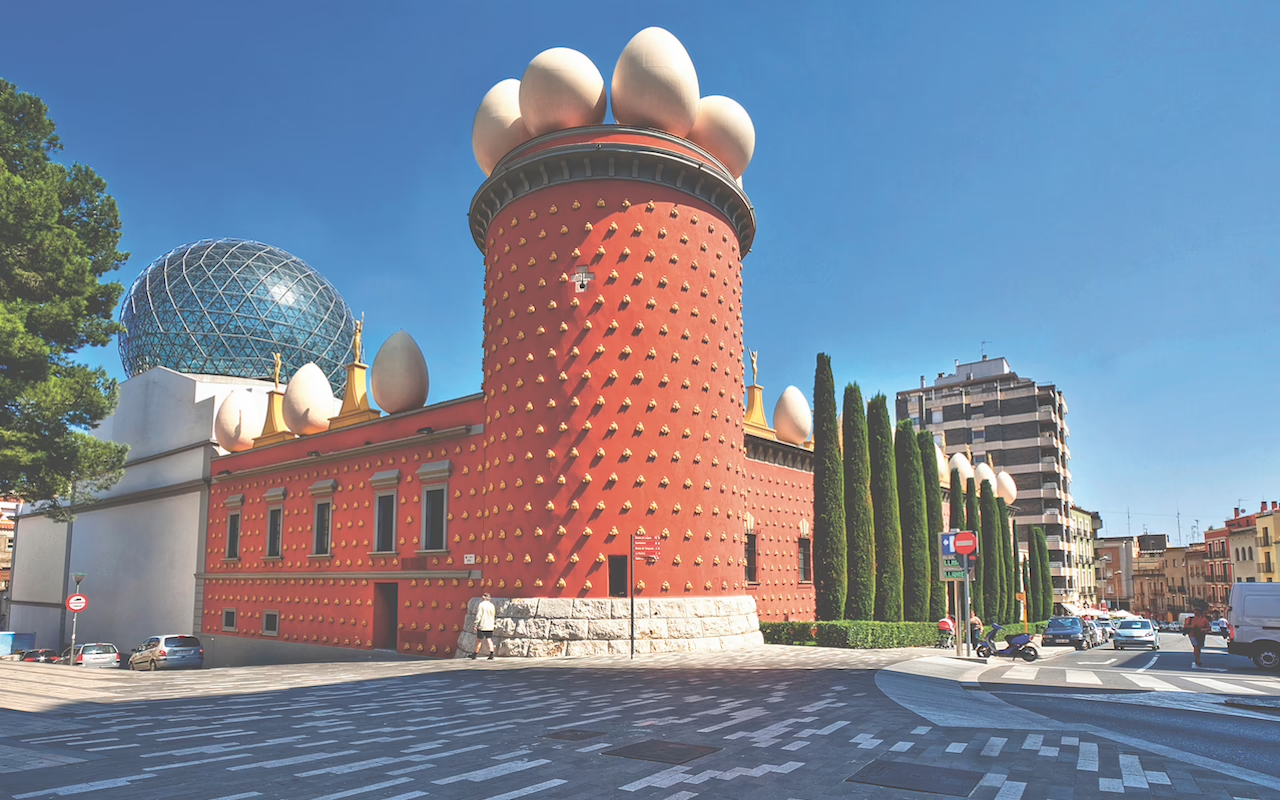
And so, the Dalí Theatre-Museum was born – a storage spot for 1,500 pieces of art (including a mirrored flamingo, a taxi with rain falling inside and a few skeletons) which has pink exterior walls topped with eggs (best glimpsed from along Pujada del Castell).
For a fuller picture of the man behind the art, visit the Casa Natal Salvador Dalí first: his actual childhood home, transformed since 2023 into an immersive one-hour experience of holograms, projection mapping and preserved original rooms, tracing his upbringing and early influences rather than his finished work – locals recommend seeing it before the Theatre-Museum for context.
Note: Trains go from Barcelona Sants to Figueres-Vilafant (a short bus or taxi ride from the city centre) in 55 minutes.
Costa Brava
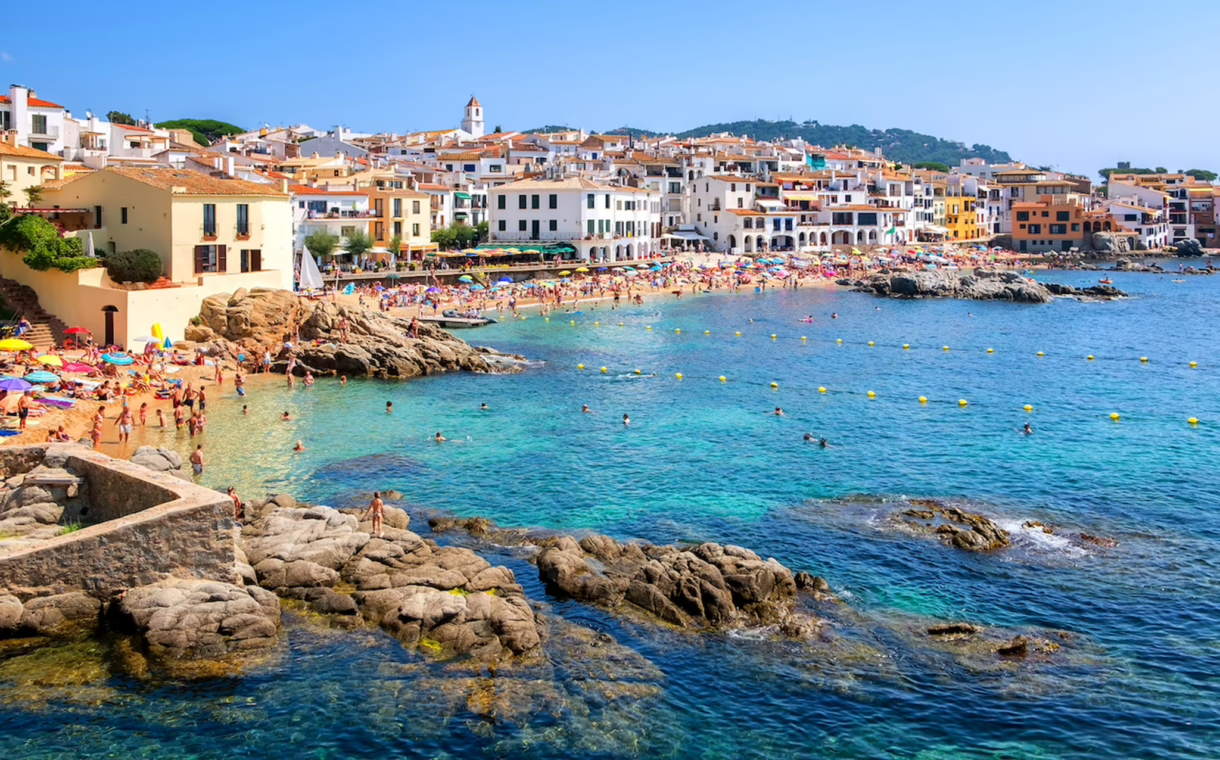
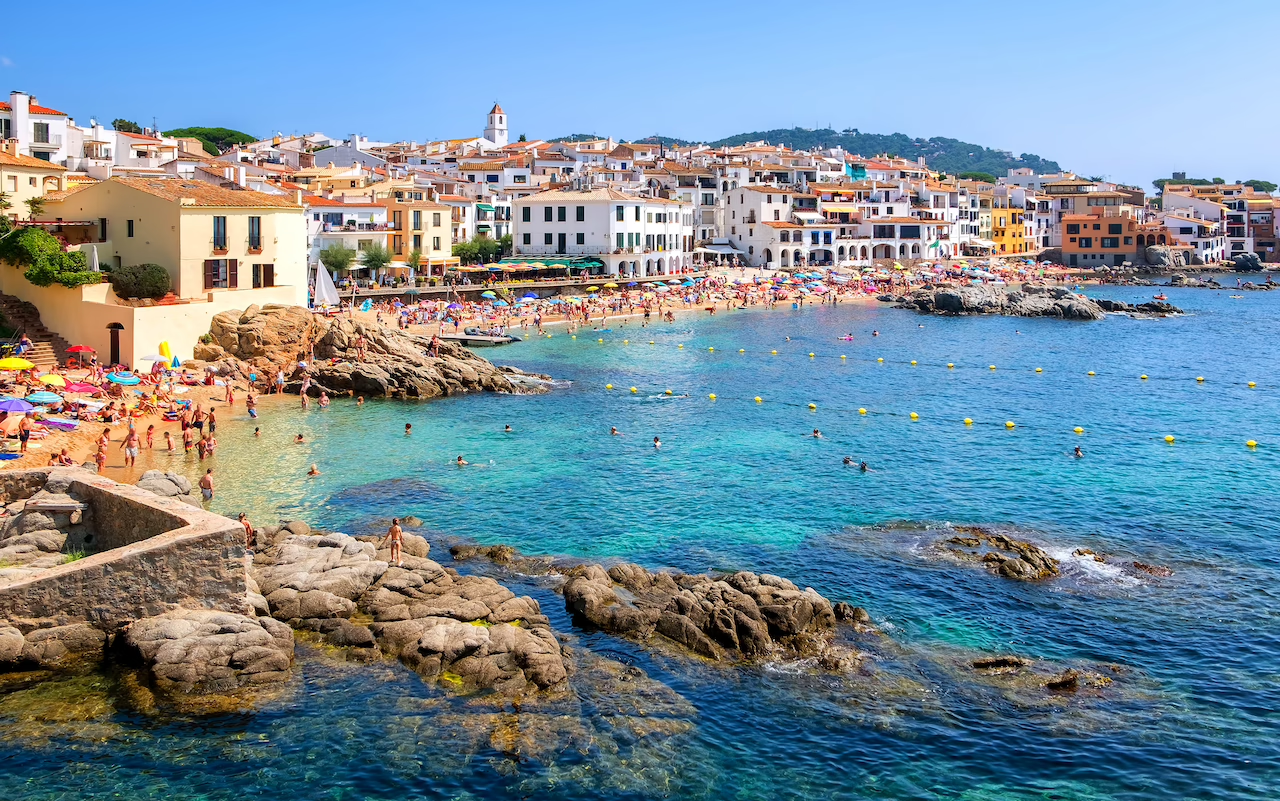
What do Salvador Dalí, Pablo Picasso and Truman Capote have in common? They all got inspiration from the Costa Brava – a coastline of white-walled villages and electric blue waves that spectacularly ripples from Blanes (70km northeast of Barcelona) all the way to France.
Aside from Lloret de Mar, its towns have also managed to escape the skyscrapered gulp of mass tourism. Cove-hop by car or take a Moventis Sarfa bus from Barcelona’s Estació del Nord to Palamós, Begur, Cadaqués or Palafrugell.
The latter is famous for its summer music festival, Cap Roig, where big-name artists, including Bryan Adams, Diana Krall and Mika in recent lineups, perform on the grounds of a medieval-style castle.

Tarragona
Once one of the most important Roman cities, much of Tarragona’s epic 15,000-seater Mediterranean-hugging amphitheatre remains – today, honoured with UNESCO World Heritage site status.
Newly added: a mixed-reality experience called “The Roar of Tarraco,” where free-roam headsets turn you into an apprentice gladiator witnessing digitally reconstructed combat inside the real, unaltered ruins – the first attraction of its kind staged in a Roman amphitheatre anywhere in the world.
There’s also the eye-catching cathedral, with a giant rose window in its façade; the buzzy central square, Plaça de la Font; Rambla Nova with its Modernist architecture and lunchtime pit-stops; or the nearest beach, Platja de l’Arrabassada.
While the latter lacks the wildness of Cala Fonda (dubbed Tarragona’s Waikiki) further along the coast, it more than makes up for it with easy access and signature golden sand – the same sand that gave this whole stretch of coastline its name: the Costa Daurada, Catalonia’s “Golden Coast.”
Note: Train journey from Barcelona will take about an hour to reach.
Poblet Monastery
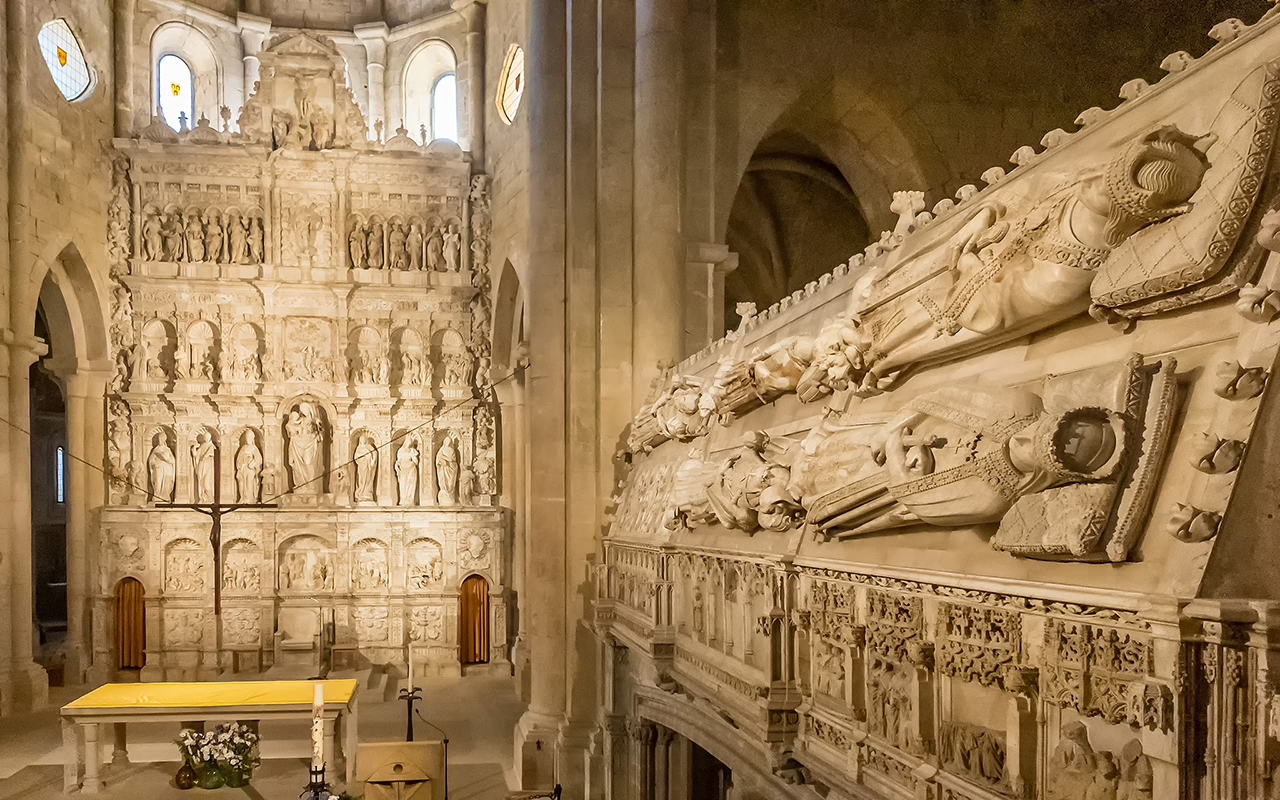
If Montserrat’s mountain-top drama and crowds aren’t quite your speed, Poblet offers the calmer alternative: one of the largest and most complete Cistercian monasteries in the world, tucked into the Prades mountains southwest of Tarragona.
Founded in 1150 and still home to an active community of Cistercian monks, it served as the royal pantheon of the Crown of Aragon – the alabaster tombs of kings like Jaume I sit inside the 12th-century church, a genuinely striking sight rarely found outside major cathedrals. UNESCO-listed since 1991, it’s part of the wider Cistercian Route alongside the monasteries of Santes Creus and Vallbona.
Unlike Monsterrat, Poblet Monastery doesn’t get overwhelmed with tourists, making it a solid pick for travellers who want the monastic-visit experience without the tour buses.
The catch: it’s the hardest of these day trips to reach by public transport, with train-plus-local-bus combinations from Barcelona typically running 1.5–2 hours each way. So it’s a better fit for a rental car or a guided day tour from Barcelona or Tarragona than a spontaneous solo trip.
Vic
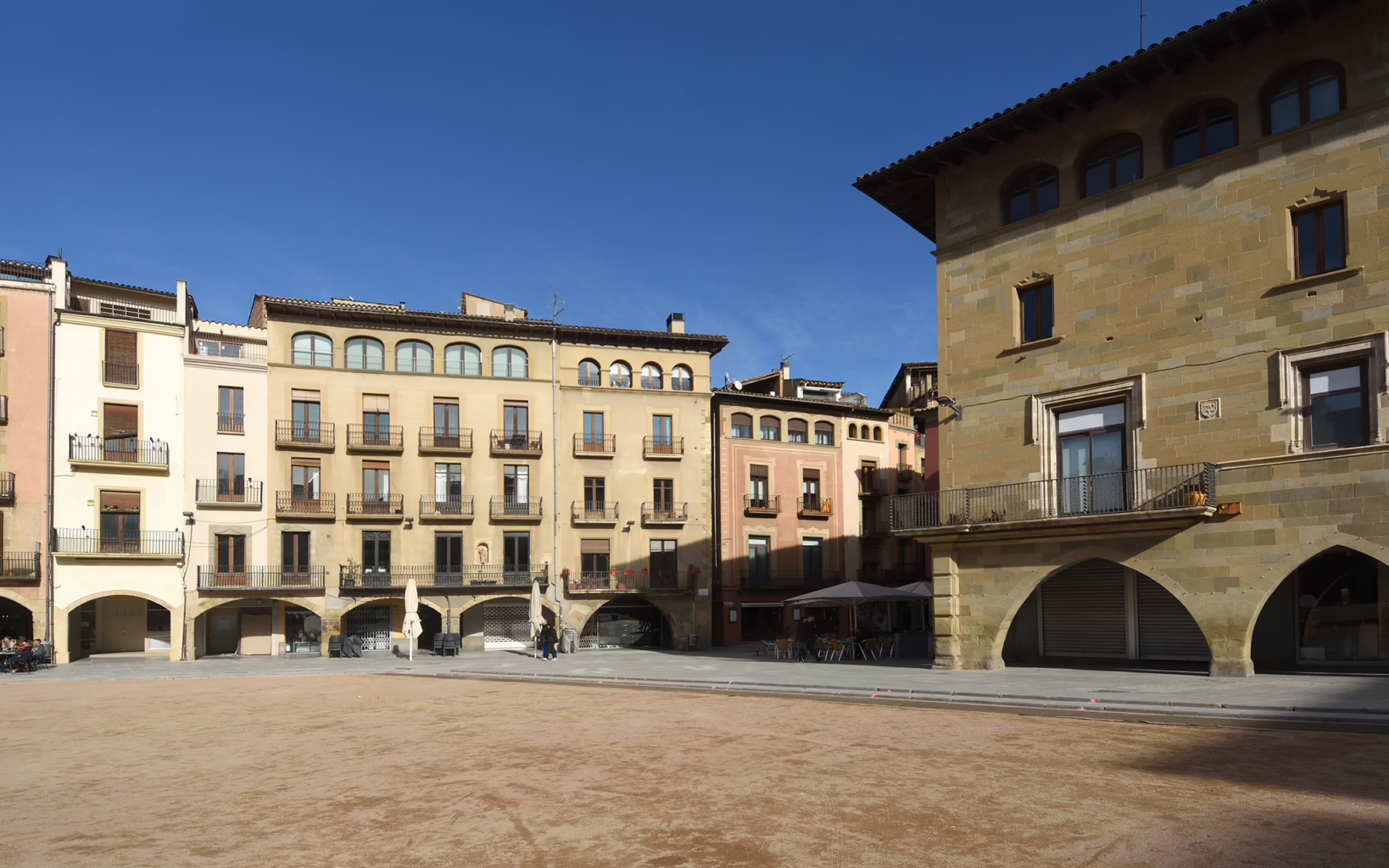
Inland Catalonia looks nothing like its coast, and Vic is where that difference is felt most clearly: no palm trees, no promenade, just fog-prone farmland and a 2nd-century Roman temple tucked beside the main square.
The real draw is Plaça Major, one of the largest plazas in Catalonia, which comes alive on Tuesday and Saturday mornings when the weekly market takes over – farmers from the surrounding Osona region selling cheese, mushrooms, produce and the local cured meats Vic is famous for, especially fuet and botifarra.
It’s also home to the Episcopal Museum, one of Europe’s most important collections of Catalan Romanesque and Gothic art.
Note: Trains run from Plaça Catalunya or Barcelona Sants (Rodalies R3 line) in around 80 minutes.
Colònia Güell
Most visitors to Barcelona tick off Gaudí’s greatest hits – Sagrada Família, Park Güell, Casa Batlló – without ever hearing about the building where he actually worked out how to do it.
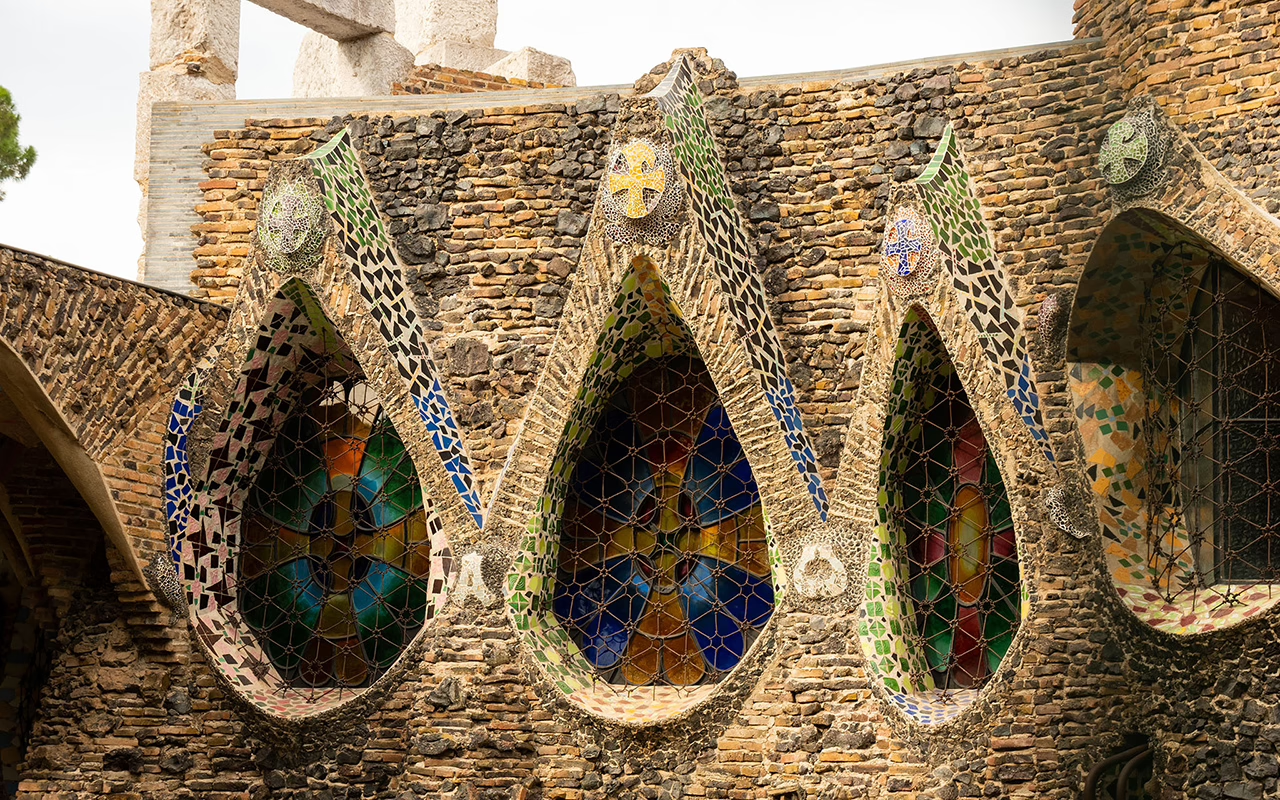
Colònia Güell, a 19th-century textile workers’ village 20 minutes southwest of the city, houses Gaudí’s Crypt: the “laboratory” where he first combined the catenary arches, tilted columns, and trencadís mosaic he’d later scale up for the Sagrada Família. It was meant to be the base of a full church; funding ran out in 1914, leaving only the crypt complete.
A UNESCO World Heritage Site since 2005, it remains one of the quietest major Gaudí sites in Catalonia – comfortably uncrowded even in peak season.
The surrounding village, built by industrialist Eusebi Güell to house his mill workers, is a remarkably intact slice of Modernista architecture in its own right.
Note: Trains run from Plaça Espanya (FGC lines S3, S4, S8, S9) in about 20 minutes.
Please check the establishments’ respective websites for opening hours as well as booking and seating requirements before visiting, and remember to adhere to safe-distancing measures while out and about.
To learn more about Singapore Airlines flights, visit singaporeair.com. For updates and travel advisories, please visit Ministry of Foreign Affairs’ website.
This article was originally published in the June 2019 issue of SilverKris magazine and has been updated.
Additional reporting: Syed Zulfadhli