
Published on March 19, 2024
The thrill of the bite
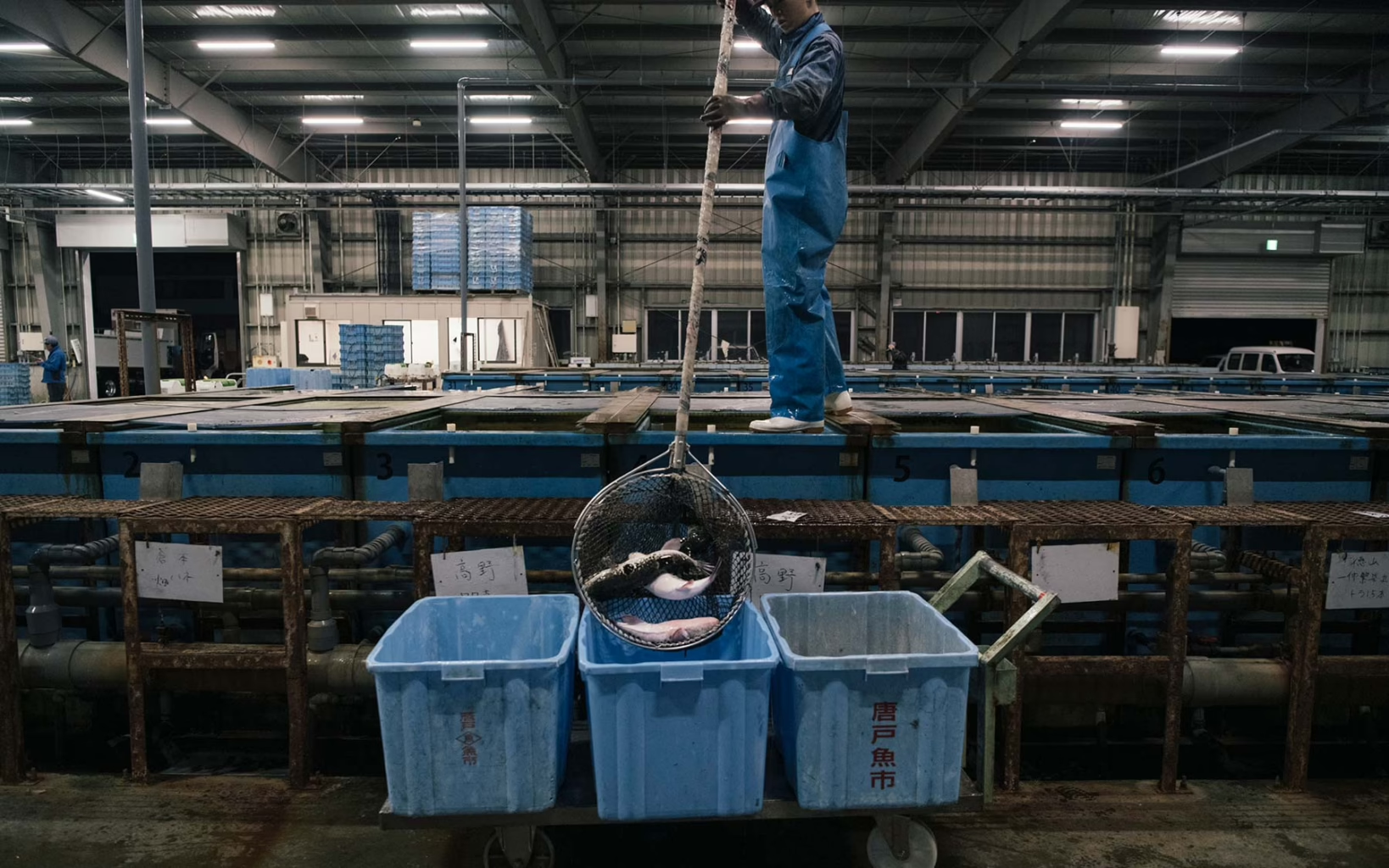
At 2am, the streets in wintery Shimonoseki are mostly deserted. However, for the staff and buyers at Haedomari Market, on the western reaches of the city, the day has just begun. This is Japan’s only fish market dedicated to fugu, the highly prized – and highly poisonous – pufferfish. From here, this legendary Japanese delicacy travels to restaurants and markets across the country.
Lying 90 km northeast of Fukuoka, Shimonoseki has always been an important crossroads for people, goods and culture. Being Honshu Island’s most westerly point, Shimonoseki has been the closest port of call for Korean people and culture for centuries and today boasts a large Korean diaspora. The city is the gateway to the Seto Inland Sea, making it critical to both international and domestic shipping. Its coastal geography also makes it a thriving fishing port.
In fact, Shimonoseki is perfectly positioned to gather catch from the Sea of Japan and Kyushu and send it on to the metropolises, Osaka and Tokyo

You’ll spot adorable fugu depictions emblazoned on walls, signs and even manhole covers wherever you look. But for most travellers, the pufferfish remains an enigma.
With notoriously lethal amounts of tetrodotoxin poison found in its organs, fugu seems like an unnecessarily risky and expensive dining choice when there are so many other seafood options available.
It’s a different story for the locals of Shimonoseki, for whom the fugu is the uncontested king of fish. Because Haedomari Market is closed to the public, tourists flock to the famous Karato Fish Market to indulge in fresh pick-and-mix sushi.


But it’s at Haedomari Market – just 8km west of the tourist-friendly Karato Market – where treasured fugu varieties are bought, sold and transported. Haedomari Market handles over 1,500 tonnes of fugu every year, including the much sought-after wild torafugu variety which fetches the highest prices.
Tonight, I am lucky enough to witness firsthand the centuries-old traditions that still govern this market.
As the clock hits 3am, the activity inside the market steps up a gear. Staff climb on plastic water tanks, netting fugu and rolling them out onto the bidding floor. One licensed fugu handler swiftly guts and fillets sample fugu for the buyers to inspect.
The bidding process is unlike any other. Bidders congregate around the auctioneer, who weaves among the container boxes of fugu and holds out a black bag.
“You bid by placing your hand inside the bag and grabbing the auctioneer’s fingers,” explains Hirotada Matsuura, an auctioneer with over 30 years of experience at Haedomari. “The number of fingers you grab states your price.”
According to Matsuura, a combination of grips and holds allows buyers to bid up to 10 units. Each finger can either represent 10,000, 100,000 or even 1,000,000 yen. Everyone can see the quality and the amount of fugu in a box, creating a baseline that avoids misunderstandings.
"The origin of this unique bidding style can be traced to horse auctions in mainland Korea"
“In the past, the Korean traditional dress with its long sleeves could cover the hands of both the auctioneer and the bidder, helping to keep each bid secret,” explains Matsuura. “That culture came to Shimonoseki and it became the standard practice for Japanese fugu auctions. Even when the traditional dress disappeared, fugu auctioneers continued to use a bag.”
The intense bidding is over after 30 minutes. The buyers are quick to load their spoils onto the back of their trucks. The highest price that day was for one box of wild torafugu, which sold for ¥105,000 (SG$946). The day before, the most expensive box went for ¥150,000 (SG$1350).

At the auction, I meet a shrewd buyer for historic fugu trader Sakai Shoten who invites me to call on the business a few days later. Though it sits in an unassuming building, just across the street from Karato Fish Market, Sakai Shoten is one of the oldest fugu merchants in the city.
The building has been in the family for generations, and the wholesale business still operates on the ground floor. But the third-generation owner, Hajime Sakai, has converted his parents’ old living quarters upstairs into the highly acclaimed fugu restaurant, Fukudokoro Sakai.
Due to its long association with fugu, Shimonoseki boasts a high concentration of fugu restaurants and skilled, licensed fugu chefs compared to any other city in Japan.
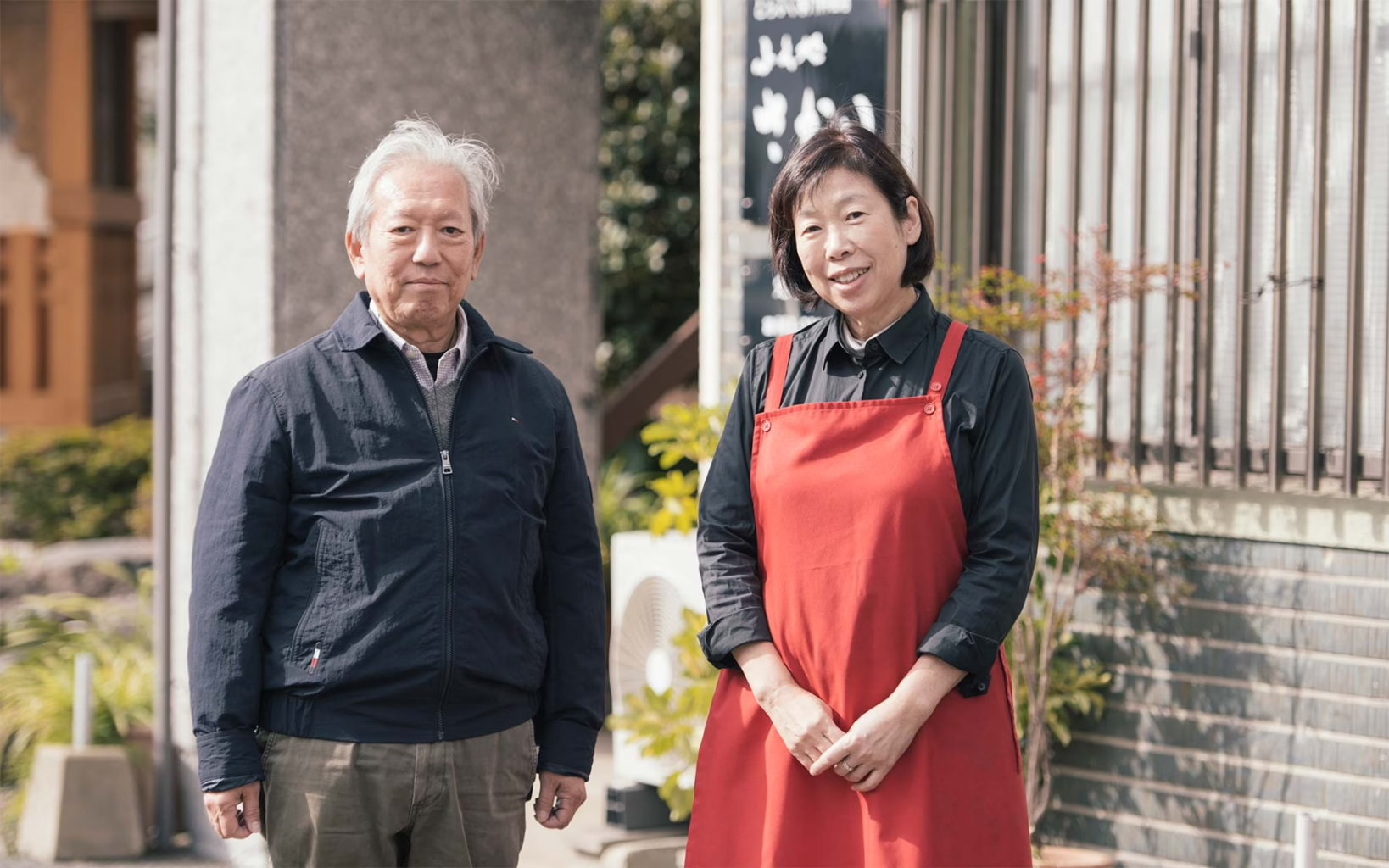
“Incidents of poisoning in fugu restaurants are unheard of,” says Hajime. “Poisonings occur more so when amateur fishing enthusiasts catch fugu and try to fillet it on their own. After eating fugu in restaurants for years, they become overconfident. That usually leads to disaster.”
Hajime equates eating fugu to eating wild mushrooms.
“Mushrooms are delicious, but you would never let anyone pick them in the wild and eat them unless they knew exactly what they were doing,” explains Hajime. “It’s the same for fugu. There are different varieties of fugu, some with poisons in different areas. That’s why everyone who handles fugu must be a licensed professional.”
The delicate, translucent slices of raw fugu are traditionally displayed in the shape of a chrysanthemum
In front of me, Sakai Shoten’s head chef Masanao Terato meticulously prepares the traditional dish of fugu sashimi. He arranges the delicate morsels in the shape of a chrysanthemum, the Japanese symbol of longevity.
Appreciating the skill of the chef and the beauty of the dish is part of the fugu dining experience. Fugu itself has such a delicate taste that the preparation and the thickness of the slices have nuanced impacts on flavour. According to Masanao, fugu preparation takes over 20 years of experience to master.


Fukudokoro Sakai offers the traditional fugu dinner – a multi-course meal of fugu sashimi followed by fugu nabe hotpot, deep fried fugu and finally a rice zosui porridge using the dashi soup stock from the hotpot.
Wild torafugu prices can be astronomical, especially in Tokyo. Some of Fukudokoro Sakai’s regular customers fly down from Tokyo just to dine at the restaurant. For them, the difference in price and the quality compared to the capital makes the journey pay for itself.
Because of its strong association with the hotpot, fugu is popular during the colder months. The official fugu season runs from the autumn equinox (20 September) to the spring equinox (20 March), but with the advent of high-quality farmed fugu, it is now possible to dine on fugu all year round.
“Before my time, Sakai Shoten only dealt in the expensive wild torafugu,” says Hajime. “But now we also sell farmed torafugu. It’s exceptional and makes fugu more accessible.”
Whether it’s exquisitely shaped sashimi or a farmed hotpot alternative, no trip to the city of Shimonoseki would be complete without a taste of its legendary mascot.
Shimonoseki
Karato Fish Market’s pick-and-mix sushi stands operate every Friday and Saturday from 10am to 3pm and Sundays, and on public holidays from 8am to 3pm.
If you plan to dine at Fukudokoro Sakai, be prepared to book at least three months in advance. Some of their regulars book a year in advance, just to be on the safe side.
Tokyo
Seeking a taste of Sakai Shoten but only stopping by in Tokyo? Hajime suggests Kaneman, a high-end, traditional tatami-style restaurant founded in 1881. Kaneman serves fugu from Sakai Shoten fugu in prepared Edo style, which accentuates the flavours of the ingredients.
For more information on Singapore Airlines flights to Fukuoka and Tokyo, visit the official website.