Fancy some wine in the air? Your beverage choice matters more than you think. Here’s how to choose the perfect pour
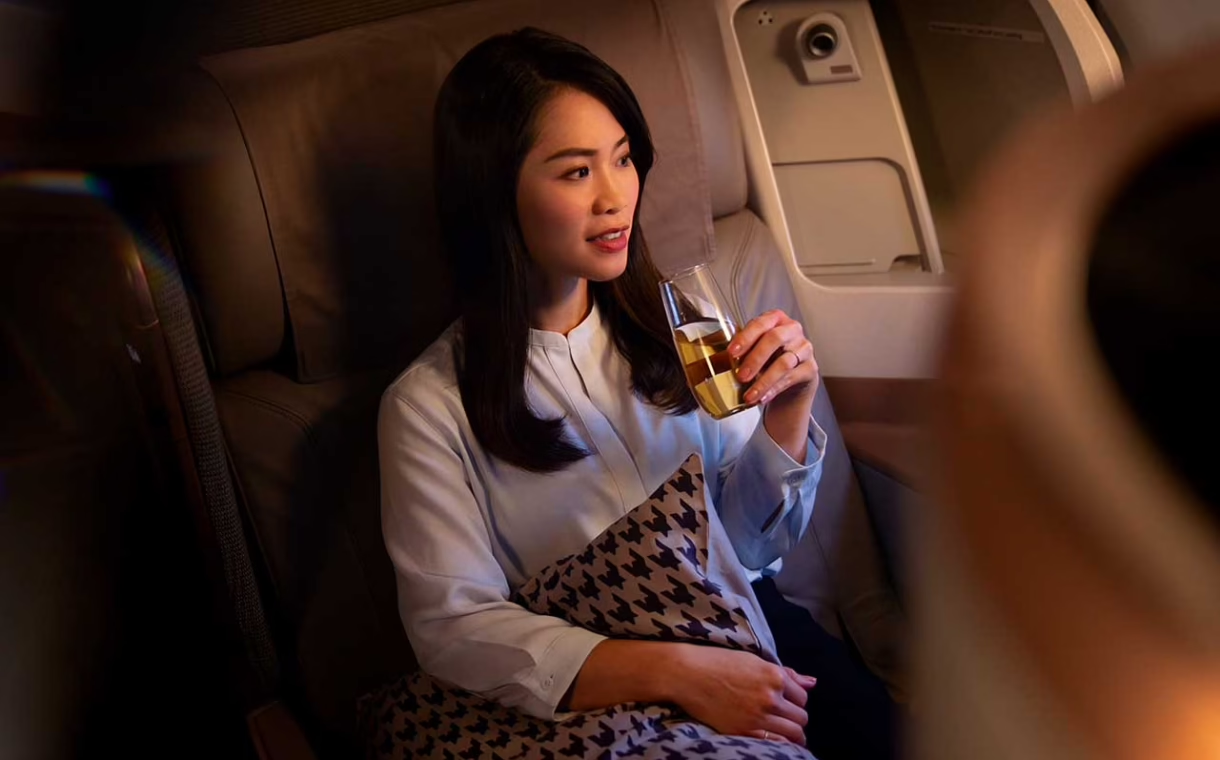
If there’s ever an occasion for champagne, it’s during a flight.
At cruising altitude, dry cabin air reduces humidity, drying out the palate and dulling our sense of smell, which in turn affects our ability to detect subtle nuances in wine.
“Champagne is a great choice because it’s served chilled and its very essence – its bubbles, refreshing acidity and lighter, toasty character – still comes through despite the dryness and our dulled senses,” says British wine critic Oz Clarke, who is also a consultant to Singapore Airlines.
This shift in taste is not caused by altitude itself, but by low humidity. Australian wine consultant Michael Hill Smith, who holds the prestigious Master of Wine title, explains: “Our sensory membranes in our nose dry out during a flight – this is the main culprit.”

As smell is closely linked to taste, aromas can seem muted, while tannins, oak and acidity may feel more pronounced. As a result, certain wines perform better in the air than others. Wines with more fruit, vibrancy, perfume and acidity tend to shine.
For reds, this often means New World wines from Australia, New Zealand, Chile and California, while aromatic, light-bodied whites – such as Riesling or Sauvignon Blanc – also hold their own. In contrast, heavily oaked, fuller-bodied whites and highly tannic reds can come across as harsher at altitude.
This is why pairing matters. A glass of champagne – versatile and refreshing – works well with most starters on Singapore Airlines, from dim sum and seafood to light salads.
Asian dishes, seafood and poultry pair beautifully with Riesling or Pinot Noir, while Western mains such as beef or lamb are better complemented by fuller-bodied reds, including Australian Shiraz, Bordeaux, Tuscan or Californian wines.
“The best pairing is one you enjoy; the rules exist only as a starting point, not a constraint"
That said, Hong Kong-based Korean-American wine critic Jeannie Cho Lee, also a Master of Wine, advises against being overly prescriptive: “The best pairing is one you enjoy; the rules exist only as a starting point, not a constraint.”
Behind every in-flight beverage menu is a rigorous selection process. With limited space onboard, Michael says: “Each wine has to earn its place.”
Wines hand-picked for Singapore Airlines typically have “sufficient personality and intensity to project through challenging environmental conditions”, according to Jeannie.
Passenger feedback also plays a key role. She adds: “This informs us of what our passengers want and enjoy, and we combine that with our knowledge of global wine trends to make informed decisions about beverage selection.”

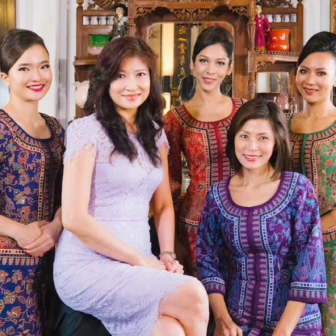
The consultants also encourage passengers to step outside their usual choices. Some flights feature Air Sommeliers – crew members with deep wine expertise who have spent at least two years developing their knowledge. Jeannie encourages passengers to seek them out.
“They are always thrilled to offer advice and share what they know,” she says. Even when one is not onboard, many cabin crew members are happy to offer recommendations.
To keep the list fresh and dynamic, the team continues to strengthen relationships with producers in Australia, Burgundy and Bordeaux, bringing new and exciting selections to the cabin.
Michael shares: “We continue to broaden our offerings, which have great depth, and feature some exceptional producers.
“We are all keen to pour lighter styles as an exciting contrast to our fuller bodied reds. Watch this space.”