Childhood memories in West Bengal, Kali Puja and the many traditions of Deepavali come together in a personal reflection on family, loss and the enduring power of light
The story of good versus evil is eternal, as is the festival of lights. Growing up, I thought Deepavali – Sanskrit for “a row of lights” – belonged solely to the Indian subcontinent.
Then I began travelling during the Deepavali festive season, watching India’s cities glow like clusters of fireflies from the sky. I soon realised that this halo of light stretched far beyond India – from the Middle East to Southeast Asia and even Europe, wherever the Indian diaspora had put down roots.
Memories of Deepavali carry a particular melancholy. I see my seven-year-old self in a hurry-free childhood, holding a sparkler at arm’s length while my grandfather calls from the doorway for me to be careful – a doorway I no longer walk through. The brave dog at my feet now lives among the stars. That house is no longer mine to visit; no one lives there anymore. The family I once burst crackers with has become a story I may one day tell my own children.
But Deepavali doesn’t seek permission before returning. It comes every year, whether or not I am ready to face what it remembers.
In my hometown in West Bengal, the festival arrives as Kali Puja. While much of India lights lamps in honour of other deities, Bengal turns its attention to its fiercest goddess – dark and unbound, garlanded with skulls, her tongue out in shame after realising she is standing on her husband’s chest.
Elsewhere, the stories shift: to Rama’s homecoming after his victory in Lanka, or to the churning of the ocean of milk, from which Lakshmi emerged to bestow prosperity. But it is Kali – wading through demons and refusing gentleness on her path towards light – who feels truest to me now.
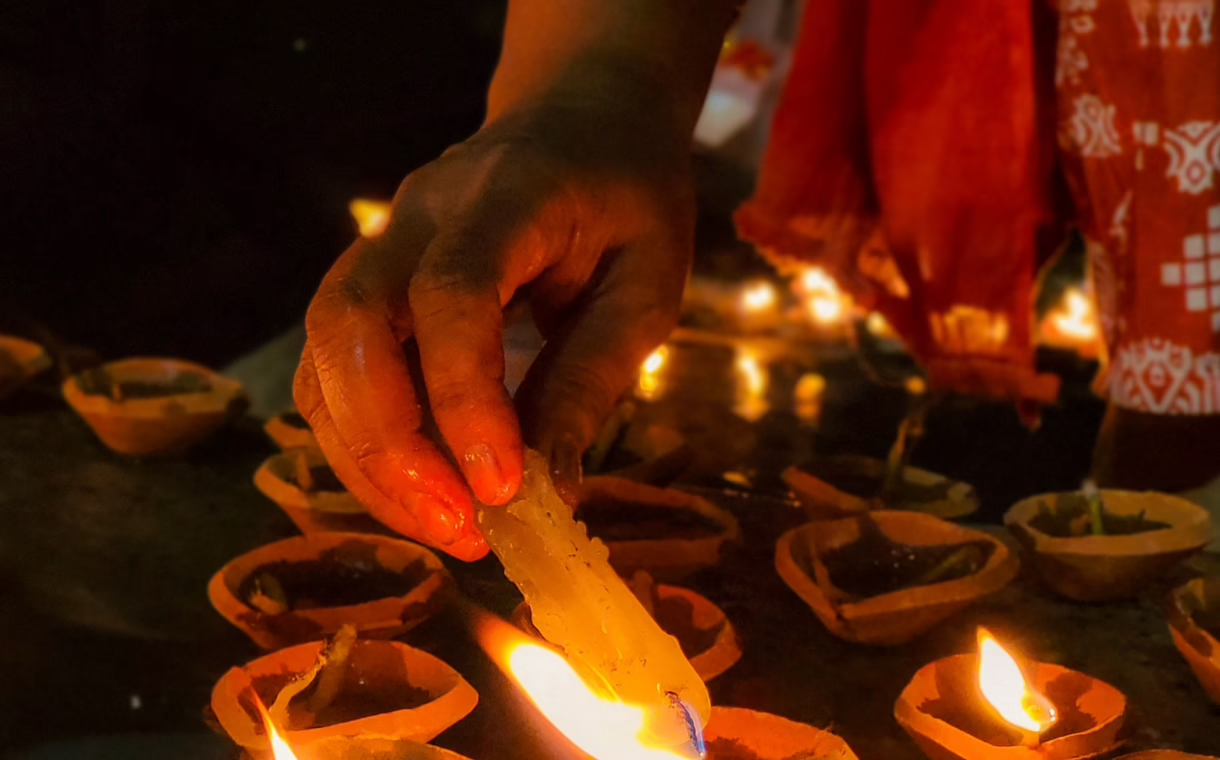
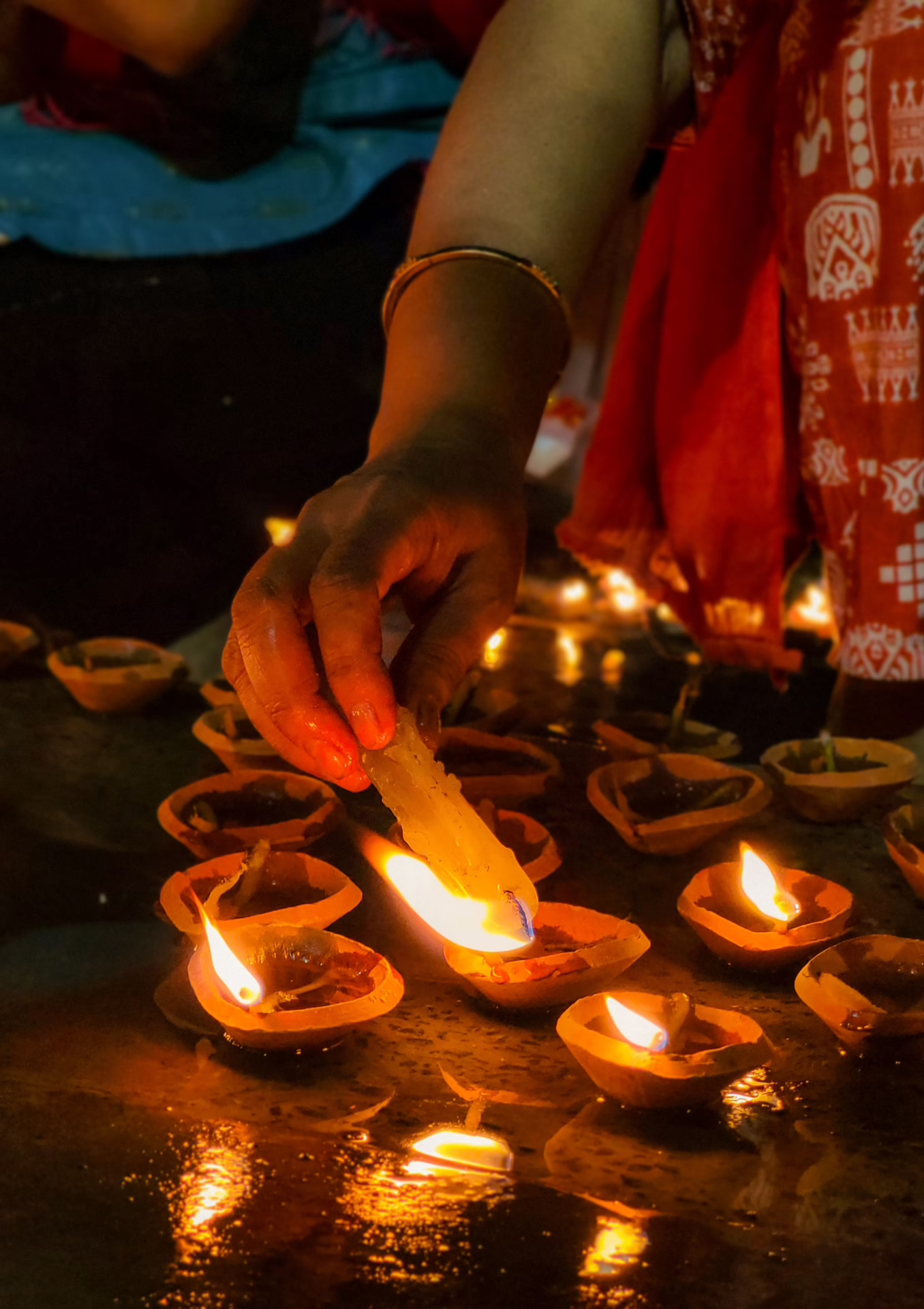
The night before is Bhoot Chaturdashi, our own version of Halloween, when spirits are said to roam. Fourteen diyas, one for each forefather, are placed at doorways and on windowsills, leaving no dark corner for a wandering ghost. Fourteen kinds of leafy greens are also prepared in a bitter dish called choddo shaak, traditionally eaten to ward off what the light cannot reach.
“All the legends of Deepavali lead back to the same act: a refusal to let any corner of the house, the year or the self go unlit”
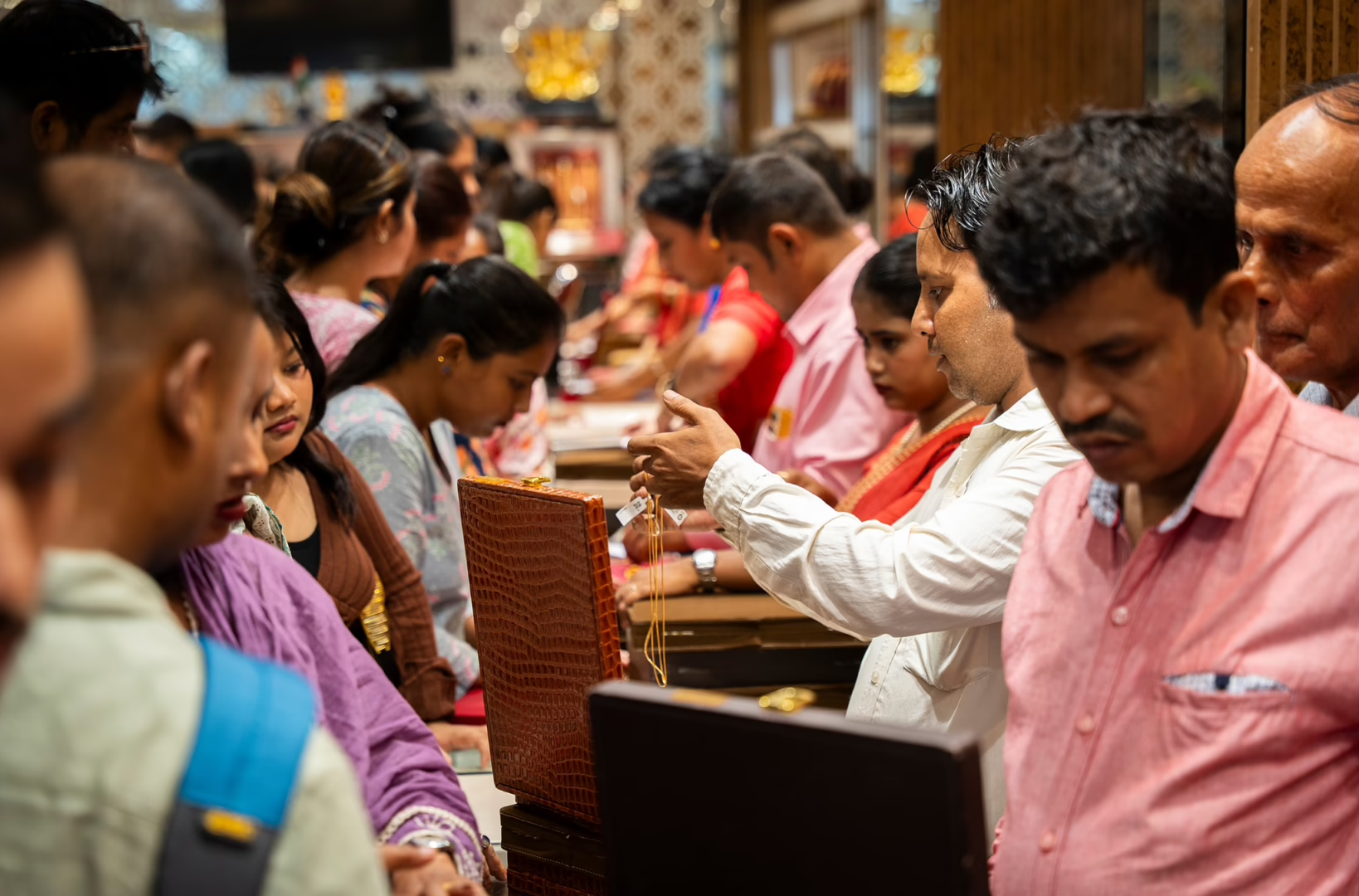
In Mumbai, Deepavali arrives with a sense of opulence. Accountants close their ledgers and open new ones in Lakshmi’s name, while gold is bought the day before, on Dhanteras. Families gather around card tables, playing rummy and teen patti into the night.
Legend has it that Parvati once played dice with Shiva on Deepavali and declared that those who gamble on the festival would prosper throughout the year, while those who abstain risk returning as a donkey. Money changes hands amid sweets and laughter. Beneath it all lies the same enduring hope: Let this year be brighter than the last.
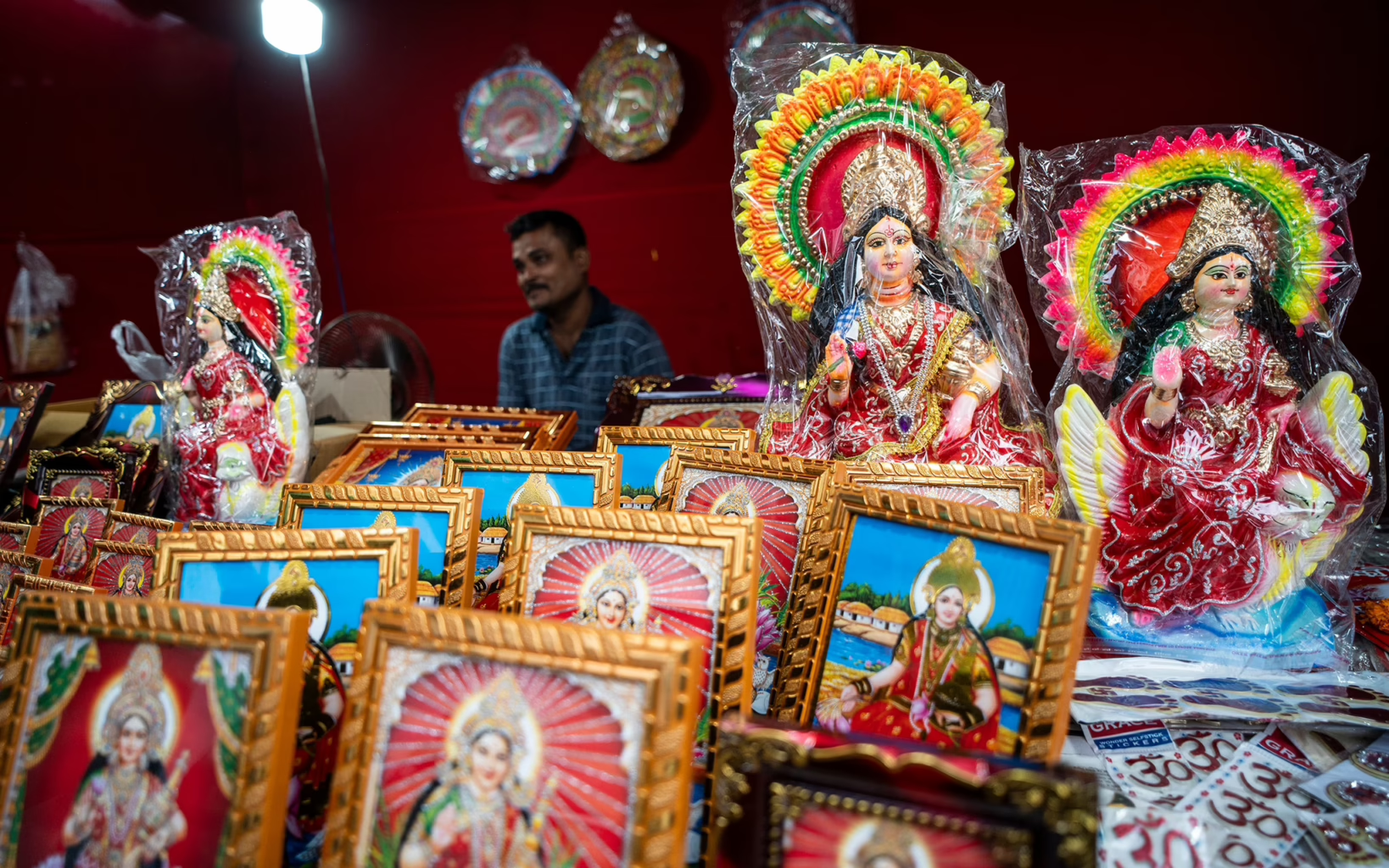
Further north, Deepavali marks Rama’s return to Ayodhya, with lamps lit to guide a king home. Down south, Lakshmi takes centre stage again, bringing her own language of prosperity. The celebration now stretches far beyond India – to Singapore, Thailand and even Dubai, where skylines come alive with dazzling light displays.
I no longer light firecrackers, having traded them for hand-drawn rangoli and lamps that I light without much thought for which god they are meant for.
Every year, in whatever city I find myself, a small flame at my doorway does what it has always done: show me a better path through life. Deepavali survives distance, different gods and even a childhood home whose door you can no longer knock on.
All the legends of Deepavali lead back to the same act: a refusal to let any corner of the house, the year or the self go unlit. I don’t know which story is true. What I do know is that everywhere around me, people are doing exactly what I am doing: striking a match, watching it catch, and believing that the dark never gets the last word.
For more information on Singapore Airlines’ flights to India, visit singaporeair.com.