When you're done exploring Angkor Wat and Ta Prohm, step off the beaten track to discover lesser-known temples within the sprawling Angkor Archaeological Park
There’s an upbeat vibe in Siem Reap these days, an exciting feeling that many of us haven’t experienced since this pandemic began. Maybe it’s been sparked by the city’s spanking new riverside promenade, the result of a massive infrastructure upgrade initiated by the government last year. Or it could be Cambodia’s impressive 81% vaccination rate – a number that has no doubt helped locals return to a much more normal life.
Whatever the case may be, now is the best time to come over: with only two daily flights landing at the Siem Reap International Airport (courtesy of Singapore Airlines), the whole city is refreshingly free from tourist crowds. Furthermore, many bars and restaurants are offering 1-for-1 cocktails, half-off deals and all kinds of add-ons for guests. This also applies to Siem Reap’s greatest attraction – the Angkor ruins. The Apsara Authority is currently granting free extra days to the usual one-, three- and seven-day passes, giving sightseers more time to roam this majestic ancient city.
Take a day or two to traverse the so-called Small and Big circuits, which cover the most popular landmark ruins. These routes include the 12th-century Bayon with its massive stone heads, Ta Prohm and its jungle-encrusted walls, the sprawling Preah Khan monastery and, of course, the stunning Angkor Wat.
Afterwards, head off the tourist trail to check out this ancient city’s lesser-known temples. There’s literally dozens of these crumbling structures that are bypassed by most visitors; some are partially covered by jungle, and are only accessible via dirt trails. Others hide in plain sight – overshadowed, perhaps, by bigger, more spectacular ruins nearby.
Angkor may no longer be the lost city of lore, but these off-the-beaten-path ruins still provide a worthy adventure.
Starting 26 April 2022, fully vaccinated travellers on all Singapore Airlines and Scoot flights will enjoy quarantine-free entry into Singapore without any pre-departure Covid-19 test. On your way to Siem Reap, why not stopover in the Little Red Dot and experience Singapore for yourself? Enjoy a few public art installations, take part in family-friendly outdoor activities or check out its bustling bar and restaurant scene. To know more about entry requirements for Singapore, check Singapore Airlines’ travel advisory.
Begin with the city walls
Those exploring Angkor Thom, a popular stop on the Small Circuit, usually focus on the ruins rather than the wall that goes around the complex. For a different experience, take the road less travelled and explore this laterite barrier instead. Standing at roughly 8m tall and stretching for 3km on each side, it has five entrance gates – one at each cardinal point, and an additional one along the eastern wall – serving the ruins.
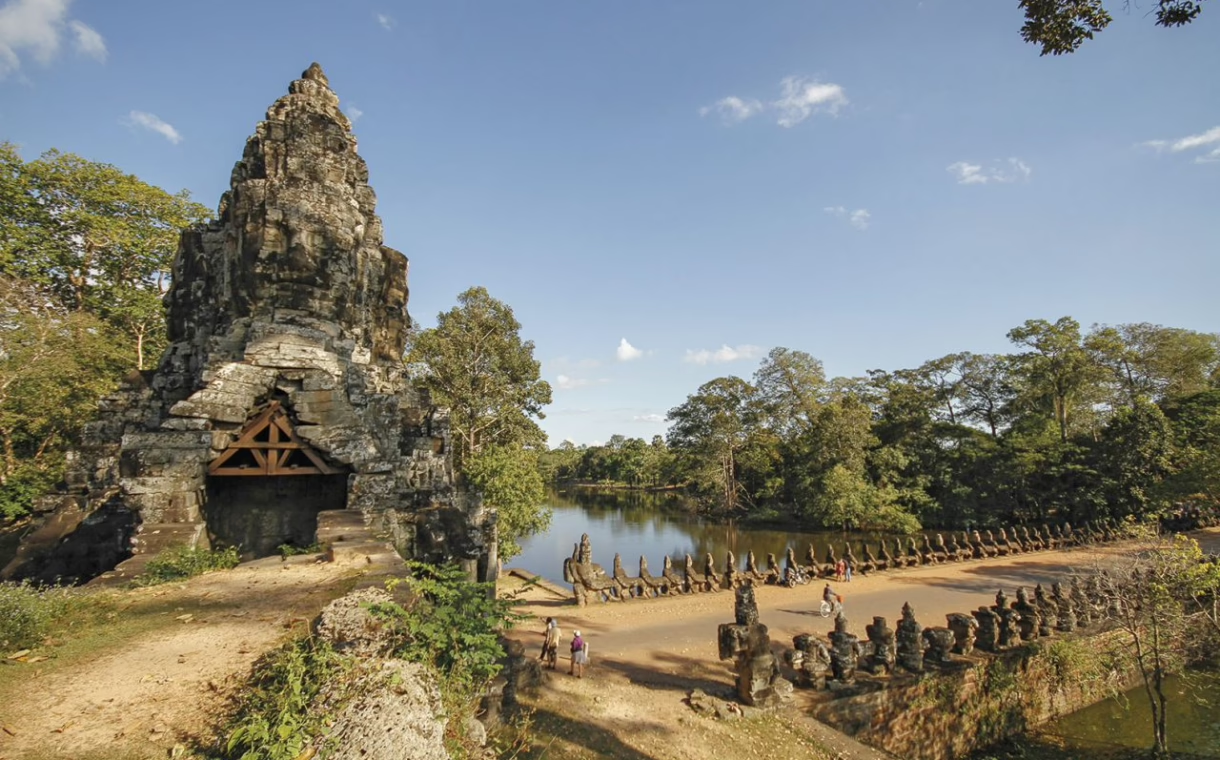
A good place to start the Angkor Thom wall trail is the South Gate – the most accessible among the gates. A narrow dirt path at the side of the massive stone monument will take you up to the top of the wall; from there, take a 1.5km stroll towards the barrier’s southwest corner, where one of the Prasat Chrung temples – four religious structures that guard the edges of the citadel – stands. Along the way, you’ll come face to face with a huge, smiling stone face thought to be the 12th-century representation of Lokeshvara, the Buddhist deity of compassion, made during the time of the Khmer king Jayavarman VII. Pay your respects before moving along the wall to the west, via a walkway with jungle on one side and a steep drop on the other, until you reach your destination.
While the partially destroyed Buddhist shrine of Prasat Chrung may not look too different from countless other minor Khmer temples, its spectacular location, which affords sweeping views of the surrounding landscape and the city moat below, sets it apart. Here, you can sit back and enjoy the scenery in complete solitude, your only company being the handful of dancing apsara statues on the temple walls.
[sk_post id=”44372″]
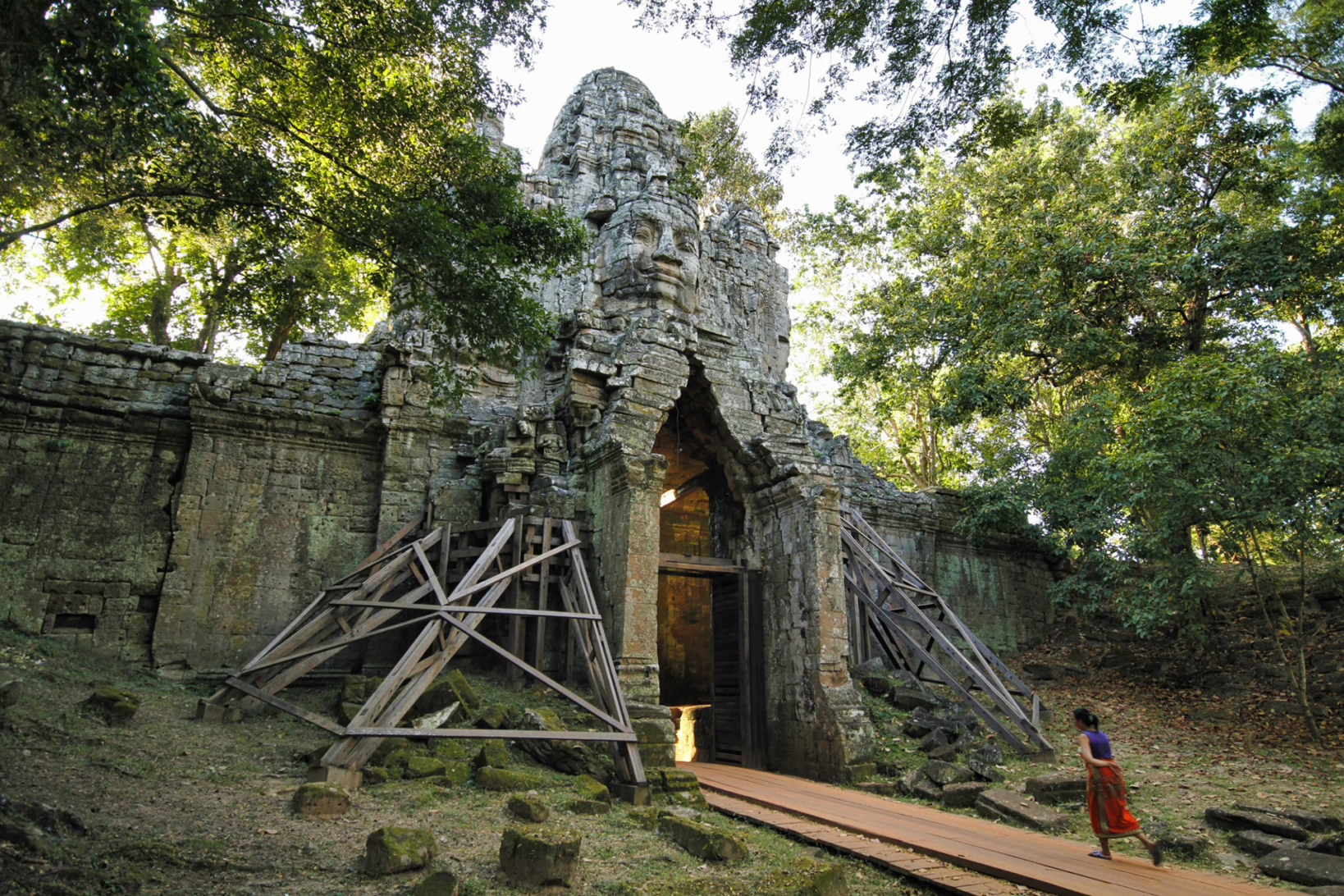
The border of Angkor Thom stretches to a total of 12km, which makes for a challenging hike for those wishing to explore its entire length. So make your way back to the South Gate and find a ride that will take you to the vicinity of the Bayon temple. From there, hop on a motorbike or a tuk-tuk (a motorcycle with an attached carriage), and take the narrow side road, which leads to a little- known section of the eastern wall: the East Gate, also known as the Gate of the Dead. You know you’re on the right path when the concrete you’re following turns to red dust.
Very few ever reach this landmark, since the road it straddles leads literally nowhere. Like all the other gates of Angkor Thom, the gopura features what’s believed to be the four faces of Lokeshvara. You can climb up the walls, or simply walk around the massive structure while keeping in mind its original function – as a portal to a graveyard for executed criminals.
Explore Ta Nei Temple
From the East Gate, it only takes a few minutes on wheels to get to another hidden gem: the Ta Nei temple. Find your way to Victory Gate (that’s the main entrance at the eastern wall – yet another tourist hotspot) and continue heading east, past the city moat, the Siem Reap River and the monolithic temple Ta Keo. Close to this area is a dirt road going straight to your destination.
It’s intriguing how obscure Ta Nei is, given that it’s right in the shadow of the mountain-like Ta Keo. In fact, it’s not even mentioned on most tourist maps. Surrounded by verdant forest, this unrestored ruin is a taste of the proverbial lost city in the jungle. A layer of moss covers its crumbling walls and centuries-old trees grow amid its fallen laterite blocks. It is yet another Buddhist relic of the 12th century, a period that saw the construction of many of Angkor’s most iconic monuments.

Wander further afield
Outside the bounds of the archaeological park stand many more structures that are overlooked by tour groups. At its peak, the city of Angkor is believed to have stretched out over 100 sq km, its massive land area sustaining over a million residents. Such urban density has left its mark on the countryside, with countless other structures just waiting to be explored. One of these is the Phnom Bok temple (below), located some 18km east of Angkor Thom.
Intriguingly, it is just a short ride away from another tourist magnet, the Banteay Samre Temple. Phnom Bok, though, is the exact opposite, with its vicinity hosting more monks and village folk than foreigners. A modern Buddhist temple guards the base of the hill. From there, take a steep concrete stairway up, pass trees and grassy fields, until you come to the ruins themselves, some 235m above the countryside. On this peak, one can see all the way to the shores of Tonle Sap lake, some 30km to the south. The temple’s three towers are only partially restored, while around it lie the jumbled remains of two minor sanctuaries.
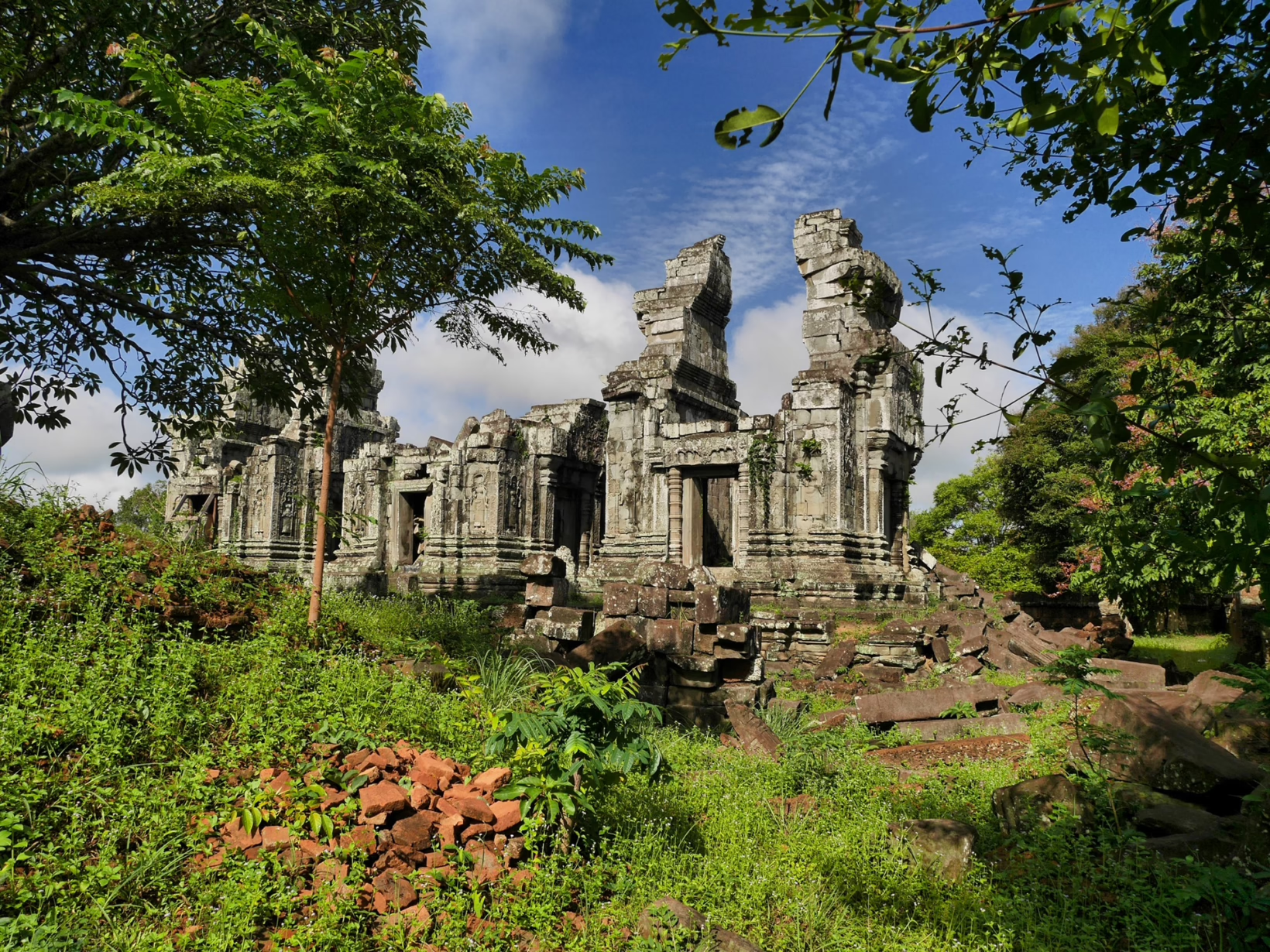
Believed to be constructed in the early 10th century, Phnom Bok is one of three temples built on the three hills surrounding Angkor Thom. The other two – Phnom Krom and Phnom Bakheng – are firmly established on the tourist routes. There is, however, another little-known landmark on a much lower hill, just 10km away from Phnom Bok.
Flanked by a primary school on one side and a Buddhist monastery on the other, the sprawling Chau Srei Vibol is so untouched that parts of it are still heavily forested. The local monks say that its eastern edge – the side that leads straight into the jungle – hasn’t been cleared of land mines. The rest of the compound – from its tree-encrusted entrances to the pile of rocks that once formed its main buildings – is, thankfully, safe.
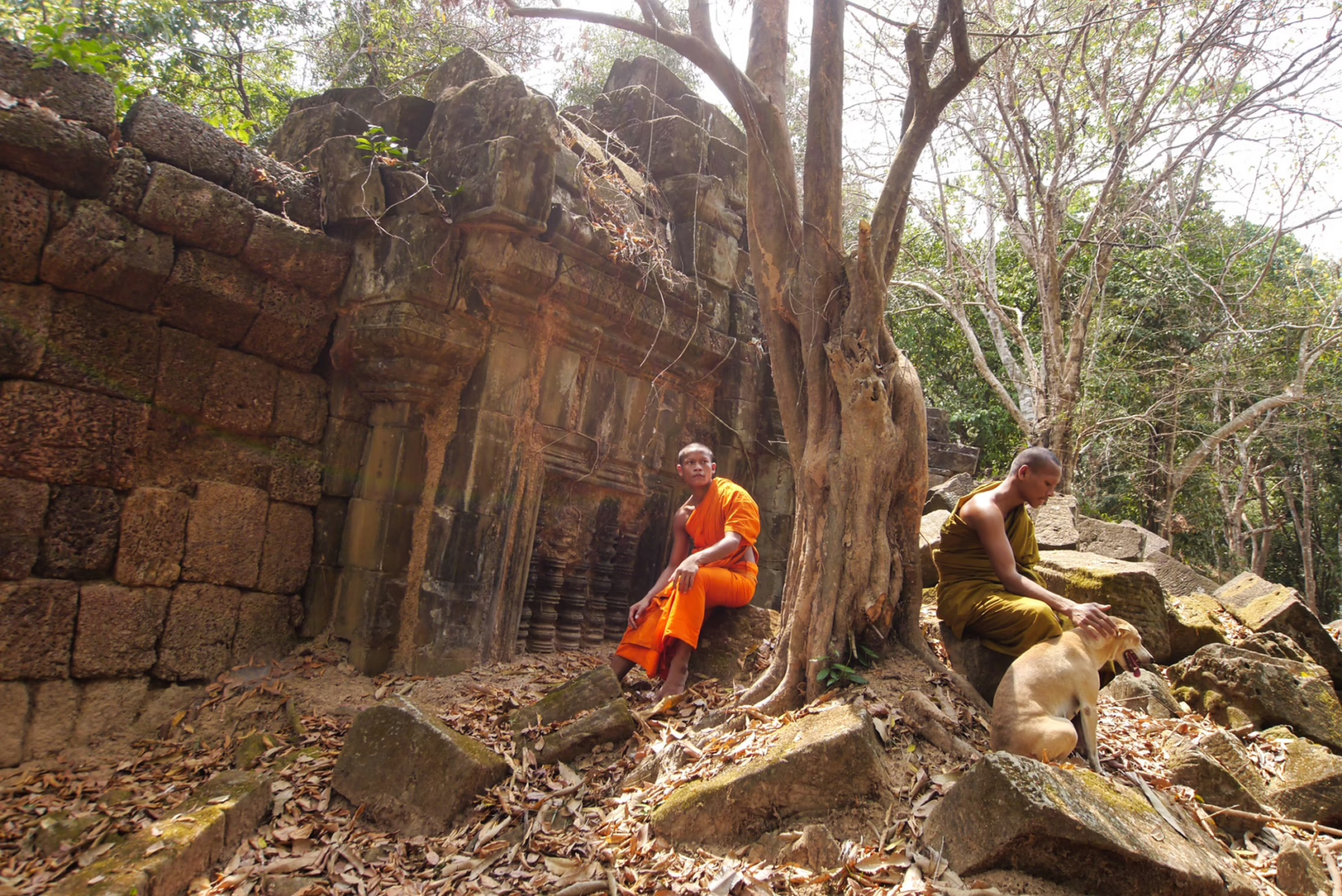
At this tranquil hideaway, surrounded by the remnants of an empire, one can ponder the Khmer legacy without being interrupted by anyone. It’s amazing how much of Angkor still remains hidden and how little it takes to get off the beaten track.
Please check the establishments’ respective websites for opening hours as well as booking requirements before visiting, and remember to adhere to safe-distancing measures while out and about.
The information is accurate as of press time. For the latest travel advisory updates, please refer to the Ministry of Foreign Affairs’ website.
To learn more about Singapore Airlines flights to Siem Reap, visit singaporeair.com. To join us in protecting the environment by offsetting your carbon emissions on your future flights, visit the following websites to learn more: carbonoffset.singaporeair.com.sg and carbonoffset.flyscoot.com
This article was originally published by Singapore Press Holdings on 10 November 2017 and updated on 20 March 2021.
PHOTOS: LESTER V LEDESMA, ALAMY (CLICK PHOTOS)