
Published on May 6, 2020
Over vales and hills: The enchantment of the Lake District
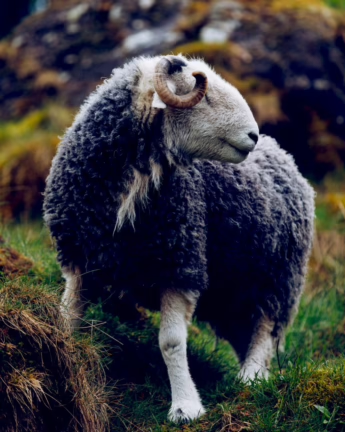
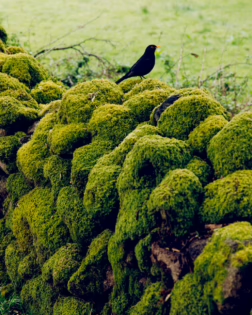
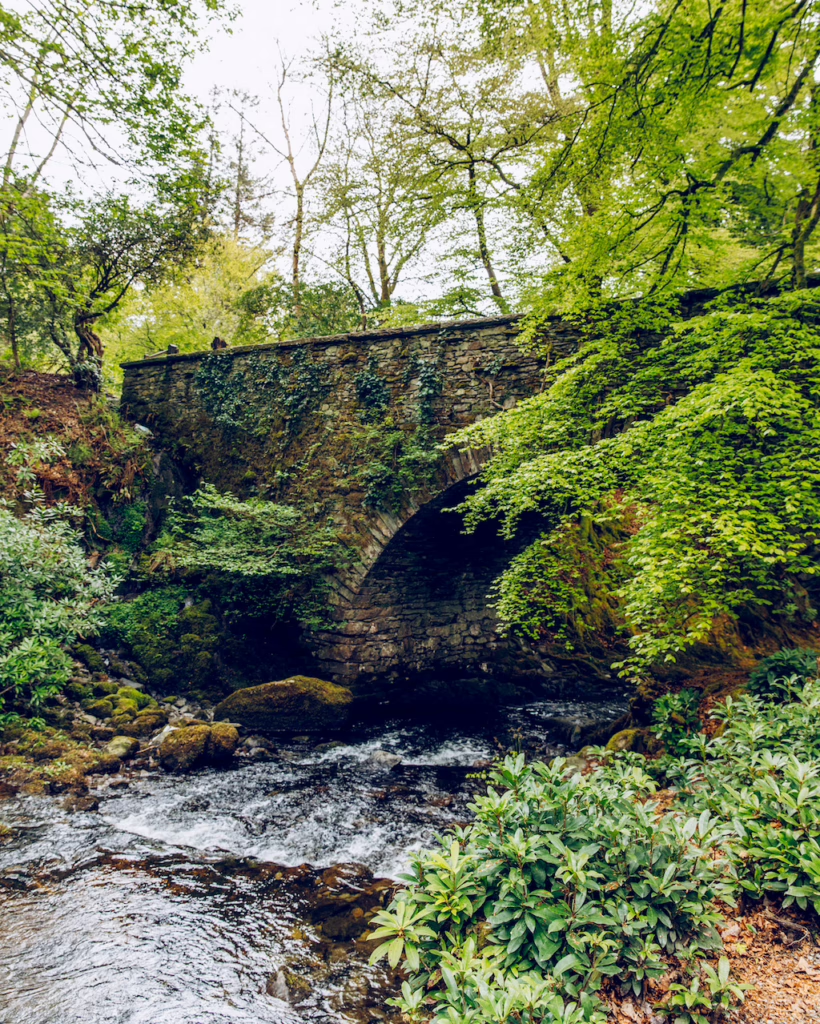
A ram near Watendlath; a blackbird on a wall near Stonethwaite; a bridge in Rydal
A wonderland I first visited as a girl,
I am lured back to the Lake District year after year
Borrowdale has thrilled me since childhood. A huge, wild, living playground, it was the perfect antidote to the grey shades and straight lines of school and suburbia. With my parents, brother and sister – as well as our dogs, a young and exuberant Irish wolfhound and a sensible, much older border collie – many happy summer days were spent here. In the meadows, we searched for daisies, buttercups and forget-me-nots for my flower press. And, in the woods, with socks and shoes off , we chased each other around huge oak trees, picking up acorns, throwing them for the dogs to catch, always saving a few to play wonky marbles with later. Then we’d find a clear stream to cool down and clean our hot little feet before starting our adventures all over again.
Of course, some four decades on since playing in the woods here, it’s sturdy boots, rather than bare feet, for me on my walk today. Now reaching the end of the lane, the view opens out and my climb up Great Crag, a steep fell-side, begins. The colours are different here – less verdant, more of an autumnal palette of faded-purple heather, burnt-brown bracken and grey rocky knolls. The colour of storm clouds. Now, some 200 metres above sea level, I turn around and marvel at the classic Lakes view. The valley floor – which in the summer months is ablaze with wildflowers – is strikingly green, intersected by the shimmer of the River Derwent that snakes through Borrowdale like a silver ribbon.
Turning back towards Great Crag, I follow the bridleway until a large whitewashed farmhouse and a small cluster of stone cottages come into view. This is the secluded picturesque hamlet of Watendlath that nestles on the shores of the tarn here. Apart from a mewing buzzard above me, enjoying the warm thermals, and a gaggle of honking barnacle geese, it’s incredibly quiet.
I take the path around the water’s edge, passing a flock of free-roaming sheep. Huge moss-covered oaks, with branches outstretched like arms and twigs pointing like fingers, cast their shadows. As the terrain turns to moorland, damp and peaty in places, I spy the yellow-green heads of bog myrtle popping above the scrub.
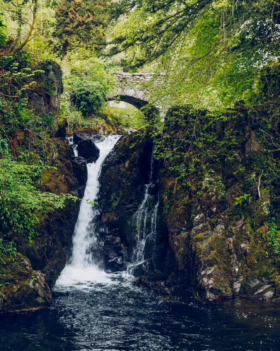
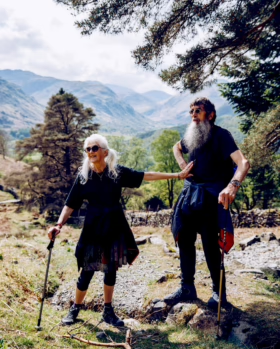
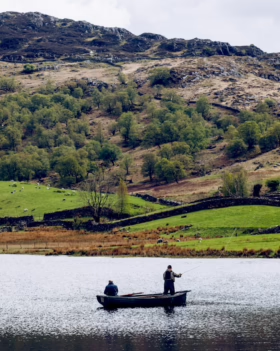
A river scene in Rydal; a pair of keen ramblers taking in the scenery; two people fishing at a reservoir in Watendlath
Rare creatures live in its ancient oakwoods and birds of prey majestically soar the skies
I scan the sky, hoping for a sight of another buzzard or maybe a falcon. It is empty. If I’d been standing here three or four years ago, though, I might have seen England’s last golden eagle, known as Eddie, filling the void. Up until the early 1800s, golden eagles – Britain’s second-largest bird of prey with a wingspan of around 1.8 metres – were numerous in the Lakes. But regarded as a threat to new-born lambs, the birds’ eyries (nests) were systemically destroyed by local sheep farmers – causing such a catastrophic decline in their numbers that golden eagles became locally extinct by the 1850s.
Since then, only very occasional pairs have settled in the Lakes. The last known couple were Eddie and his mate. He is believed to have died in 2016, some 12 years after the female. Fortunately, conservation measures have been put in place to encourage the return of these iconic birds. It’s hoped that chicks from successful populations in southern Scotland will be introduced here soon, turning the Lakes’ skies golden once again.
After two and half kilometres or so, I see Dock Tarn, one of the Lake District’s most beautiful mountain lakes. Circled by a small ring of tor-topped hills, covered in heather and bilberry, the tarn is aglow in the sunshine. On the surface, some yet-to-flower waterlilies shiver slightly as a light breeze brushes over them. Come high summer, orchids can be found among the grasses, and when the heather blooms, the tarn will reflect their hazy-purple hues, as if in perpetual twilight. It’s not just Dock Tarn that mesmerises. From here, I can also admire the summit of Glaramara and enjoy take-your-breath-away views of other mighty fells, including Haystacks, Honister and Pillar.
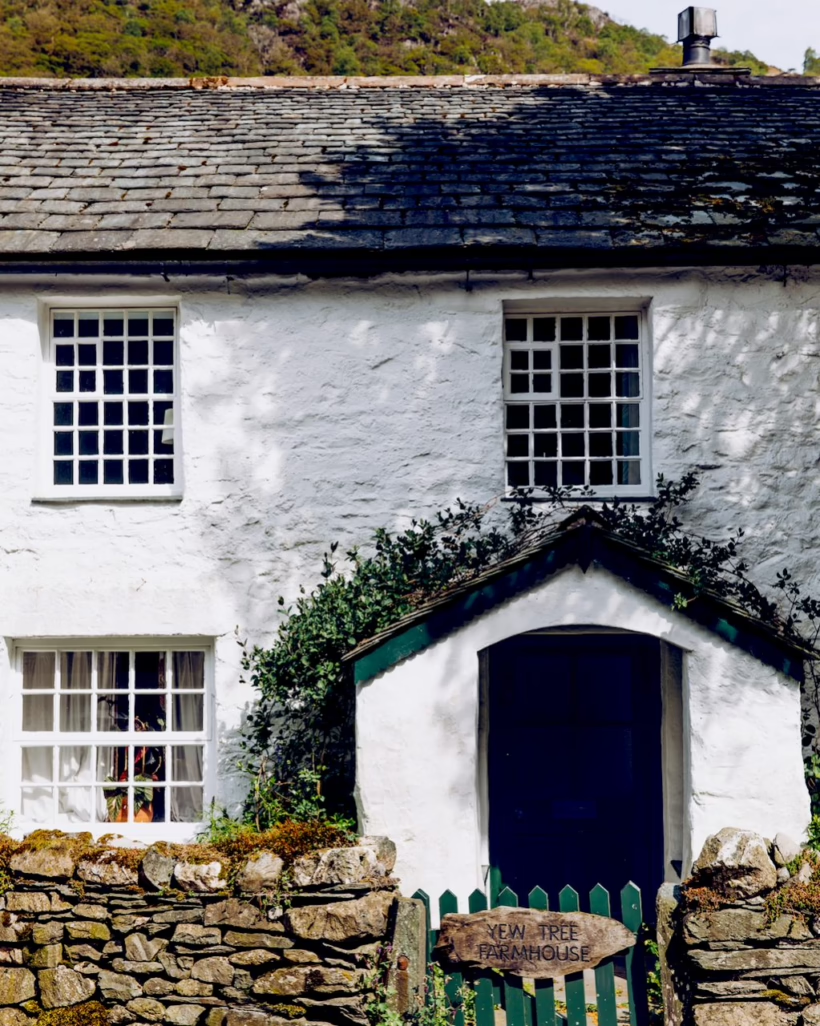
The Lake District’s natural beauty has quickened people’s hearts for centuries. During the 1800s, some of England’s best-known Romantic poets and writers – including William and Dorothy Wordsworth, Samuel Coleridge, Thomas de Quincey and John Ruskin – were particularly enamoured. They celebrated the Lake District’s sublime beauty in their writings, often elevating the region to a heaven on earth, a wild Eden where man could achieve spiritual harmony with nature.
In his great autobiographical work, The Prelude, published in 1850, William Wordsworth described the region as a place where:
“The solid Mountains were as bright as clouds,
Grain-tinctured, drench’d in empyrean light;
And, in the meadows and the lower grounds,
Was all the sweetness of a common dawn,
Dews, vapours, and the melody of birds,
And Labourers going forth into the fields.”
The best places to stay in the Lake District
Brimstone Hotel
Situated near some of Ambleside’s finest fell-walking valleys, the Brimstone is a modern luxury retreat. Its well-appointed and spacious suites come with wood-burning stoves, stunning bathrooms and private terraces. Part of the hotel’s philosophy includes collaborating with other businesses that pride themselves on quality – it has a luxurious boot room stocked by Canadian outdoor gear brand Arc’teryx, where guests can get decked out in insulated jackets, walking boots and hats to brave all climates.
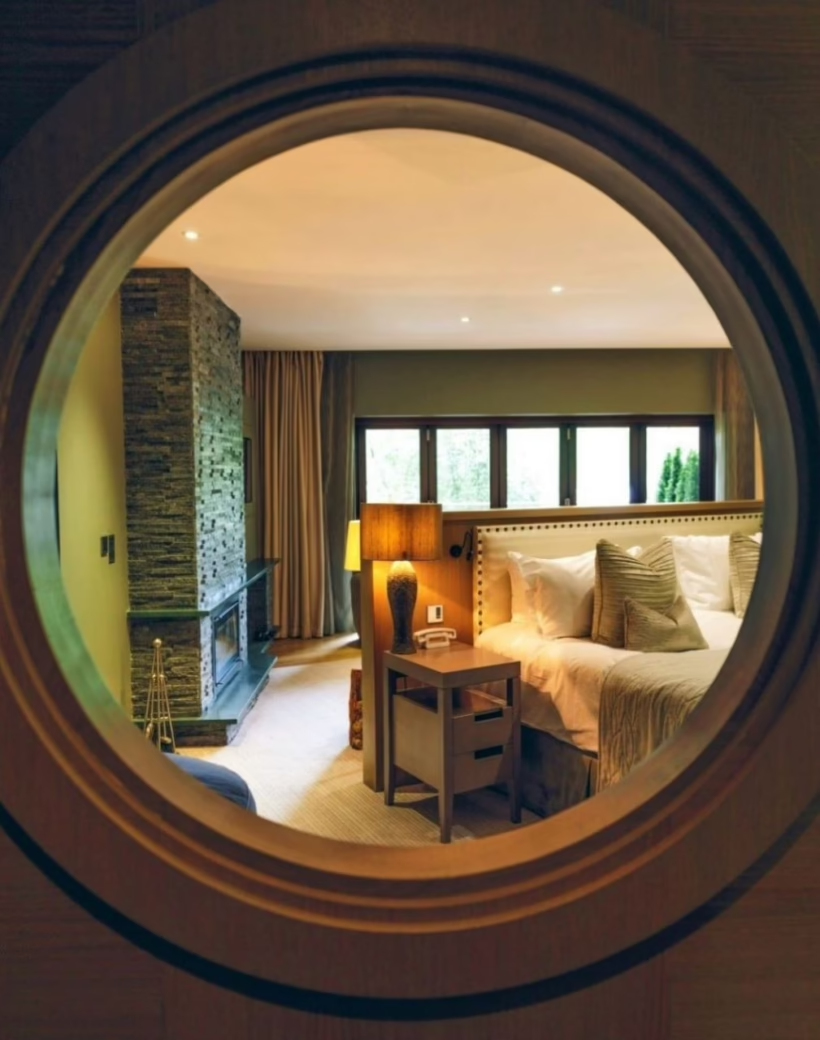
The Ryebeck
The Ryebeck is set in a leafy clearing above Lake Windermere’s shores. Along with lake views, the lodging offers a laid-back, rustic charm and easy access to the nearby village of Bowness-on-Windermere, which is known for its immersive exhibition and garden on the life and characters of famed writer Beatrix Potter. There’s a spectacular range of rooms to choose from, but most remarkable are the dog-friendly amenities that include access to a dog bed and treats. To round off the English countryside experience, the hotel restaurant’s menu of modern British dishes will have foodies rejoicing.
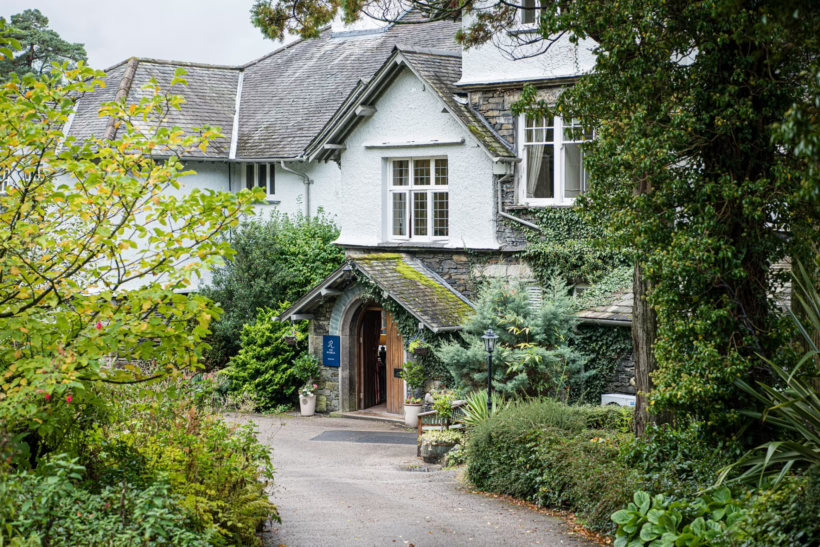
Lodore Falls Hotel & Spa
This superbly located hotel overlooking Derwentwater is more than 200 years old, and is perfect for a luxurious romantic getaway. Recently upgraded, it has state-of-the-art spa facilities, including a heated outdoor pool with mountain views. For those disinclined towards down-to-the-detail planning, the hotel has a great selection of short-stay packages that’ll have you rejuvenated in the blink of an eye.
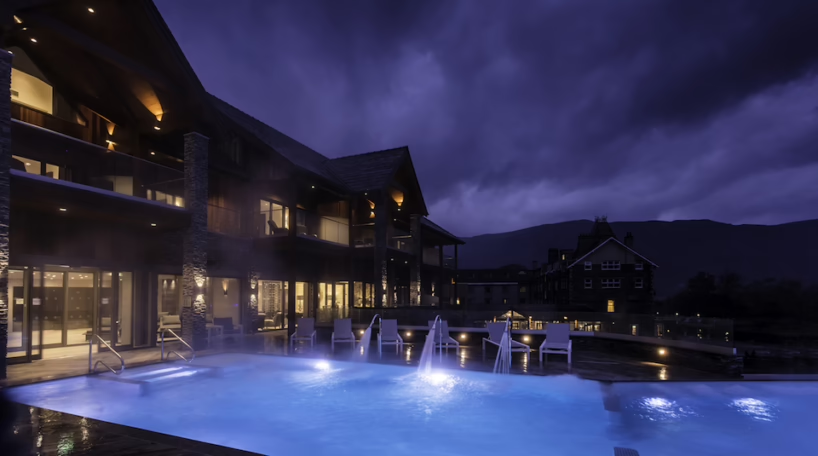
Turning away from the “bright as clouds” view of the summits, I trace a stone-pitched track to the hanging oakwood at Lingy End and begin my descent. The climb down through the ancient wood is steep, and I’m kept company by the babbling Willygrass Gill stream. Originating at Dock Tarn, it cascades gently down the valley, eventually joining the River Derwent. Shoots of pungent wild garlic sprout between rocks and stones, joined by butter-yellow, star-shaped celandine flowers.
I scan the trees for red squirrels, an endangered native species. Thanks to special conservation programmes, Borrowdale’s woods are one of the best places in England to spot this rare and elusive creature. I also look out for red and roe deer, but as with the squirrels, I am out of luck. I do, though, sight a great spotted woodpecker drilling into a tree, its distinctive black, white and red markings glimmering softly in the dappled light.

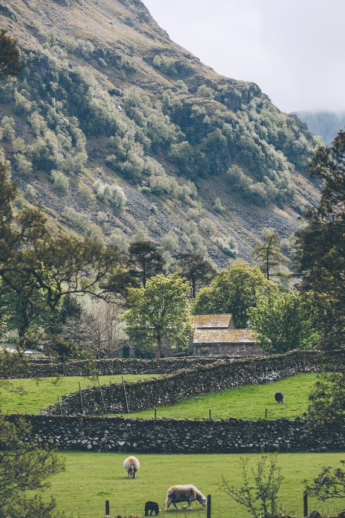
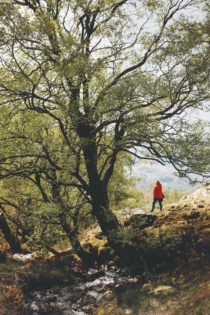
Borrowdale’s oakwoods are the remnants of the temperate “rainforests” that once flourished on the western seaboard of Britain. They are the precious last habitat of disappearing moss and liverwort species and support an incredible variety of ferns and fungi, as well as butterflies, moths and other insects. That’s why Borrowdale’s oakwoods – over 500 hectares, home to more than a hundred bird species – are afforded the highest tier of protection available to habitats in Europe.
After an hour or so, the steepness of the slope eases and I’m back on level ground in the village of Stonethwaite, just next door to Rosthwaite. The wide walled and pretty path here runs parallel to the River Derwent, considered one of the purest rivers in Europe. Freshwater shrimp, lamprey and salmon thrive in its protected waters – even sleek-haired otters, once locally extinct, are back and can sometimes be spotted on the riverbanks with freshly caught fish in their paws.
Back at Rosthwaite, I jump on a bus and less than 10 minutes later find myself on the shores of Derwentwater, one of the Lake District’s fi nest glacial lakes. In the afternoon light, the water reflects the shape of the mountains that circle it. A swan glides by, heading towards Lord’s Island, one of the lake’s four main islands. Once inhabited by the Earls of Derwentwater, the island is now a desirable residence for nesting birds and primroses only. During the winter months, the secluded bays and headlands here provide shelter for many wildfowl, including greylag geese, mallards and moorhens.
The Queen of the Lakes, as Derwentwater is also known, is the only place in England – apart from Bassenthwaite Lake about 16 kilometres further north – where vendace, a rare Arctic fi sh species dating back to the Ice Age, survives. Bassenthwaite Lake is also the place to see the Lake District’s only ospreys. These spectacular birds of prey, with a wingspan of almost 1.5 metres, returned to breed in 2001, after an absence of almost 150 years, and during the summer months can be seen diving for fish in Bassenthwaite’s pristine waters.
During the winter months, the secluded bays and headlands here provide shelter for many wildfowl, including greylag geese, mallards and moorhens
Two years ago, in 2017, the Lake District National Park was designated a Unesco World Heritage site. It became a National Park in 1951, one of the first established in Britain after the passing of the 1949 Act of Parliament. This year marks the 70th anniversary of that Act, without which the UK wouldn’t have its 15 glorious National Parks to explore and enjoy today.
That the Lake District is – and remains – a protected place is important to me. The Lake District is a gift. A green refuge where once-lost species have returned; a precious jewel of a place where I, and countless others before me, have felt at peace and been inspired, and found gentle reminders of a more natural past. A wonderland I first visited as a girl, I am lured back to the Lake District year after year. And each time I return, I fall back in love – bewitched all over again by the “empyrean light” of the Lakes that shines forever bright, captivates completely and re-wilds my heart.
This article was originally published in the June 2019 issue of SilverKris magazine